Woman in Her 20s Left Blind After ‘Glass-Cutting Pain’ in Eye During Bus Trip
- Input
- 2026-01-12 05:22:55
- Updated
- 2026-01-12 05:22:55
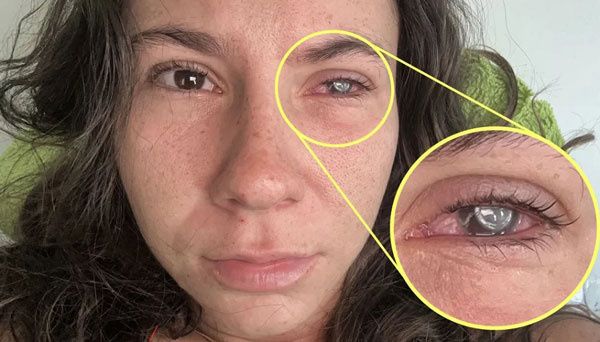
According to reports, Vivian Nosovitsky, who lives in Florida, lost her sight after becoming infected with a parasite during a trip to Mexico.
On August 8 (local time), British outlet The Sun and other foreign media reported that Nosovitsky experienced severe pain in her right eye while traveling in Mexico. She was prescribed eye drops at an urgent care center, but the pain worsened over the following weeks. Describing the ordeal, she recalled, “Every 10 seconds it felt like shards of glass and knives were cutting into my eye.”
Right eye left without vision
After detailed examinations, Nosovitsky was diagnosed with Acanthamoeba keratitis. As for how she became infected, she explained, “I suspect the parasite got in either when I rubbed my eye without washing my hands after getting off a bus the day before the pain started, or while I was taking a shower.” She had been wearing contact lenses for about two years and stressed the importance of proper lens hygiene. She is now reported to have lost vision in her right eye.
Acanthamoeba keratitis occurs when Acanthamoeba, a parasitic organism, penetrates the cornea. Acanthamoeba is commonly found in the environment, including soil, tap water, and swimming pools, and usually does not harm humans. However, if contaminated water or soil comes into contact with the eye while a person is wearing contact lenses, it can trigger keratitis. In rare cases, infection can also occur through tiny scratches on the cornea even without lenses.
Early symptoms include foreign body sensation, redness, and light sensitivity
Early signs typically include eye pain, a feeling that something is in the eye, redness, and sensitivity to light. A key feature is that the pain patients feel is often far more severe than what would be expected from the actual degree of corneal damage. As the condition worsens, a ring-shaped opacity can form in the central cornea, and vision may deteriorate rapidly.
Experts advise that strict contact lens hygiene is essential for prevention. A study published in the British Medical Journal (BMJ) found that the less carefully lenses are disinfected, the higher the risk of infection. Ignoring the recommended replacement schedule or using tap water instead of a dedicated cleaning solution further increases the danger. The research team reported that proper lens disinfection alone can prevent more than 80% of infections.
[email protected] Han Seung-gon Reporter