[Editorial] Germany’s Highest Corporate Bankruptcies in 20 Years Must Be a Cautionary Tale
- Input
- 2026-01-11 19:12:41
- Updated
- 2026-01-11 19:12:41
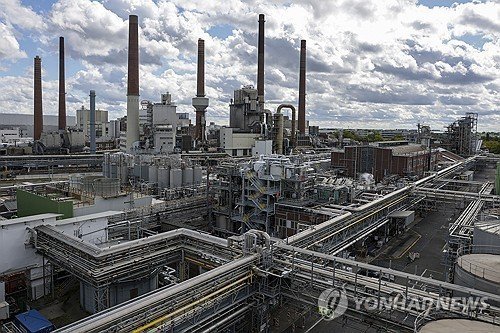
Jonas Eckhardt of the management consulting firm Falkenstech pointed to high energy prices, labor costs, and administrative expenses driven by bureaucracy as the main causes. He argued that “the number of bankruptcies no longer reflects a temporary downturn, but indicates a structural collapse of the German economy.” He also projected that large corporate bankruptcies will increase by 15–20% this year.
Corporate bankruptcies lead directly to job cuts and a shrinking labor market. It is estimated that about 170,000 jobs were affected by corporate failures in Germany last year. Germany’s economic growth rate was -0.3% in 2023 and -0.2% in 2024, marking two consecutive years of contraction for the first time in 21 years. Many expect that it will again be difficult for the growth rate to rise above zero this year.
We must take Germany’s economic situation seriously because it closely resembles our own. Like Germany, Korea has great difficulty producing its own energy. We import all of our oil and gas. Germany relies heavily on gas imports from Russia, and the war between Russia and Ukraine sent energy prices soaring, dealing a heavy blow to its companies. Korea, which does not produce a single drop of oil, could easily face a similar situation, just as it did during the oil shocks of the 1970s.
Germany is an export-driven manufacturing economy, with a structure similar to Korea’s. China is its largest trading partner, as it is for us. A key cause of Germany’s downturn has been a decline in exports to China, and Berlin failed to respond in time. Since the 2010s, rapid population aging has sharply reduced the working-age population and labor supply, another trend that mirrors Korea’s situation.
Korea must treat Germany’s prolonged slump as a cautionary example and avoid following the same path. Over time, we need to shift our export-dependent manufacturing structure toward a more service-oriented economy, while persistently diversifying our export markets. We must also find ways, by any means possible, to reverse the trends of low birthrates and population decline.
Germany, like Korea, pursued a nuclear phase-out and ended up triggering the current energy crunch. It has belatedly recognized this as a grave mistake and begun to reverse its nuclear phase-out policy. Korea should pay close attention to this policy failure as well. The damage that the Moon Jae-in administration’s five-year nuclear phase-out inflicted on our economy has already been demonstrated. Energy is the fuel of the economy; if it is too expensive, the economy simply cannot function properly. Germany’s experience shows how misguided it is to abandon nuclear power. The Lee Jae-myung administration also emphasizes renewable energy, but it is at least fortunate that it does not sideline nuclear power to the same extent as the Moon Jae-in administration did. As a carbon-free, environmentally friendly energy source, nuclear power should be used more actively as a core pillar of our future energy mix.