KFTC Chairperson Joo Byung-ki: "Investigation Under Way Into Alleged Collusion in Starch Sugar Market"
- Input
- 2026-01-09 10:11:14
- Updated
- 2026-01-09 10:11:14
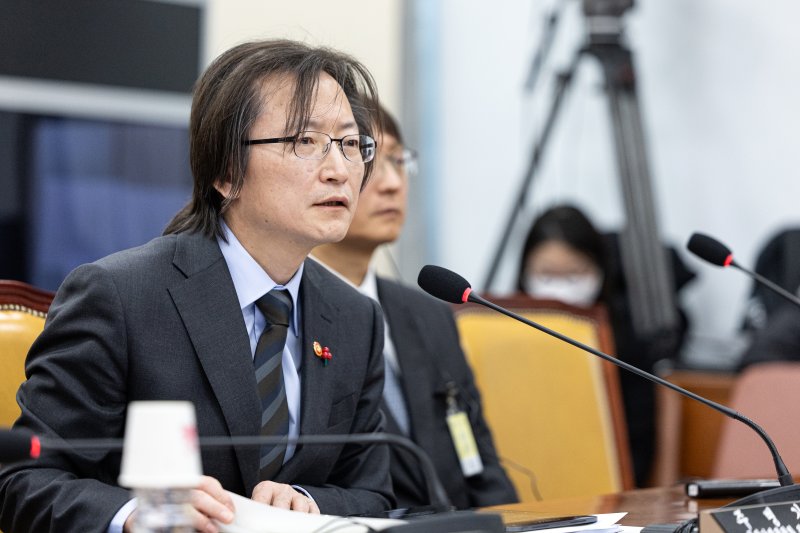
According to Financial News, the Korea Fair Trade Commission (KFTC) is investigating allegations of collusion among companies that dominate the domestic starch sugar market.
At a New Year’s dinner with reporters held on the 8th in Sejong Special Self-Governing City, KFTC Chairperson Joo Byung-ki stated, "In addition to sugar, pork, and flour, which have already been reported in the media in connection with our investigations into collusion affecting people’s livelihoods, we have recently detected suspected wrongdoing in the starch sugar sector and are currently conducting an investigation."
Starch sugar refers to products in which sugars obtained by hydrolyzing starch with acid or saccharifying enzymes are the main component, and it is primarily used as a sweetener in processed foods. In Korea, corn starch is the main raw material used to produce starch sugar. Syrup, fructose, and oligosaccharides fall under this category and are used as ingredients in snacks, beverages, and dairy products.
According to industry sources, the domestic starch sugar market is dominated by Daesang, Samyang Corporation, Sajo CPK, and CJ CheilJedang, and these four companies are reportedly under investigation by the KFTC.
Regarding a planned reform that would increase surcharge multipliers up to 100% depending on the number of repeated violations, Joo Byung-ki characterized it not as a simple strengthening of penalties but as a "rationalization of surcharge levels."
On surcharges for abuse of market-dominant positions, the KFTC chairperson noted, "Korea’s level of sanctions is far lower than that of other advanced economies," adding, "As companies have grown, regulation must also be brought in line with a level that can hold them accountable for their social responsibilities."
The KFTC is pushing a plan to significantly toughen surcharge multipliers so that, once a company has violated the law at least once, the current additional 10% to less than 20% would be raised to more than 40% and up to 50%. For four or more violations, the multiplier would increase to more than 90% and up to 100%. Surcharges on acts by market-dominant businesses that unfairly set prices would also be raised from 6% of sales to 20%. Where fixed-amount surcharges are imposed, the upper limit would be increased from 2 billion won to 10 billion won.
Addressing interpretations that the legislative initiative for fair online platform transactions, which will regulate business practices on online platforms, is primarily aimed at companies from the United States of America (U.S.), Joo Byung-ki drew a clear line, saying, "It is certainly not a law targeting U.S. companies."
Joo Byung-ki explained, "The initiative is focused on ex post regulation to correct various unfair trade practices or power imbalances that may arise in transactions with online commerce platform operators," adding, "It will apply not only to Coupang but also to a range of domestic platform operators such as Naver Corporation. The law strictly adheres to the principle of non-discrimination."
He went on to say, "It is not a law that pre-designates large operators in advance and regulates their conduct, nor is it aimed at regulating abuses of dominance by monopolistic firms or conduct that harms consumer welfare."
[email protected] Seo Young-jun Reporter