SK bioscience and Sanofi launch MenQuadfi meningococcal vaccine in Korea, available from 6 weeks of age
- Input
- 2026-01-09 08:48:48
- Updated
- 2026-01-09 08:48:48
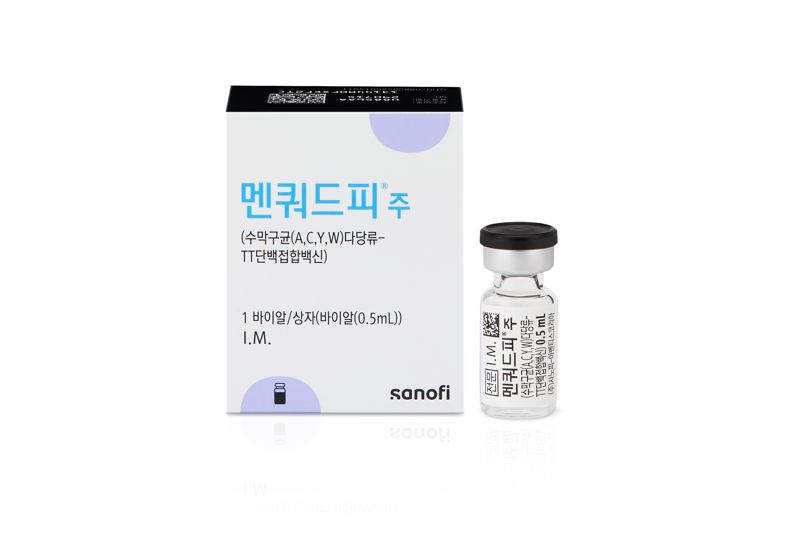
On the 9th, SK bioscience announced that, in cooperation with the Korean subsidiary of global biopharmaceutical company Sanofi, it has newly launched the quadrivalent meningococcal conjugate vaccine MenQuadfi (MenACWY-TT) in the Korean market. SK bioscience will be responsible for domestic distribution and supply of the vaccine for infants and children.
MenQuadfi is a vaccine developed by Sanofi. It can be administered from 6 weeks of age up to 55 years and helps prevent invasive meningococcal disease (IMD) caused by the major meningococcal serogroups A, C, W and Y. Among A, C, W and Y meningococcal vaccines approved in Korea, MenQuadfi is the only product that includes serogroup A and can be used in infants from 6 weeks to under 24 months of age.
A key feature of MenQuadfi is its fully liquid formulation, which can be administered without any separate reconstitution process. This simplifies vaccination preparation in clinical settings, improves workflow efficiency and helps reduce the risk of errors that may occur during reconstitution.
The vaccine is administered as a 0.5 mL intramuscular injection. Infants from 6 weeks to under 6 months of age receive a total of four doses, those from 6 months to under 24 months receive two doses, and individuals aged 2 to 55 years receive a single dose.
Meningococcal infection is transmitted through respiratory secretions such as nasal discharge and saliva, and infection can occur even via asymptomatic carriers, making prevention particularly important. The bacteria can reside in the human nasopharynx without symptoms, but under certain conditions may invade the bloodstream or central nervous system, causing meningitis or sepsis. The risk of infection increases with close contact among family members and in group-living environments.
Given these characteristics, major advanced countries such as the United States, the United Kingdom, Australia and Canada have incorporated meningococcal vaccines into their national immunization programs for infants, children and adolescents, or operate them as part of routine vaccination schedules under official national recommendations. In Korea, the Korea Disease Control and Prevention Agency (KDCA) recommends vaccination for high-risk groups considered to have a relatively higher risk of infection, including immunocompromised individuals, laboratory personnel, new military recruits, university dormitory residents, and travelers to or residents in outbreak areas, as well as contacts during an outbreak.
“With the introduction of MenQuadfi, we have expanded the options available in Korea for preventing invasive meningococcal disease in infants and children,” said Jae-yong Ahn, CEO of SK bioscience. “Building on our global partnerships, we will continue to strengthen the domestic environment for infectious disease prevention and steadily supply vaccines that contribute to public health.”
[email protected] Jung Sang-hee Reporter