[Editorial] Climate Minister Finally Admits the Flaws of Renewable Energy
- Input
- 2026-01-08 18:08:21
- Updated
- 2026-01-08 18:08:21
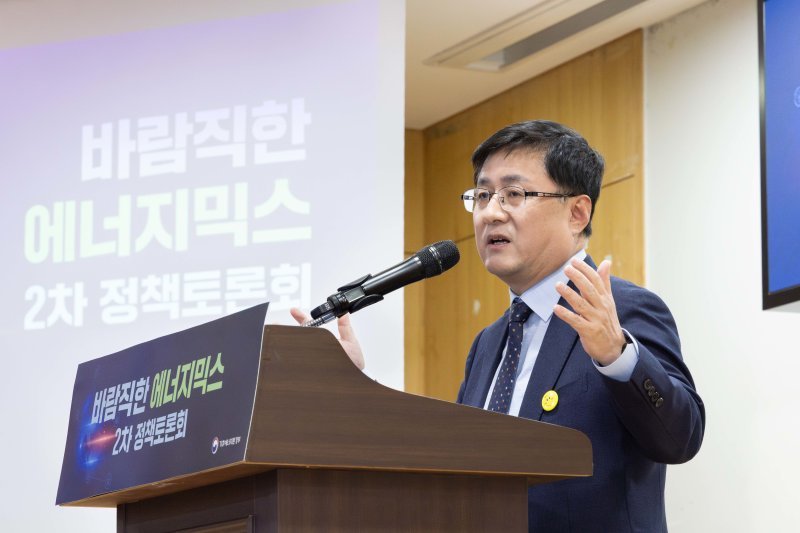
Until now, Kim has argued that phasing out nuclear power is an irreversible global trend and has positioned himself at the forefront of that movement. His energy vision has been to prioritize renewable energy while treating nuclear power as a supplementary source. He has also repeatedly raised the possibility of scrapping plans for new nuclear reactors. Each time, critics have questioned whether surging electricity demand in the era of Artificial intelligence (AI) can really be met with renewables alone, and he has faced a barrage of criticism and rebuke.
Pushing the share of renewable energy excessively high runs counter to the wave of countries reversing their nuclear phase-out policies and to the aggressive nuclear investments now being pursued by global big tech companies. A stable electricity supply is the top prerequisite for operating advanced semiconductor and AI plants. The revolutionary technologies in autonomous driving and Physical AI now on display at the Consumer Electronics Show (CES) in Las Vegas will not bear fruit without a robust and reliable power system. It is no exaggeration to say that the battle for leadership in future technologies now hinges on electricity.
Trying to lead the AI race while relying on renewable energy, whose output fluctuates wildly with weather, wind and climate conditions, is close to impossible. As heat waves and cold snaps become more frequent, household electricity consumption is rising day by day. If an unstable renewable source is used as the main energy supply, electricity prices are highly likely to soar.
When policy decisions are trapped in ideology, the burden borne by businesses and the public only grows heavier. In this sense, Kim's change in stance is belated but still welcome. He has put on hold the construction of two new nuclear reactors that the previous administration approved under the 11th Basic Plan for Electricity Supply and Demand, saying the issue will be settled through debate. Under the original schedule, the sites were to be selected last year, with construction beginning this year and completion targeted for 2038.
Strictly speaking, even that plan was already a step back from the original. The initial draft of the 11th Basic Plan for Electricity Supply and Demand included three large new reactors, but this was cut to two under pressure from the Democratic Party of Korea (DPK), then the opposition. With the change of government, even those two reactors have been sent back to square one for reconsideration, a reckless decision that failed to take long-term power supply and demand into account.
Kim has criticized the Moon Jae-in administration, saying it was "embarrassing" to push nuclear exports abroad while declaring that no new plants would be built at home. If he means that not building reactors domestically was a mistake, he is absolutely right. As the minister in charge of energy policy, he should overhaul the policy framework. The government must promptly reach a conclusion on new nuclear construction and also bring its overly aggressive eco-friendly and carbon-neutral vision—on which Korea alone is flooring the accelerator—back in line with reality.