Yoon at Center of Insurrection Case to Learn Sentence Recommendation Today, Focus on Whether Special Prosecutor Will Seek Death Penalty
- Input
- 2026-01-09 06:00:00
- Updated
- 2026-01-09 06:00:00
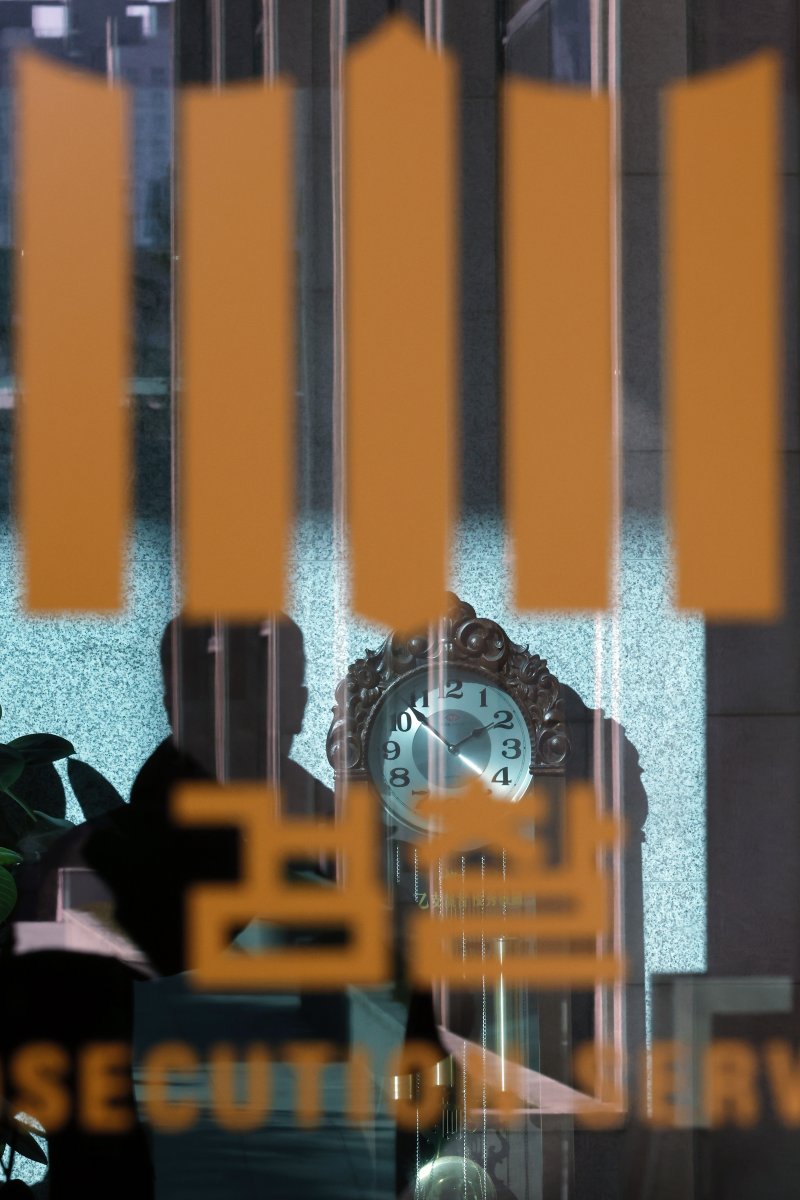
The Special Prosecutor's Team for Insurrection is scheduled to reveal its sentencing recommendation for former President Yoon Suk Yeol, who has been charged as the leader of an insurrection, at today's hearing. The statutory penalty for insurrection ranges from the death penalty to life imprisonment, and many in legal circles believe that, given the gravity and historical significance of the case, the special prosecutor is highly likely to seek the maximum sentence of death.
According to legal sources on the 9th, Criminal Division 25 of the Seoul Central District Court, presided over by Jee Kui-yeon, will hold a final hearing starting at 9:20 a.m. to conclude arguments in the case against former President Yoon Suk Yeol on charges of leading an insurrection.
The Special Prosecutor's Team for Insurrection held a meeting from 3 p.m. on the 8th, the day before the hearing, to discuss sentencing recommendations for former President Yoon and other key defendants in the insurrection case. The meeting was attended by Special Prosecutor Cho Eun-seok, assistant special prosecutors, and senior prosecutors who took part in the investigation. Prosecutors who returned to the regular prosecution service after the investigation period ended, as well as those who remained to maintain the indictment, were also reported to have joined the discussion.
The special prosecutor’s team is said to have reached its decision with particular caution, recognizing that its sentencing recommendations in this trial could influence related cases. Alongside former President Yoon, sentencing recommendations for former Minister of National Defense Kim Yong-hyun, former Commissioner General of the Korean National Police Agency Jo Jiho, and other senior military and police leaders whose cases have been consolidated with Yoon’s are also expected to be disclosed in court today.
Legal experts view several factors as likely to work against former President Yoon. They point out that he has completely denied the charges, repeatedly failed to appear during the investigation and trial, and thereby appeared to disregard judicial procedures. Even in insurrection cases, showing remorse does not bring formal sentencing benefits, and throughout the proceedings Yoon has often tried to shift responsibility onto his subordinates. Both the extent of his involvement and his attitude are expected to weigh heavily against him in the prosecution’s sentencing recommendation and in the court’s eventual ruling. A lawyer who previously served as a prosecutor commented that "the prosecution will focus more on the nature and motives of the crime than on the fact that the martial law attempt ultimately failed."
Members of the legal community also note that the first proclamation issued under the emergency martial law—declaring that "all political activities of the National Assembly are prohibited"—strongly suggests an attempt to undermine the constitutional order by obstructing the exercise of the powers of the National Assembly of the Republic of Korea. The legal requirement for insurrection is an uprising aimed at undermining the constitutional order, and in this case there was an attempt to use the military and police to subdue by force constitutional institutions such as the National Assembly and the National Election Commission (NEC). Even under the regimes of Park Chung Hee and Chun Doo-hwan and the new military group that seized power in 1980, proclamations did not explicitly order a ban on the activities of the National Assembly and political parties. Because the Constitution grants the National Assembly the authority to demand the lifting of martial law, a proclamation that effectively denies this authority may itself be unconstitutional.
Kim Dae-geun, a research fellow at the Korean Institute of Criminology and Justice (KICJ), stated that "blocking members of the National Assembly from entering the building by mobilizing not only the police but also the military constitutes a more direct infringement on a constitutional institution—the National Assembly—than what occurred under Chun Doo-hwan." He added that video footage from closed-circuit television and other sources shows that military and police forces were deployed during the emergency martial law to neutralize the functions of the National Assembly and the NEC, both of which are constitutional bodies.
In the past, prosecutors sought the death penalty for former President Chun Doo-hwan, who was indicted on charges of leading an insurrection, and life imprisonment for former President Roh Tae-woo, who was charged with playing a key role in rebellion and insurrection. South Korea is, in practice, an abolitionist state: the death penalty remains on the books but has not been carried out for many years. Even though a request for the death penalty would have no immediate practical effect, many in legal circles predict that, in light of the seriousness and historical weight of the case, prosecutors are still likely to seek the maximum sentence of death.
After the prosecution presents its sentencing recommendations today, the first-instance proceedings will conclude with the final arguments from former President Yoon’s defense team. The court is expected to hand down its first-instance verdict around mid-February, before the regular reshuffling of judges takes place.
[email protected] Lee Hwan-joo Reporter