[Editorial] China’s ‘Rare-Earth Retaliation’ Against Japan: National Interest Diplomacy More Urgent Than Ever
- Input
- 2026-01-07 18:25:24
- Updated
- 2026-01-07 18:25:24
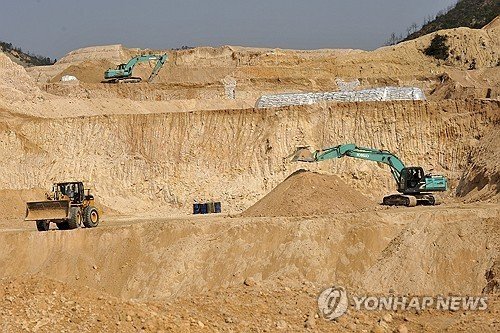
REE are metallic elements widely used in rechargeable batteries, semiconductors, and electric vehicle (EV) motors, earning them the nickname 'vitamins of advanced industries.' Given that China supplies more than 90% of the world’s REE, these new export controls are likely to deal a direct blow to Japan’s high-tech industries.
If Japan is unable to import Chinese REE, it will inevitably face significant disruptions in the production of home appliances and EVs. The situation is further complicated by MOFCOM’s decision to ban indirect exports via third countries, effectively blocking Japan from sourcing Chinese REE through alternative routes. The 'secondary boycott,' which sanctions third parties dealing with sanctioned entities, has typically been used as a tool for Sanctions against North Korea. Applying it to an economic powerhouse like Japan is unprecedented. An official from the Ministry of Foreign Affairs of Japan told local media that the country was caught off guard.
The issue is not limited to Japan alone. Japan has been importing Chinese REE, processing them into components and materials, and supplying them to the global market. If this export structure is disrupted, South Korean companies that rely on Japanese intermediate goods will also face difficulties in sourcing parts. During his state visit to China, President Lee Jae-myung commented at a local press conference, 'Export controls are highly complex and deeply rooted,' adding, 'While there may be short-term impacts on processed exports, it is difficult to predict the long-term effects.' Although the measures appear to target Japan on the surface, South Korea’s industries are also unlikely to escape indirect consequences.
South Korea has already experienced a similar situation. In 2016, when the deployment of the Terminal High Altitude Area Defense (THAAD) system by United States Forces Korea (USFK) was decided, China responded with the unofficial economic retaliation known as the ban on Korean Wave (Hallyu Ban). As a result, the entry of Korean entertainment and content industries into China was blocked, and group tourism was suspended, severely impacting the tourism, distribution, and cultural sectors. Companies highly dependent on China suffered sharp declines in sales and had to scale back operations. This demonstrates how diplomatic conflicts between nations can quickly translate into economic damage.
The recent South Korea-China summit was significant in that it could serve as a turning point for restoring bilateral relations. However, there were clear limitations, as discussions on the denuclearization of the Democratic People's Republic of Korea (DPRK) were minimal, and there was little substantive progress on lifting the Hallyu Ban. Amid these circumstances, China’s rare-earth retaliation against Japan symbolically highlights that Northeast Asian diplomacy has entered a complex crisis phase where security, economic, and supply chain issues are deeply intertwined.
South Korea now faces a dilemma, pressured to choose between trilateral cooperation among South Korea, the United States, and Japan and cooperation with China. As the THAAD incident has shown, diplomatic conflicts can quickly lead to economic repercussions. The government must take a long-term view, diversify supply chains for key raw materials and strategic goods, and strengthen the ‘diplomatic safety net’ through multilateral consultations to prevent diplomatic disputes from escalating into economic retaliation. A sophisticated diplomatic strategy focused on national interests, rather than emotion or ideology, is now being put to the test.