[Editorial] Sudden Demands to Relocate the Semiconductor Industrial Complex Undermine National Interests
- Input
- 2026-01-06 18:12:02
- Updated
- 2026-01-06 18:12:02
Those making such comments include Lee Won-taek, a Democratic Party of Korea (DPK) lawmaker representing Gunsan, Gimje, and Buan, and Byung Hoon Lee, Senior Vice Chair of the Honam Development Special Committee. Lee has declared his candidacy for governor of Jeonbuk Special Self-Governing Province in the upcoming June local elections, while Byung Hoon Lee is expected to run for mayor of Gwangju Metropolitan City. It is clear that these statements are nothing more than populist rhetoric aimed at winning votes.
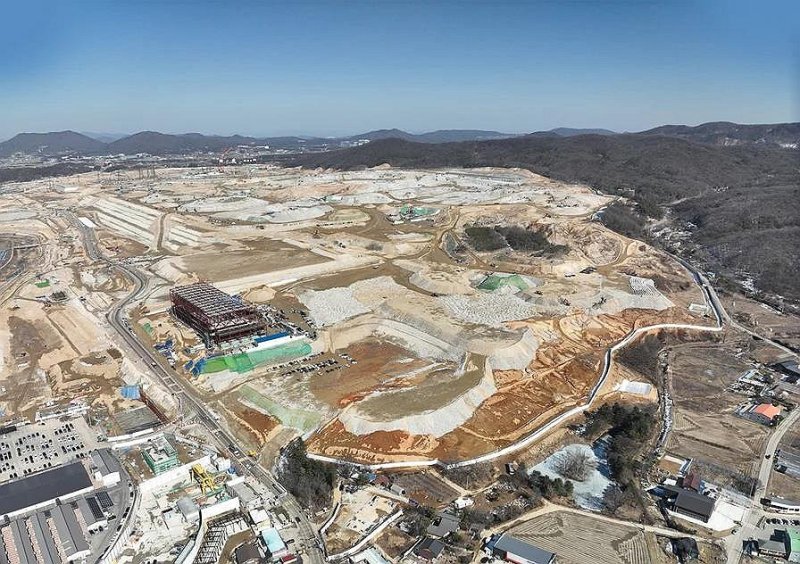
What exactly is the Yongin Semiconductor Cluster? It is a national policy project initiated by the Moon Jae-in administration and finalized by the Yoon Suk Yeol administration. Despite the change in administrations with differing ideologies, the cluster has proceeded as planned. The site has already been incorporated into national plans for power plants, transmission networks, and water pipelines, with compensation and administrative procedures underway. Furthermore, the semiconductor plants being built by Samsung Electronics and SK Hynix have reached a 20% completion rate, and some facilities are already in operation.
Given these circumstances, it is absurd for Honam-region politicians to now call for relocating the cluster. It is only natural that the relevant companies, Gyeonggi Province, and Yongin City have dismissed these demands as nonsensical. If Saemangeum or other Honam areas were truly suitable for a semiconductor industrial complex, their advocates should have spoken up during the site selection process. The fact that they did not is evidence that Saemangeum and similar areas are less suitable than Yongin.
While regional development through the distribution of industrial complexes is important, the suitability of the site is even more critical. Semiconductor plants cannot be built near saltwater coasts. Although there may be an abundance of electricity, the high proportion of unstable renewable energy sources such as solar power is a concern. These factors were considered in selecting Yongin. The area is also home to existing semiconductor factories and partner companies, creating synergy in production.
A prime example of wasted budget due to building infrastructure in unsuitable locations is the existence of several underutilized regional airports. These airports were constructed under the political logic of regional development, but now operate at a loss due to a lack of passengers. No one has taken responsibility for these failures.
The semiconductor cluster is an urgent national project that must be completed as quickly as possible. Other countries are finishing such complexes within a few years to respond to market trends. Although Korea has tried to keep pace, nearly a decade has already passed. If politicians continue to stir up controversy, it will inevitably hinder progress. Those responsible should refrain from further fueling confusion. If they persist in stoking the debate, they must recognize that they are impeding national development and harming the national interest.