Special Court for Insurrection Act Enforced... What Will Be the First Case for the New Court?
- Input
- 2026-01-06 16:14:49
- Updated
- 2026-01-06 16:14:49
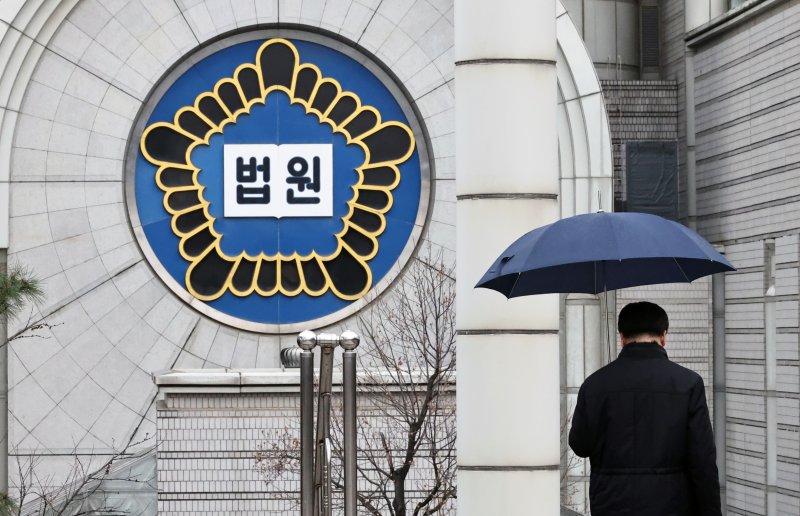
[Financial News] With the promulgation of the so-called Special Court for Insurrection Act on the 6th, the judiciary has begun discussions on forming the new court divisions and is moving forward with follow-up measures. The main focus is now on what the first case assigned to the special court will be.
According to legal sources on the 6th, the government announced in the official gazette that it would promulgate the 'Special Act on Criminal Procedures for Insurrection, Treason, and Rebellion Crimes' (Special Court for Insurrection Act) on this day. The law takes effect immediately.
The Special Court for Insurrection Act passed the National Assembly of the Republic of Korea on the 23rd of last month, led by the Democratic Party of Korea (DPK). President Lee Jae-myung approved the bill at the State Council meeting on the 30th of last month.
As a result, both the Seoul Central District Court and the Seoul High Court are required to establish two special court divisions each to handle cases of insurrection, treason, rebellion, or related matters deemed to be of national importance. The Judges' Meeting of each court will set the criteria for forming these divisions, and the Case Assignment Committee will distribute the workload accordingly. After the Judges' Meeting approves the assignments, the chief judge will appoint the judges to the special court divisions.
Additionally, the Seoul Central District Court must appoint at least two judges dedicated to issuing warrants for insurrection cases. Whistleblowers related to insurrection cases will be protected under the Protection of Public Interest Whistleblowers Act.
All judges involved in deliberations must express their opinions in the written verdicts of the special court. Except for pretrial hearings, first-instance trials must be broadcast unless there is a risk to national security, public order, or public morals. However, the ongoing first trial of Former President Yoon is not expected to be affected by this provision.
The judiciary is also taking follow-up steps. The Case Assignment Committee of the Seoul High Court is currently discussing specific plans for the formation of the special court, which will be submitted to the Judges' Meeting. On the 22nd of last month, the Seoul High Court resolved at its Judges' Meeting to increase the number of criminal divisions by at least two this year. Based on the committee's agenda, another Judges' Meeting to discuss the formation of the special court is expected to be held soon.
The Seoul Central District Court is also internally reviewing the legal provisions. The issue is expected to be tabled at the regular Judges' Meeting scheduled for the 19th.
Meanwhile, the Supreme Court of Korea may need to revise its own draft regulations for the special court for insurrection and treason cases. The National Court Administration announced its draft regulations on the 22nd of last month and collected opinions until the 2nd of this month.
There is also considerable interest in what the first case assigned to the special court will be. The special court will handle cases from the first trial, but cases already in progress at the time of the law’s implementation will remain with their current divisions. Therefore, the case against Former President Yoon for leading an insurrection, currently being heard by Criminal Division 25 (Presiding Judge Jee Kui-yeon) of the Seoul Central District Court, is expected to be assigned to the special court from the second trial, after the first-instance verdict in February. Among cases related to Former President Yoon, the first-instance verdict for the CIO obstruction case is scheduled for the 16th and could become the first case assigned to the special court.
However, Former President Yoon’s legal team has filed a constitutional challenge, claiming the Special Court for Insurrection Act is unconstitutional. The People Power Party has also announced plans to file a petition with the Constitutional Court of Korea, which is expected to review the law’s constitutionality. Typically, trials under constitutional review are suspended until the Constitutional Court of Korea reaches a decision.
[email protected] Kim Dong-gyu Reporter