[Editorial] The ‘War of Innovation’ Begins at CES: Change or Perish
- Input
- 2026-01-05 19:16:01
- Updated
- 2026-01-05 19:16:01
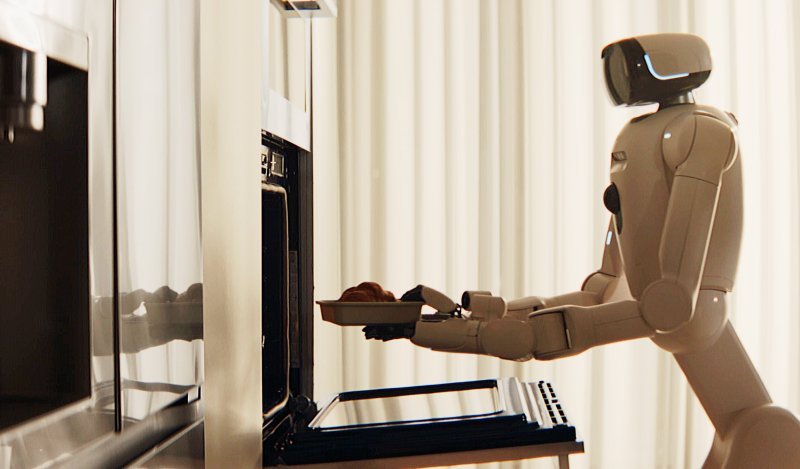
The central theme of this year’s CES is 'Physical Artificial Intelligence (AI).' While generative AI serves as the brain, physical AI acts as the body, translating thoughts into actions. By using sensors and robotic arms to perceive their environment and act autonomously, these technologies are enhancing everyday convenience.
At this CES, LG Electronics is unveiling its humanoid robot, LG CLOiD, which can handle a wide range of household chores, from meal preparation to laundry. Hyundai Motor Company will present the next-generation humanoid robot Atlas from its U.S. subsidiary, Boston Dynamics. Samsung Electronics will showcase its 'AI Living Platform,' which connects all devices and services through AI. The competition in physical AI is rapidly moving beyond simple demonstrations to real-world applications that are quickly integrating into daily life.
Such changes are not unique to Korean companies. Among foreign participants, Chinese companies are particularly prominent. This year, 942 Chinese firms are attending CES, the second largest group after the United States (1,638). There are also signs that traditional machinery leaders like Caterpillar and Siemens from the U.S. and Germany are pursuing collaborations with global semiconductor companies such as Nvidia. Although Korean firms are accelerating the commercialization of physical AI, the innovation race among global companies is truly formidable.
The AI technology race presents both opportunities and risks for Korean companies. As the U.S. and China compete for dominance in semiconductors, data, and algorithms, Korean firms face potential setbacks from supply chain disruptions and various regulations. Core AI semiconductors and cloud infrastructure are still heavily dependent on foreign sources, and there are numerous regulations surrounding data usage that restrict research and development (R&D).
This sense of crisis is clearly reflected in New Year’s addresses from business leaders. Park Jeong-won, Chairman of Doosan Group, named AI transformation as this year’s core strategy, stating, 'Soon, companies with AI competitiveness and those without it will stand on completely different ground.' Huh Tae-soo, Chairman of GS Group, also emphasized the importance of response speed, saying, 'Change always comes faster than our preparations.' How companies and nations navigate this era of rapid AI transformation will determine their ultimate success or failure.
According to The Global AI Index 2025 published by Tortoise Media, Korea ranks fifth in overall AI capability, but only 13th and 17th in talent and industrial ecosystem, respectively. This indicates a shortage of top-tier developers and a lack of dynamism in the industry.
The government must now address the AI talent shortage. It is urgent to move away from regulation-focused workforce management and actively attract global talent while reforming systems to encourage domestic developers to find jobs and start businesses. Regulations that hinder data utilization and real-world testing must be revised to provide companies with a foundation to rapidly trial and scale AI technologies. Without fostering a vibrant industrial ecosystem through openness and collaboration, the government’s goal of making Korea one of the top three AI powers will remain an empty slogan.