"As the Civilizational Paradigm Shifts... A New Opportunity for Korea's Leap Forward" [2026 New Year Special: Asking the Way for Korea]
- Input
- 2026-01-05 18:39:04
- Updated
- 2026-01-05 18:39:04

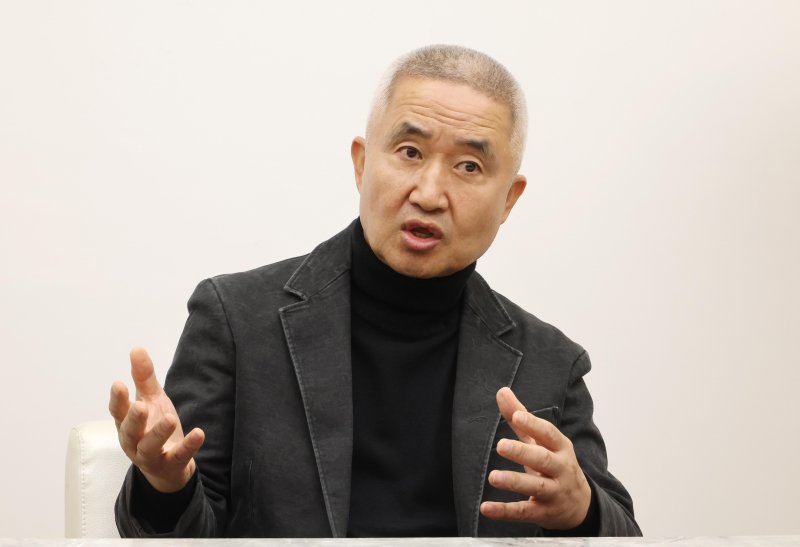
— Why are social conflicts in Korea so severe?
▲Conflict is a natural phenomenon in both the natural and human worlds. Without conflict, there is no progress. However, our conflicts are not those that drive us forward; rather, they halt or even reverse our progress. This suggests we have reached our limits. Fundamentally, intellectual growth has stalled. As Hannah Arendt noted, tragedies like the Nazi Holocaust occurred because of a lack of reflective thinking. When people act without considering the consequences, swept up by emotion or collective frenzy, it means thought has ceased. Thought serves as a shield for ethics. Without it, ethical behavior is impossible. Politics reveals a nation's true face and level. The key is trust. All modern systems—currency, education, law—are built on trust. Among all forms of trust, trust in words is the most crucial.
— Why has politics lost public trust?
▲Politicians change their words too quickly and act contrary to what they say. Humans have evolved to feel shame and embarrassment when trust is broken. Shame is the most vital mechanism that makes us human. In Korean politics, shame has disappeared. The most fundamental virtue sustaining human society is gone. In 'functional' politics, only power remains, inevitably intensifying conflict. Ontological growth as human beings has come to a halt. We are preoccupied with function and have lost sight of essence. For example, someone might say their dream is to become a prosecutor. But being a prosecutor is not a dream; it is a profession—a stepping stone to realizing one's dreams. If becoming a prosecutor is the dream itself, one can only perform the functional duties of the job. Ontological and intellectual growth stagnate. As a result, our society has developed only in terms of function, leading to clashes between functions.
— What is the difference between function and essence?
▲Function refers to something that is not essential for existence, while essence is indispensable for being. It is natural for politics to involve struggles for power. The issue lies in the level of power being pursued. Our society is still not one where the pursuit of essence is commonplace. We are not a producer of knowledge but an importer. For those who import, 'answers' become the norm. A 'question' is an intrinsic curiosity that emerges from within and addresses fundamental issues. Our society lacks questions. Knowledge is a strategy for unfolding life, but we have not reached the stage of producing it. We only use what has already been created, lacking the spirit to pursue what does not yet exist—genuine curiosity about essence.
— Hasn't Korea achieved political democratization?
▲Although democratization is said to have been achieved, in reality, it has failed. Democratic sensibility has not developed. The core of democracy is freedom of expression. For example, the 5.18 History Distortion Punishment Act restricts freedom of expression. What do the so-called democratic forces actually do in politics? Are they not moving toward totalitarianism? Civil servants' mobile phones are inspected—how undemocratic and totalitarian is that? Outwardly, they champion democratization, but their actions are anti-democratic. This is because ontological growth has stalled. We have strayed from the path of becoming truly human. Ontological growth means questioning why I exist as myself, why I am human, and living based on the self-awareness that arises from such inquiry.
— What is needed to overcome division and achieve integration?
▲Integration is impossible under current circumstances. How can we achieve integration without the capacity for it? To integrate, we need a higher level of reflective thinking than we currently possess. Politicians all talk about integration, but in reality, they do not pursue it because they lack the ability. Integration is a highly sophisticated intellectual activity. It requires the ability to consciously suppress emotions and act deliberately, even when one does not feel like it.
— How can we cultivate intellectual capacity?
▲We must study and read. We need to reflect on our own lives and ask questions about life: Who am I? How do I want to live and be remembered? What kind of person do I want to become? Without this, neither integration nor the restoration of the essence of politics is possible. The intellectual and rational growth of our society peaked around the time of President Kim Dae-jung (circa 2000). Since then, it has been in decline. Why? Up to that point, our intellectual activities were about imitation and catching up. Next, we must move from being a follower nation to a leading one. We must shift from living by the outcomes of others' thoughts to living by our own. However, this transition is extremely difficult.
— What must Korea do to become a leading nation again?
▲We must move from a society that gives answers to one that asks questions. The ability to ask questions is not easily acquired, which is why we have spent the last 20 years focused on answers. We need an outstanding leader who can inspire dreams and present a vision. Until President Kim Dae-jung, we achieved nation-building, industrialization, and democratization. After that, we should have pursued advancement and leadership. We needed to present dreams, but instead, we became a society without them. One major reason is the lack of educational reform.
— What is needed to reform education?
▲A nation stands on two pillars: national defense and taxation. In addition, there must be two gears: education and politics. For a country to function properly, both must work effectively. Our problem is more a failure of education than of politics. One of the most important aspects of education is establishing a clear identity for oneself and the community. National identity is being shaken within the education sector. The Deputy Prime Minister for Education even expressed agreement with an article advocating a socialist model state. Healthy education begins with clarifying one's own and the community's identity.
— Are traditional virtues such as morality, propriety, and filial piety collapsing?
▲We must carefully examine whether these values are changing or collapsing. I believe both are happening. The older generation should not impose outdated values on the younger generation. If one's attitude toward life is rooted in essence, they will naturally practice filial piety and respect in their own way, even without being taught. If life is only functional, how can essential virtues be maintained?
— Isn't the ultimate purpose of human life happiness?
▲I do not believe happiness is the purpose of life. The purpose is to increase the quality and quantity of one's survival. Happiness is felt as a result. Happiness matters because there is a difference between those who are happy and those who are not. Happy people can see the world more broadly and deeply. Happiness is a highly subjective psychological state. Was Kim Ku psychologically at ease? He was likely anxious and suffering, yet he continued to pursue his ideals. That is happiness. The sense of satisfaction and joy felt while growing and moving toward one's goals is happiness.
— Compared to 30 years ago, has the nation or its people grown?
▲We have achieved economic and material growth, but not ontological growth. With ontological growth, those who could not think learn to think, and those who did not reflect begin to live reflectively. People become curious about things they previously ignored. Outwardly, we have grown, but internally, we have stagnated or even regressed. The nation must strive for inner growth and development, primarily through education. Politics must set an example. Currently, leaders cannot even match the average level of the people. There are countries that, like us, started as latecomers and reached the threshold of advanced nations—Argentina is a prime example. Such countries ultimately failed to become advanced nations and fell behind.
— Are we now in a similar situation?
▲Yes. Without essential and ontological growth, we cannot join the ranks of leading nations, and if we fail to do so, we risk decline. This is the middle-income trap. Business leaders have sensed this and attempted to leap forward, which led to the popularity of Humanities. Humanities explore the essence of human existence, and the result of a humanistic perspective is creativity. Underdeveloped countries lack creativity. Korea survives through exports, but we have not invented anything we export first. Most of the goods and systems that fill our lives were not created by us. Except for Hangul, almost everything is imported—even democracy. This is what it means to be a follower nation. From now on, creativity will determine our future.
— But didn't we create the Korean Wave and K-pop?
▲We did. Civilization is the product of thought, and intellectual achievements like the Korean Wave and K-pop prove our intellectual capacity. However, our intellectual abilities have been honed at a subordinate level. To further expand and sustain the Korean Wave and K-pop, we must develop intellectual capacity at a leading level. This is why a reflective life, a humanistic perspective, and a pursuit of essence are so important.
— Has Korean culture entered a period of prosperity?
▲Everything in this world, including culture, goes through cycles of birth, growth, decline, and death. When intellectual capacity is strong, these cycles are prolonged; when weak, they are shortened. To sustain prosperity, we must seize opportunities to leap forward at the right moment. Now is that time. The Fourth Industrial Revolution (4IR) is breaking the paradigm of civilization. When paradigms break, opportunities arise for latecomers. We must seize this opportunity.
— What kind of life should young people pursue?
▲They must fight for the world they want to live in and the person they want to become. First, they should be curious about themselves. Do not simply conform to what already exists. Live as the self you have discovered on your own. Who are you? Who am I? Young people who approach life essentially do not avoid or run from problems but confront and solve them. Such individuals frequently ask themselves, 'Who am I?' and 'How do I want to live and be remembered?'
— What should parents do?
▲Parents should not try to educate their children in a prescriptive way. Telling them how to live is a form of violence. The most important thing is to allow children to dream about the world they want to live in and the person they want to become. Who created all these conflicts? Parents, who then impose their will on their children. For society to change, young people must be given freedom. Do not see children as objects of education, but as objects of love. Let us relearn how to love.
■ About Professor Jinseok Choi: △Ph.D. in Daoist Philosophy, Peking University (PKU) △Honorary Professor of Philosophy, Sogang University △Distinguished Visiting Professor, Graduate School of Artificial Intelligence, Korea Advanced Institute of Science and Technology (KAIST) △Founding Director, Geonmyeongwon △Chairman, New Word New Attitude △Principal, The Philosophy School
[email protected] Interviewed by Son Seong-jin, Editorial Director Reporter