‘Mission Boys’ Arrive... Production Briefing for Musical Concert ‘The Mission: K’
- Input
- 2026-01-05 15:04:41
- Updated
- 2026-01-05 15:04:41
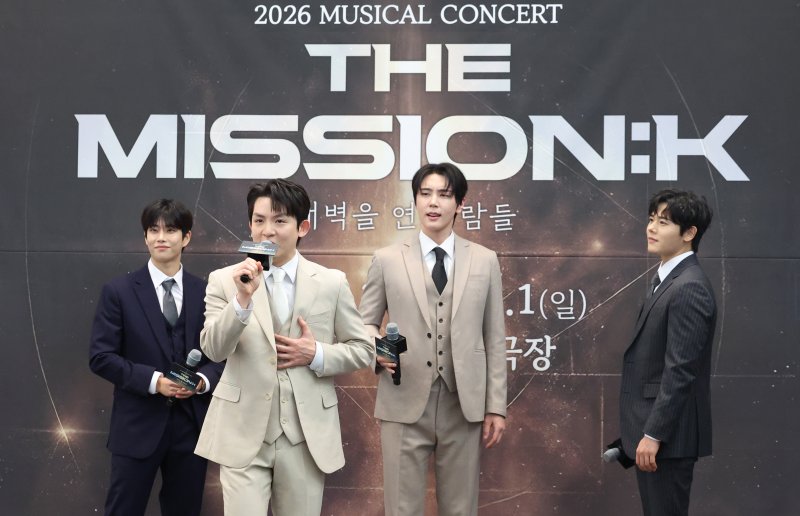
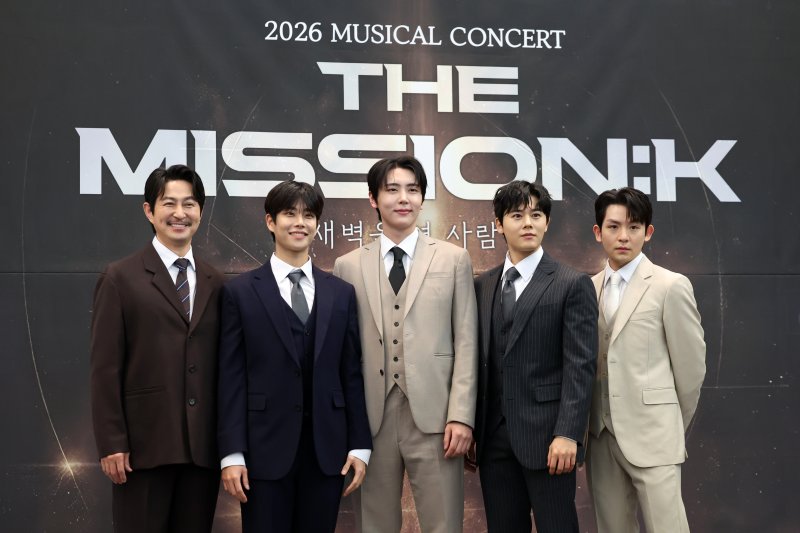
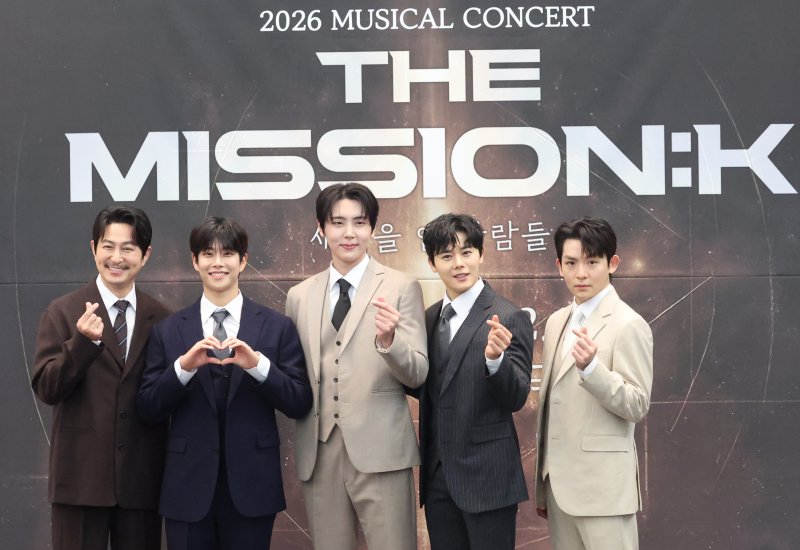


[Financial News] While ‘K-pop Demon Hunters’ features the Lion Boys, the musical concert ‘The Mission: K’ introduces the ‘Mission Boys.’ Boy group members MJ (ASTRO), Jaeyoon (SF9), Kim Dong-jun (ZE:A), and Ricky (TEEN TOP) will take the stage together as the ‘Mission Boys.’
‘The Mission: K’ is a production that reinterprets the lives of four real historical figures—Horace Newton Allen, Horace Grant Underwood, Oliver R. Avison, and Louis H. Severance—who laid the foundation for modern medicine, education, and missionary work in Joseon, combining their stories with contemporary K-pop performances.■ Recalling the Prime Years of Four Missionaries in Their Twenties"But where is Joseon?" "It’s where we must go, where we are needed." "That place calls me, the place I belong, it keeps pulling me in, that place calls me."
The four actors united as the Mission Boys energized the atmosphere at the press conference held at the Korea Press Center in Jung-gu, Seoul, on the 5th, by performing their signature number, ‘The Place That Calls Me,’ live.
MJ, who plays Horace Newton Allen, described his character as "the first resident missionary in Joseon." Allen led the establishment of Chejungwon, the first Western-style hospital in Korea, after treating Min Young-ik during the Gapsin Coup.
MJ explained, "He was someone who, despite questioning his place in an unfamiliar society, devoted himself to healing people," adding, "He is a symbolic figure who marked the beginning of modern medicine."
Jaeyoon, who plays Horace Grant Underwood, is one of the missionaries who laid the foundation for Protestantism. Jaeyoon noted, "He opened new ways of learning through the establishment of Yonhi College and changed the way people viewed the world."
In 1957, Yonsei University was formed by the merger of Yonhi College and Severance Union Medical College, the predecessor of Chejungwon. Jaeyoon introduced the number ‘When the Lights Came On, It Was a Sensation,’ sharing the anecdote of Underwood bringing electricity to Joseon for the first time and astonishing the people.
Kim Dong-jun portrayed Oliver R. Avison, a Canadian missionary and physician. He said, "During the cholera outbreak, he spread the concepts of handwashing and boiling water, establishing a public health system." Through numbers like ‘If Only You Believe,’ he aims to convey the message that ‘mutual trust opens up a new world.’ Avison is recognized for his deep involvement in the operation of Severance Union Medical College and Yonhi College, building an integrated model of medical and educational institutions.
Ricky, who plays Louis H. Severance, introduced his character as "the benefactor whose decisive donation made the establishment of Severance Hospital possible." He described Severance as a strong supporter who made all previous achievements possible, and said he plans to humorously portray the character’s personality and values through the number ‘Give and Flex.’
The cast cited the "dynamic concert format," "interactive atmosphere with the audience," and "new discoveries about historical figures" as reasons for participating, expressing high expectations for the performance.
■Reinterpreting 140 Years of History Through a K-pop ConceptThis performance is characterized by its unique format, combining spectacular performances with a talk concert. More than 80 participants, including chorus, ensemble, orchestra, and actors, will fill the stage of the Sejong Center Grand Theater.
Producer and music director Jang So-young described the work as "the story of blue-eyed missionaries’ challenges in Joseon." She explained, "Rather than presenting the noble spirit of real-life figures as rigid history, I wanted to deliver it in a concert format that combines talk, music, and dance, so that anyone can relate and enjoy."
Regarding the background of the production, she said, "It started from the history of Chejungwon, the first Western-style hospital in Joseon, and the origin of Yonsei University. To cover this history, the missionaries’ narratives had to be at the core." She added, "The concept expanded from the imagination that those who came to Joseon in their early twenties were as young and energetic as today’s idols. The format evolved into summoning missionaries onto the modern concert stage."
On the casting criteria, she stated, "Since the actors are telling the stories of missionaries, we chose those who possess both character and talent. We hope to convey what the mission of these pioneers, who laid the roots of K-medicine and education, means to us living today."
The title combines ‘Mission,’ meaning vocation or duty, with ‘K.’ The ‘K’ stands for Korea, Knowledge, Knock, and other layered meanings.
Writer Kim Eun-hye reflected on the lives of the four figures, saying, "It was astonishing that they came to the unknown land of Joseon 140 years ago, healed patients, trained doctors, and practiced education." She emphasized, "While thoroughly verifying the facts, we also incorporated entertaining episodes that could have occurred as they adapted to Joseon into the numbers and performances. There’s no need to worry that it will be heavy or boring like a biography."
When asked why she chose to focus on their twenties, she explained, "The choices they made at a young age led them to spend the rest of their lives in Joseon, witnessing both the Japanese occupation and liberation. I wanted to convey the message that a small choice, true to one’s beliefs, can ultimately become a great light."
The reason for adopting a K-pop idol concept was a desire to engage deeply with the audience. Director An Jin Sung stated, "We determined that bringing a story from 140 years ago into the present was the most effective way to communicate with the audience." He added, "We created a story that audiences can easily and comfortably enjoy."
jashin@fnnews.com Shin Jin-ah Reporter