'National Actor' Ahn Sung-ki Passes Away... A Living Witness of Korean Cinema History, "Appeared in 170 Films Over 69 Years"
- Input
- 2026-01-05 09:50:42
- Updated
- 2026-01-05 09:50:42
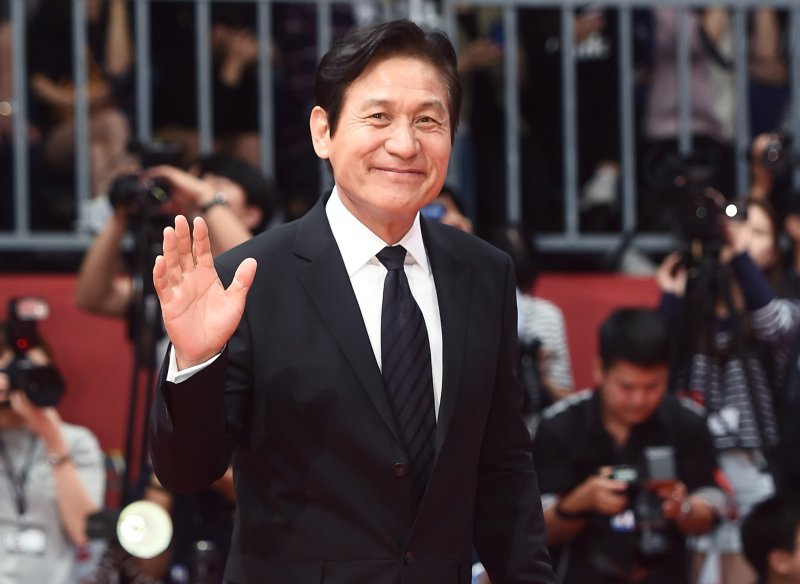
[Financial News] Former child actor and national star Ahn Sung-ki passed away on the 5th. He was 74 years old.
According to the Korea Actors Association, Ahn Sung-ki passed away at around 9 a.m. on the 5th in the intensive care unit of Soonchunhyang University Hospital Seoul, surrounded by his family. He had been hospitalized in a coma for six days after collapsing at home on the 30th of last month due to food getting stuck in his throat.
Ahn Sung-ki was diagnosed with blood cancer in 2019 and, although declared in remission in 2020, his symptoms worsened just six months later, forcing him to undergo further treatment and endure a difficult battle with illness.
He began his film career as a child actor in Kim Ki-young's 'Twilight Train' in 1959. Over 69 years, he appeared in more than 170 films, including 'Mandala' (1981, directed by Im Kwon-taek), which depicted spiritual journeys, and 'Two Cops' (1993, directed by Kang Woo-suk), which opened a new chapter in Korean comedy. Other notable works include 'Nowhere to Hide' (1999, directed by Lee Myung-se) and 'Revivre' (2015, directed by Im Kwon-taek).
In a 2023 interview, Ahn Sung-ki expressed his enduring longing for film sets despite his long illness, reaffirming his passion for acting. He admitted that the title of 'national actor' once felt burdensome, but it ultimately motivated him in a positive direction. He named Park Joong-hoon, his co-star in 'Chilsu and Mansu,' 'Two Cops,' 'Nowhere to Hide,' and 'Radio Star,' as his best partner. He also shared his wish to be remembered by the public as an actor they could trust.
Debuted in Kim Ki-young's 'Twilight Train' thanks to his father's friend
Born in 1951, Ahn Sung-ki experienced the ups and downs of Korean cinema firsthand. From his debut in 'Twilight Train' in 1957 at the age of six to his special appearance in 'Noryang: Deadly Sea' in 2023, he remained an active actor for nearly 70 years.
Although he never received formal acting training, he was recognized for his ability to portray a wide range of characters based on experience gained on set. Known for his humility and diligence, he considered actors as part of the filmmaking process and maintained a scandal-free career through strict self-management.
Ahn Sung-ki began acting by chance in Kim Ki-young's 'Twilight Train' (1957), a film by his father's friend, who was a film planner. He won a special award at the San Francisco International Film Festival for Kim's 'Teenage Rebellion' (1959) and appeared in about 70 films during the 1950s and 1960s. While in his third year at Kyungdong Public Middle School, he shared the stage with senior actor Lee Soon-jae and met singer Cho Yong-pil there.
Initially, acting was not his dream. After entering high school, he stopped acting to focus on his studies and, including his military service, took a break of about ten years. In his late twenties, he considered using his major in Vietnamese to find a job, but the communist takeover of Vietnam blocked his path, leading him to consider returning to film. Although the Korean film industry was in a slump in the late 1970s, he decided to dedicate his life to acting and made his comeback with 'Soldiers and Young Ladies' in 1977.
Established as an adult actor with the film 'Good Windy Day'
In a 2017 interview with the Korean Film Archive's 'Movie Heaven,' Ahn Sung-ki said he hoped for an environment where filmmakers would be respected. Despite the underdeveloped industry and low social recognition at the time, he set a principle not to participate in adult films, which were prevalent then. Instead, he chose roles with realism and social themes. He noted that while some works like Lee Jang-ho's 'Between the Knees' (1984) and 'Eoudong' (1985) are classified as adult films, they are difficult to compare directly due to their clear thematic focus.
After his return, for two to three years, he played supporting roles in anti-communist and enlightenment films such as 'The Third Workshop' (1978). He then experienced a turning point with Lee Jang-ho's 'Good Windy Day' (1980), and continued to build his filmography by working with directors like Im Kwon-taek in 'Mandala' (1981) and Bae Chang-ho in 'People of Kkobang Neighborhood' (1982).
Ahn Sung-ki became a leading actor reflecting the changes of the 1980s. Even as Korean cinema underwent two major industrial shifts in the 1990s, with the introduction of planned films and blockbusters, he continued to adapt and remain active.
His career continued into his fifties during the 2000s. He appeared in action dramas and blockbusters such as 'Musa' (2001), 'Silmido' (2003), 'Arahan' (2004), 'Duelist' (2005), 'May 18' (2007), and 'The Divine Weapon' (2008). He also took on new characters in low-budget films like 'Unbowed' (2011) and 'Revivre' (2015).
His acting spectrum was truly diverse. He played everything from naïve characters to charismatic intellectuals, and even portrayed a prickly city man in 'Blue in You.' Notable roles include Min-woo in 'Whale Hunting' (1984), which brought him fame as a kingpin; Detective Cho in 'Two Cops' (1993), a corrupt police officer; King Jeongjo in 'The Eternal Empire' (1995), a role praised for its integrity; Jang Sung-min, a villain in 'Nowhere to Hide' (1999); Warrant Officer Choi Jae-heon, the leader in 'Silmido' (2003); and Park Min-soo, a manager caring for a troubled singer in 'Radio Star' (2006). In 'Hansan: Rising Dragon' (2022), he impressed audiences as the venerable Oh Yeong-dam, a loyal general by Admiral Yi Sun-sin's side.
Film journalist Kim Hyungseok commented, "Ahn Sung-ki debuted at the end of the 1950s, when Korean cinema was on the rise, experienced the golden age of the 1960s, returned during the downturn of the late 1970s, and witnessed both the new wave of the 1980s and the industrial upheavals of the 1990s. Among living filmmakers, only director Im Kwon-taek and actor Ahn Sung-ki have so vividly experienced the trials and transformations of Korean cinema since liberation."
A representative actor who swept Korea's three major film awards
He achieved the rare feat of winning the Best Actor award at all three of Korea's top film awards: the Blue Dragon Film Awards, Baeksang Arts Awards, and Grand Bell Awards.
Looking at his major accolades, he began to gain significant attention after winning the Best New Actor award at the 19th Grand Bell Awards in 1980 for 'Good Windy Day.' In 1983, he won Best Actor at the 22nd Grand Bell Awards and the 19th Baeksang Arts Awards for 'Village in the Mist.'
In 1985, he won Best Actor at the 24th Grand Bell Awards and the 21st Baeksang Arts Awards for 'Deep Blue Night,' establishing himself as a leading actor of 1980s Korean cinema.
In 1990, he received Best Actor at the 11th Blue Dragon Film Awards and the 1st Chunsa Film Art Awards for 'North Korean Partisan in South Korea.' In 1994, he won Best Actor at the 32nd Grand Bell Awards for 'Two Cops,' and in the same year, he claimed the Grand Prize at the 30th Baeksang Arts Awards for 'Taebaek Mountains' and an acting award for 'Two Cops.'
In 2001, he demonstrated his enduring presence by winning Best Supporting Actor at the 22nd Blue Dragon Film Awards for 'Musa.' In 2006, he won at the 27th Blue Dragon Film Awards and the 26th Korean Association of Film Critics Awards (KAFC Awards) for 'Radio Star,' and in 2007, he received Best Actor at the 44th Grand Bell Awards for the same film.
In 2012, he once again proved his unwavering strength as a veteran actor by winning Best Actor at the 48th Baeksang Arts Awards and the 32nd KAFC Awards for 'Unbowed.' In 2024, he was elected as a member of the film division of the National Academy of Arts, Republic of Korea.
The funeral will be held in Room 31 of The Catholic University of Korea Seoul St. Mary's Hospital, with the burial scheduled for 6 a.m. on the 9th at Byeolgeurida Memorial Park, Yangpyeong.
jashin@fnnews.com Shin Jin-ah Reporter