The Aesthetics of Horizontality: 'Na Sang-jin'... Starbucks Connects Coffee Flavor with Experience [Coffee and Space: 'Kkik (喫)']
- Input
- 2026-01-04 09:00:00
- Updated
- 2026-01-04 09:00:00

The entrance of Starbucks Jangchung Lounge R. /Photo = Starbucks Korea During the Ottoman era, it was called the 'School of Sages.
' In 17th-century England, it was known as the 'Penny University,' where one could pay a penny to join in lively debates. Austrian neurologist Sigmund Freud and French philosopher Jean-Paul Sartre wrote there, Picasso discussed art, and Enlightenment thinkers gathered.These spaces, where people convene around 'coffee,' are what we now call 'cafés. ' In these places of 'Kkik (喫),' where people savor coffee and space, stories are also fully enjoyed.How about a taste of 'architecture' at such a space this weekend? [Editor's Note] [Financial News] The building was hidden behind a tall wall, almost out of sight. Even after the heavy main gate opened, only a side door and stairs leading to the garage were visible.
The entrance of Starbucks Jangchung Lounge R. /Photo = Starbucks Korea During the Ottoman era, it was called the 'School of Sages.As you ascend each step, the horizontal lines of the building gradually come into view, as if emerging on the horizon. Sunlight from the southeast bathes the yard, and the building’s large windows connect the inside and outside.
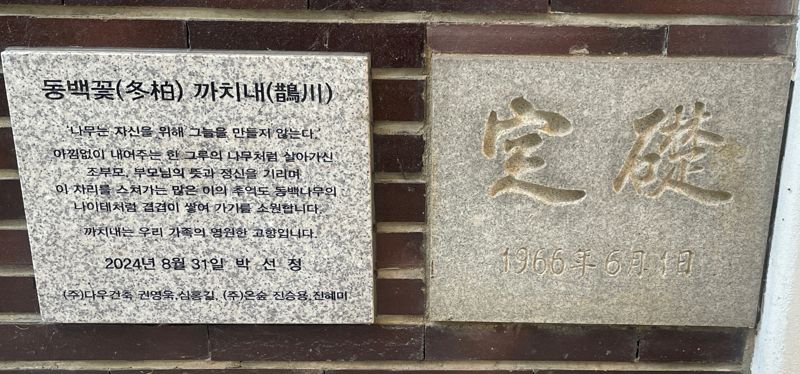
The homeowner called this house 'Dongbaek Flower Kkachinae. ' 'A tree does not cast shade for itself.
' In honor of my grandparents and parents, who lived generously like a tree that gives without reservation, I hope the memories of those who pass through this place will accumulate like the rings of a camellia tree. Kkachinae will always be our family’s eternal home.
August 31, 2024. The story of the space, engraved in stone by the homeowner, has now become a new experience for Starbucks customers.
This is the story of Starbucks Jangchung Lounge R. The building designed by Na Sang-jin, known for the aesthetics of horizontality, is now a Starbucks store.
The entrance of Starbucks Jangchung Lounge R. /Photo = Starbucks Korea During the Ottoman era, it was called the 'School of Sages.
The entrance of Starbucks Jangchung Lounge R. /Photo = Starbucks Korea During the Ottoman era, it was called the 'School of Sages.
The grandfather mentioned by the owner of Starbucks Jangchung Lounge R is the late Park Se-jung, founder of DAESUN Flour Mills. The current owner is Sunjeong Park, Park Se-jung’s grandchild and the current CEO of DAESUN Flour Mills.
The entrance of Starbucks Jangchung Lounge R. /Photo = Starbucks Korea During the Ottoman era, it was called the 'School of Sages.It was the homeowner’s decision to turn the family home into a Starbucks store, hoping it would become a meaningful space for many. The name 'Na Sang-jin' was also a factor.According to the Encyclopedia of Korean Culture, Na Sang-jin is recorded as an architect who, after liberation, built the Saenara Motor Bupyeong Plant and the Gyeonggi Provincial Government Office. Architect Na Sang-jin /Source: April 1973 issue of Monthly Space Unfortunately, little is known about him.Of his roughly 150 buildings, many were used as secret political spaces or government facilities, and due to the circumstances of the times and security concerns, most remain unknown. Even though he served as chief design commissioner for the first large-scale project in Korean architecture, Walkerhill Hotels & Resorts, and as vice president of the Korean Institute of Architects in 1970, he never left behind writings on architectural theory or ideals.
The entrance of Starbucks Jangchung Lounge R. /Photo = Starbucks Korea During the Ottoman era, it was called the 'School of Sages.

These include 'A Study on the Works of Architect Na Sang-jin' (Yoon In-seok and Lee Haeng-cheol, presented at the 2001 Autumn Conference of the Architectural Institute of Korea) and 'A Note on Na Sang-jin and His Architectural Activities' (Kim Jeong-dong, published in the 2010 Spring Conference Proceedings of the Korean Architectural History Society). Born in Gimje, Jeollabuk-do, Na Sang-jin graduated from Jeonju Technical School’s architecture department in 1940, gained experience at a Japanese construction company until Korea’s liberation, and lived through the Korean War.
In 1952, he opened a design office in Myeong-dong and built the Grand Hotel near Namdaemun in 1957, finally establishing his own style. With the May 16 military coup in 1961, he rapidly grew by designing large-scale projects such as the Saenara Motor Bupyeong Plant (1961) and the Gyeonggi Provincial Government Office (1963).
The papers describe Na Sang-jin as an architect who sought to express architecture in Korea with his own sensibility, rather than uncritically accepting Western modernism that swept in after the Korean War. He was known for the natural integration of building and site, active adoption of new technologies, and use of familiar finishing materials.
Above all, the most concise word to describe Na Sang-jin’s architecture is horizontality. The ribbon windows of Huam-dong Catholic Church, the grid windows of the Grand Hotel and Daegu Fatima Hospital—all emphasize horizontality.
Kkummaru at Children’s Grand Park, selected as one of '100 Years of Korean Architecture,' is another example. A place where the taste of coffee meets horizontality.
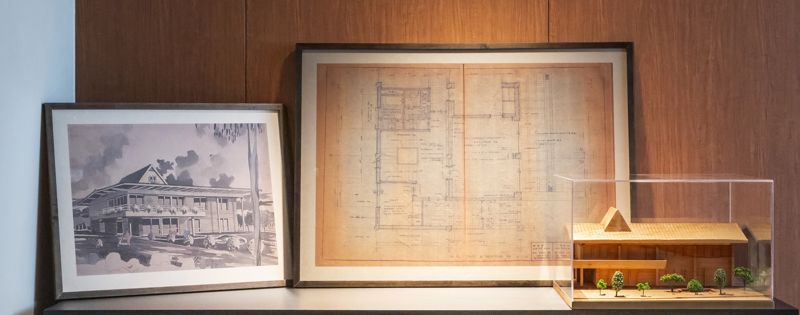
and thus, Starbucks The exterior of Starbucks Jangchung Lounge R. /Photo = Starbucks Korea Both the main gate and the building of Starbucks Jangchung Lounge R showcase Na Sang-jin’s horizontal perspective.Another feature is the introduction of a rigid-frame structure using reinforced concrete columns, at a time when brick or cement block masonry was the norm. This structure, which uses columns and beams as a framework to support loads, is more commonly found in buildings than in houses.At Starbucks Jangchung Lounge R, visitors can see the original 1963 blueprints, house sketches drawn by Na Sang-jin himself, and scale models. Original blueprints from 1963, house sketches by Na Sang-jin, and models are on display at Starbucks Jangchung Lounge R./Photo = Starbucks Korea After receiving the proposal from the building owner, Starbucks considered how to utilize this meaningful space. The answer was to create a special store.As of the third quarter of 2025, there are 2,076 Starbucks stores in Korea. In January, the number surpassed 2,000, overtaking Japan and making Korea the country with the third most Starbucks stores after the United States and China.
Of these, only 14 are special stores nationwide. Shin Yong-ah, head of store strategy at Starbucks Korea, explained, 'Ordinary stores generate sufficient profits and serve as spaces for drinking coffee.
The entrance of Starbucks Jangchung Lounge R. /Photo = Starbucks Korea During the Ottoman era, it was called the 'School of Sages.
The core of special stores is the European coffeehouse. We wanted to create spaces that offer experiences beyond just drinking coffee, and we invested boldly.
The entrance of Starbucks Jangchung Lounge R. /Photo = Starbucks Korea During the Ottoman era, it was called the 'School of Sages.The entrance of Starbucks Jangchung Lounge R. /Photo = Starbucks Korea During the Ottoman era, it was called the 'School of Sages.

Not only was it chosen as a filming location, but customer reactions were enthusiastic across all age groups. The younger generation, in particular, responded that it felt 'new.
The entrance of Starbucks Jangchung Lounge R. /Photo = Starbucks Korea During the Ottoman era, it was called the 'School of Sages.
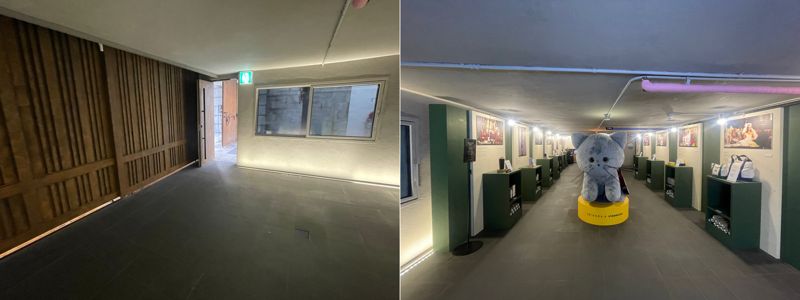
' The garage is used as a pop-up store space instead of for coffee. When there is no pop-up, visitors can view artwork painted on the walls.
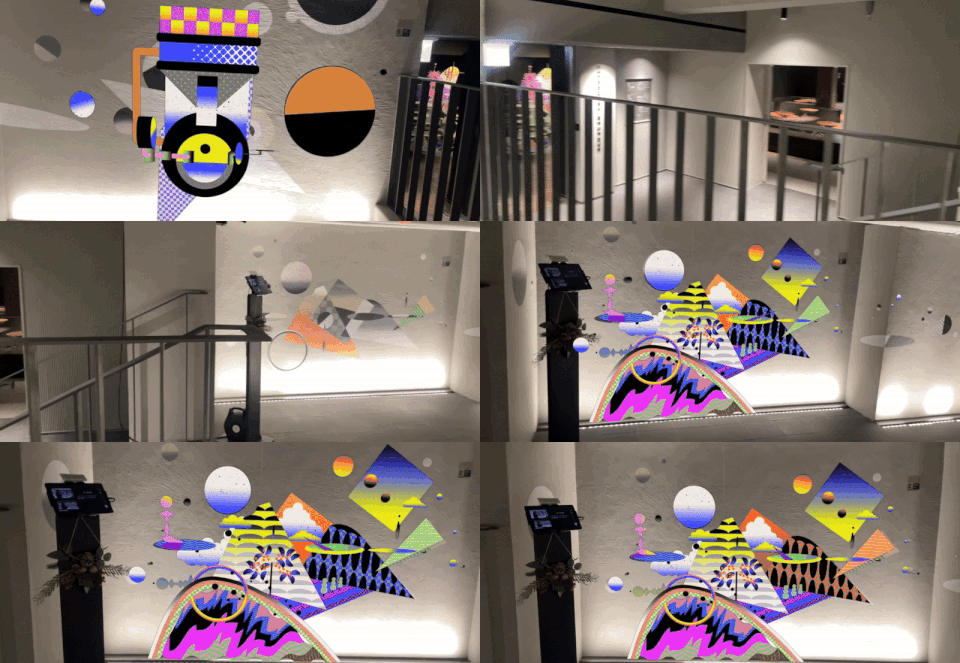
/Photo = Seo Yoon-kyung The garage is used as a pop-up store space instead of for coffee. When there is no pop-up, visitors can experience the artwork on the wall through AR.
/Video = Seo Yoon-kyung Looking closer, the garage is being utilized as a unique space. Shin explained, 'Since it is registered as a garage, coffee cannot be made or served there.
The entrance of Starbucks Jangchung Lounge R. /Photo = Starbucks Korea During the Ottoman era, it was called the 'School of Sages.

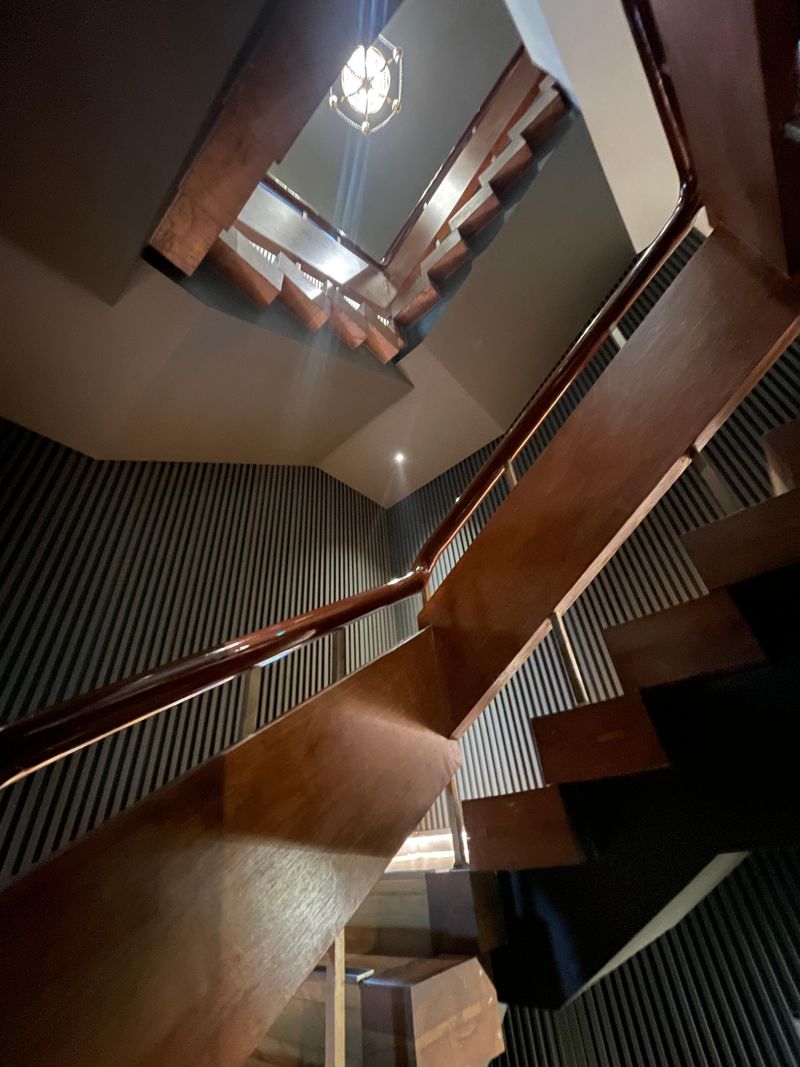
The garage has also hosted exhibitions in collaboration with car brands. When there is no pop-up, the space becomes an exhibition area where visitors can experience the wall art through augmented reality.Climbing the stairs preserved at the owner’s request leads to the coffee-drinking area. Even the stair handrail reflects Starbucks’ attention to detail.At the owner’s request, the stairs and handrail were left intact. For safety, however, an invisible board was added to increase the height.
At the top of the stairs, the original chandelier from the time of construction remains. /Photo = Seo Yoon-kyung Shin explained, 'The original height of this stair handrail was 750–800 mm.
The entrance of Starbucks Jangchung Lounge R. /Photo = Starbucks Korea During the Ottoman era, it was called the 'School of Sages.
The entrance of Starbucks Jangchung Lounge R. /Photo = Starbucks Korea During the Ottoman era, it was called the 'School of Sages.
' The house’s unique characteristics were also preserved. Although removing the walls separating rooms, the living room, and the study would have allowed for more guests, they chose to keep the original layout.
Concerns that the divided spaces would feel cramped proved unfounded.
The large windows on the first floor open to the garden, while the second floor connects to the veranda, creating a sense of openness.
The exposed rafters revealed by removing the ceiling were covered with gypsum board to increase the ceiling height.
The entrance of Starbucks Jangchung Lounge R. /Photo = Starbucks Korea During the Ottoman era, it was called the 'School of Sages.
/Photo = Seo Yoon-kyung Each room was given its own concept.
For example, the second-floor reading room was designed to feel like a library or music space, with dimmed lighting and higher speaker volume.A Starbucks representative said, 'The reading room is equipped with higher-end speakers, delivering about 25% more output than regular stores.The rich sound enhances the room’s concept.
The entrance of Starbucks Jangchung Lounge R. /Photo = Starbucks Korea During the Ottoman era, it was called the 'School of Sages.

For instance, the room with the fireplace, where families gather, features a large sofa.
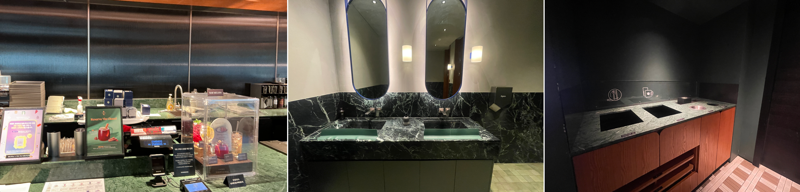
To evoke a vintage feel, green marble similar to the fireplace wall was used for the bar counter, restroom sinks, and condiment bar surfaces.
/Photo = Seo Yoon-kyung Attention was paid to interior materials as well.
For example, the countertop of the coffee bar, the condiment bar where used cups are returned, and the restroom sinks all use materials and colors similar to the green marble wall of the fireplace, as requested by the owner.
The entrance of Starbucks Jangchung Lounge R. /Photo = Starbucks Korea During the Ottoman era, it was called the 'School of Sages.
Why did Starbucks go to such lengths to preserve Na Sang-jin’s house? Shin emphasized, 'Architecture itself becomes history.
For example, the countertop of the coffee bar, the condiment bar where used cups are returned, and the restroom sinks all use materials and colors similar to the green marble wall of the fireplace, as requested by the owner.We wanted to preserve such meaningful buildings so that everyone could experience them.For example, the countertop of the coffee bar, the condiment bar where used cups are returned, and the restroom sinks all use materials and colors similar to the green marble wall of the fireplace, as requested by the owner.
' A 'pro tip' to suggest Near Starbucks Jangchung Lounge R are Kim Swoo-geun’s Kyungdong Presbyterian Church, Kim Chung-up’s Dr.
The entrance of Starbucks Jangchung Lounge R. /Photo = Starbucks Korea During the Ottoman era, it was called the 'School of Sages.
Seo's Women's Clinic, and Zaha Hadid’s Dongdaemun Design Plaza (DDP).
The entrance of Starbucks Jangchung Lounge R. /Photo = Starbucks Korea During the Ottoman era, it was called the 'School of Sages.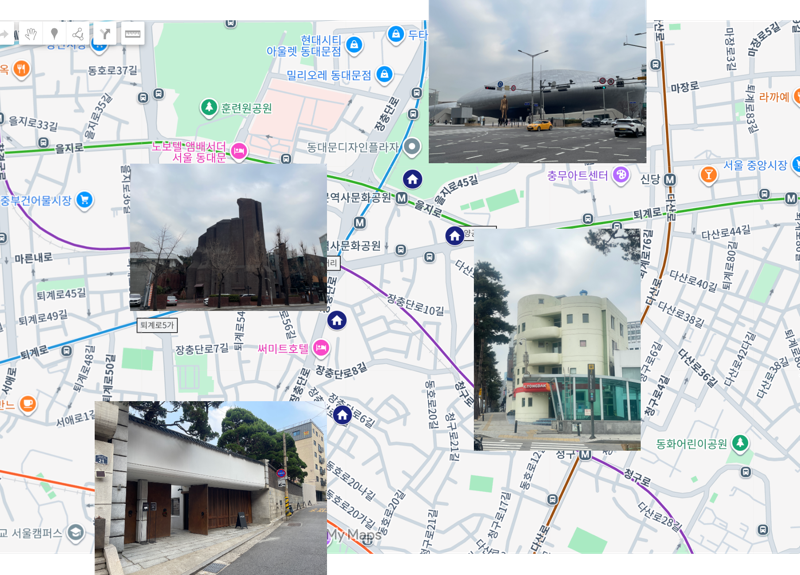
Within a 500-meter radius, you can find Kyungdong Presbyterian Church by Kim Swoo-geun, designed to resemble praying hands with red bricks; Dr.
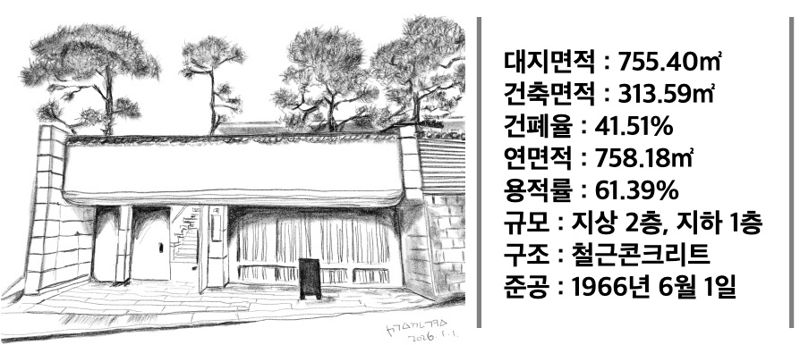
Seo's Women's Clinic (now the Arium headquarters) by Kim Chung-up, inspired by male and female reproductive organs to suit its function as a maternity clinic; and Dongdaemun Design Plaza (DDP) by Pritzker Architecture Prize laureate Zaha Hadid.Why not embark on an architecture tour with a cup of coffee? Next up: Cafés transformed from the works of Kim Chung-up and Kim Swoo-geun.A place that has undergone such a transformation.Overview of Jangchung Lounge R.The entrance of Starbucks Jangchung Lounge R. /Photo = Starbucks Korea During the Ottoman era, it was called the 'School of Sages.
y27k@fnnews.com Seo Yoon-kyung Reporter