[Editorial] The First Year of Major Transformation and Leap Forward: Fundamental Structural Reform Must Come First
- Input
- 2026-01-01 19:12:12
- Updated
- 2026-01-01 19:12:12
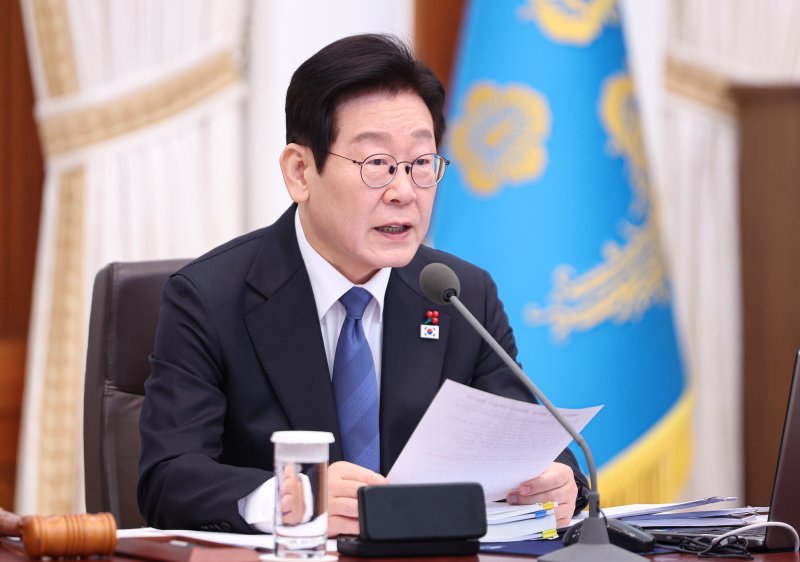
Last year was a difficult time for everyone amid political turmoil. The economic situation was no different. The Korea Composite Stock Price Index (KOSPI) broke through the 4,000 mark, and exports surpassed $700 billion for the first time in history. However, structural vulnerabilities were also laid bare. In the new year, we hope that, as President Lee stated, bold leaps and growth can be achieved in both politics and the economy. There is a strong desire for the President’s determination to be translated into vivid policies that are effectively implemented on the ground.
President Lee’s remark that we are only at the starting line signals a renewed commitment to drive progress. All government ministries must critically review the foundations for growth that will underpin this transformation and leap forward, and devote their full efforts to bold reform and innovation.
Regarding the methodology for this leap forward, President Lee called for a complete overhaul of the growth paradigm. He urged a major shift away from familiar paths and presented five guiding principles. These included moving from Greater Seoul area-centered growth to growth led by the provinces, and from large enterprise-centered growth to a model where everyone is at the center. He also noted that the collective achievements made through the efforts of the entire nation should benefit not only large enterprises, but also small and medium-sized enterprises (SMEs), venture companies, and ultimately reach the pockets of all citizens.
It will be difficult for our precarious, low-growth economy to overcome its challenges with the existing growth framework. In this respect, a major shift in the economic paradigm is the path we must take. However, only through painful self-help efforts and structural improvements by the government, businesses, and all sectors of society can we lay the groundwork for growth and expand the economic pie. This transformation must not devolve into a populist approach of simply dividing up the existing pie.
Growth led by the provinces and a model where everyone is at the center are not problematic in themselves. It is regrettable that people and wealth continue to concentrate in Seoul and the Greater Seoul area, while the provinces face the risk of extinction. As the President mentioned, the farther a region is from the Greater Seoul area, the more robust and bold the support measures should be. However, it would be problematic to pursue balanced development by indiscriminately relocating cutting-edge factories from the Greater Seoul area to the provinces. If such misguided ideas persist, they will only be criticized as election ploys.
Excessive checks on large enterprises can also have unintended negative consequences. President Lee acknowledged, “It is undeniable that the benefits of tariff negotiations have mainly gone to large enterprises,” citing the defense industry and nuclear power plant (NPP) exports, which amount to tens of trillions of won annually. When defense industry and NPP exports succeed, numerous SMEs in related fields benefit as well. Last year’s $700 billion export milestone was driven by semiconductors and automobiles—a success achieved through collaboration between large enterprises and small parts suppliers.
To break free from the tunnel of low growth and make this the first year of a great leap forward, urgent structural reforms are needed to overcome high costs and low productivity. Reforms are overdue in various fields, including public finance, the public sector, pension, welfare, and education. Labor regulation, which foreign companies cite as the biggest obstacle to investment, must also be addressed. The fundamental structure of the economy must be changed.