Artist Who Infamously Botched 100-Year-Old Jesus Fresco into 'Monkey' Dies at 94
- Input
- 2025-12-31 14:00:43
- Updated
- 2025-12-31 14:00:43
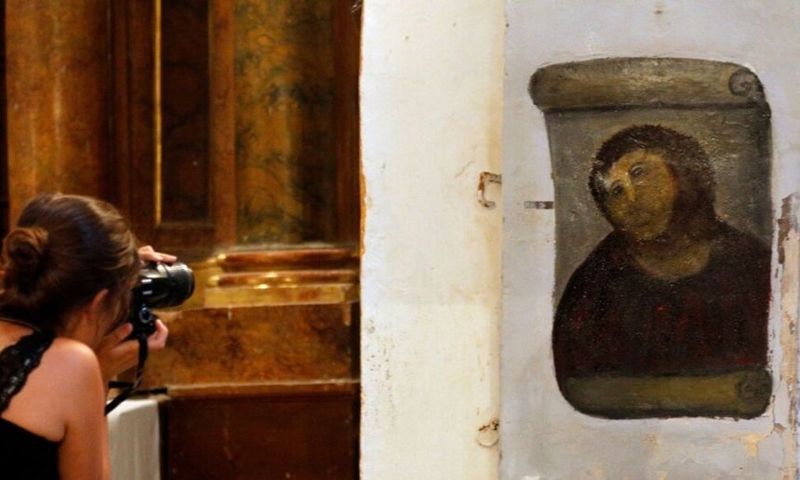
[Financial News] The Spanish amateur artist who became world-famous in 2012 for restoring a church fresco and turning the image of Jesus into something resembling a monkey has died at the age of 94.
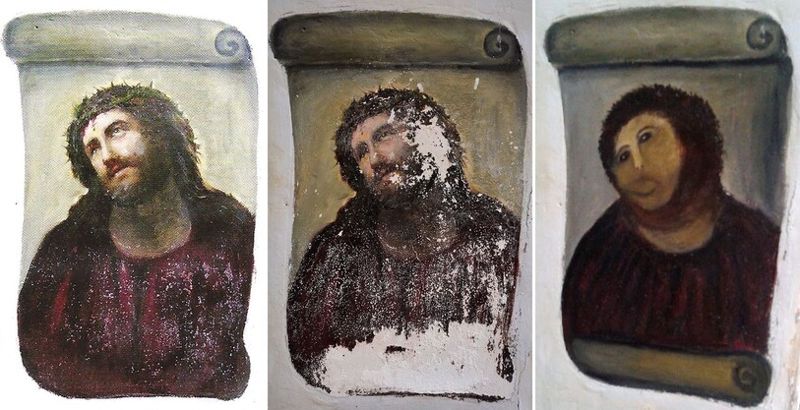
Cecilia Giménez, who passed away on the 30th (local time) at a nursing home in the Borja region of northeastern Spain, gained international fame 13 years ago after she was tasked with restoring the 19th-century fresco 'Ecce Homo' at the Sanctuary of Mercy Church in Borja.
At the time, the church decided to entrust the restoration of the century-old Jesus fresco not to a professional, but to Giménez, a devout elderly parishioner.
However, while restoring the fresco of Jesus wearing a crown of thorns, Cecilia ended up painting an image that looked nothing like the original and instead resembled a monkey.
The depiction of Jesus with the crown of thorns was barely recognizable, and global media outlets such as the British Broadcasting Corporation (BBC) and Cable News Network (CNN) described it as 'the worst restoration in history,' a 'botched job,' and 'Jesus restored as a monkey.'
Online, the Latin-titled fresco 'Ecce Homo,' meaning 'Behold the Man,' was mockingly renamed 'Behold the Monkey.'
The Guardian reported that, amid the harsh criticism, Giménez lost as much as 17 kilograms.
Ironically, the poorly executed restoration became an internet sensation, turning the church into a tourist hotspot. According to the BBC, Borja, which previously saw about 5,000 visitors annually, welcomed 46,000 tourists in just four months.
The town generated 600,000 euros in revenue, which was allocated to local charities. Even now, the site continues to attract numerous visitors. Ryanair even scheduled special flights to Zaragoza, the nearest airport to the church.
The church began charging admission to tourists coming to see the fresco, and Giménez signed a contract to share royalties from merchandise such as T-shirts and mugs featuring the image. She later became the town’s tourism director and appeared as a special guest on TV programs, enjoying newfound popularity.
In a 2022 reassessment, the botched fresco was deemed 'restorable.' However, due to its global fame, the painting remains unchanged.
[email protected] Moon Young-jin Reporter