Man in His 60s Acquitted of National Security Act Violation for 'Kim Jong Il Praise Letter and Funeral Wreath'
- Input
- 2025-12-31 09:36:45
- Updated
- 2025-12-31 09:36:45
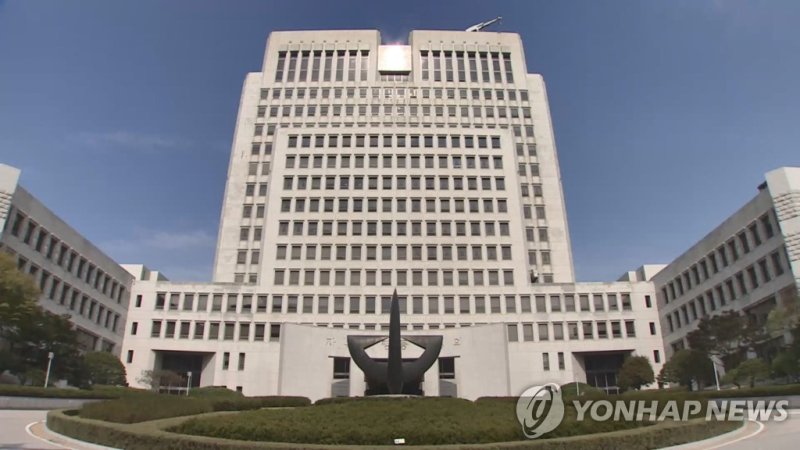
[Financial News] An inter-Korean exchange businessman who was indicted for sending a letter praising the late Kim Jong Il, former Chairman of North Korea’s National Defense Commission, and delivering a funeral wreath to North Korea, has been acquitted of violating the National Security Act by the Supreme Court of Korea.
According to the legal community on the 31st, the Supreme Court of Korea’s second division (Presiding Justice Eom Sang-pil) finalized the previous ruling on the 4th, which imposed a fine of 10 million won on a man in his 60s, identified as A, who was charged with violating the National Security Act (praise and encouragement) and the Inter-Korean Exchange and Cooperation Act. However, charges of violating the National Security Act and some counts of embezzlement, which had been found guilty in the first trial, were acquitted.
A, who was active in a sports organization related to inter-Korean exchange, was accused of delivering a letter of praise to a North Korean official on the birthday of Kim Jong Il in February 2010, and sending a funeral wreath for Kim Jong Il to the Embassy of the Democratic People's Republic of Korea in Beijing in December 2011.
He was also indicted for exporting soccer shoes worth about 60 million won to North Korea in August 2015 without approval from the Ministry of Unification (MOU) (violation of the Inter-Korean Exchange and Cooperation Act), transferring approximately $300,000 (about 350 million won) in subsidies received from Gyeonggi Province and elsewhere to China without reporting between February and August of the same year (violation of the Foreign Exchange Transactions Act), and embezzling 67 million won in subsidies between 2013 and 2015.
The main issue was whether the letter and funeral wreath sent by A constituted 'praise and encouragement' under the National Security Act.
The first trial found that A’s actions amounted to praising and encouraging an anti-state organization, sentencing him to one year and six months in prison and disqualifying him from certain rights for two years. The court stated, "He praised and encouraged the activities of an anti-state organization, knowing that it could endanger the existence and security of the state or the liberal democratic order," and added, "There is also a substantial risk involved."
The court particularly cited the fact that the letter directly mentioned Kim Jong Il and included content expressing a willingness to work for the 'motherland North Korea,' as well as A’s position, which allowed him to exert political influence through consulting and other areas with North Korean counterparts.
However, the appellate court acquitted A of violating the National Security Act and some embezzlement charges. The appellate judges determined, "It is difficult to see that these actions clearly posed a threat to the existence or security of the state or the liberal democratic order." They interpreted that A was conducting economic cooperation projects such as establishing a factory in Pyongyang at the time, and that the letter and wreath were sent as a matter of courtesy to facilitate smooth exchanges.
The court also noted that the honorifics such as 'General' and 'Great Leader' in the letter were "extremely limited in use," and while the expressions may have been somewhat excessive, they were merely formal rhetoric that could occur during inter-Korean exchanges and did not pose a risk to the existence or security of the state or the liberal democratic order. The funeral wreath was also deemed to be a simple expression of condolence ahead of a soccer tournament being held at the time.
The Supreme Court of Korea found no misinterpretation of the law in the appellate court’s decision, dismissed the appeal, and upheld the original ruling.
[email protected] Choi Eun-sol Reporter