[Editorial] The Notion of Relocating the Semiconductor Industrial Complex Could Undermine the $700 Billion Export Milestone
- Input
- 2025-12-30 19:16:08
- Updated
- 2025-12-30 19:16:08
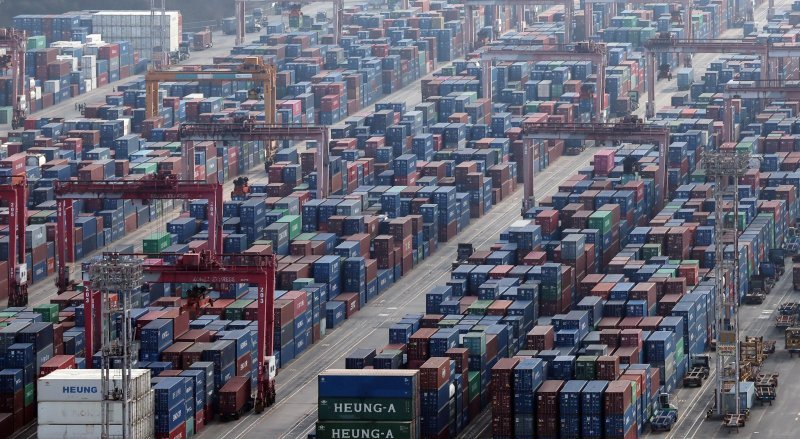
This is a rare piece of good news for the Korean economy, which has been trapped in a period of low growth. The achievement is particularly significant given that it was accomplished in a year when U.S.-led tariff shocks hit the world and global protectionism was stronger than ever. The core pillar supporting this $700 billion export record was, once again, semiconductors. Driven by an unprecedented surge in demand amid the global Artificial intelligence (AI) transformation, Korea’s semiconductor sector broke all previous records.
The so-called semiconductor supercycle is expected to continue into next year. As the world’s leading memory semiconductor producer, Korea cannot afford to miss this golden opportunity. To capitalize on this momentum, it is essential not only to maintain a technological edge over competitors but also to firmly secure our leadership position. China is aggressively pursuing technological advancement and is now threatening Korea’s semiconductor industry. Japan, aiming to reclaim its former semiconductor glory, is also a formidable competitor, while Taiwan’s determination to defend its foundry empire remains strong.
To avoid falling behind in the semiconductor power race, the government must provide robust support for both human and material infrastructure. Other countries are doing just that. By comparison, Korea’s efforts are lacking. Tax incentives are insufficient, and labor market flexibility is also behind. Among these factors, a stable power supply is a fundamental requirement for supporting the AI industry. Electricity must be supplied reliably at all times, not intermittently depending on climate or weather. The Yongin Semiconductor Cluster was designed with these considerations in mind. Companies have already invested astronomical sums in the Yongin Industrial Complex.
SK Hynix aims to begin operations at its Yongin semiconductor plant in 2027, while Samsung is targeting 2030. Given that the initial outline emerged during the Moon Jae-in administration in 2017, the timeline is already considerably delayed. It is only natural that the project should now proceed at full speed. Local governments and the central government must swiftly resolve remaining issues such as land compensation and the supply of power and water.
In this urgent situation, it is astonishing that the minister in charge of the project has suddenly raised the idea of relocating the Yongin Industrial Complex to another region. Kim Sung-hwan, Minister of Climate, Energy and Environment, remarked, "We should consider moving to a region with more abundant electricity, even at this stage." Although he later distanced himself from the comment by saying it was not the official government position, the statement was nothing short of absurd and irresponsible.
Unstable renewable energy sources are not suitable for supplying power to the semiconductor industry. Furthermore, semiconductors require a highly skilled workforce and an organically connected ecosystem of partner companies to maximize production efficiency. The out-of-the-blue suggestion to relocate the Yongin Industrial Complex is tantamount to undermining the hard-won achievements of Korea’s semiconductor export sector.