From Yoon's Impeachment to Prosecution and Judicial Reform... The Tumultuous Legal Landscape of 2025
- Input
- 2025-12-30 15:41:48
- Updated
- 2025-12-30 15:41:48
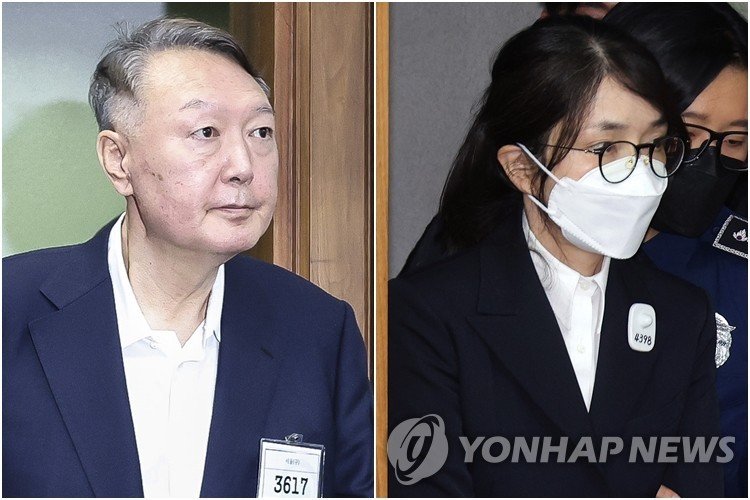
[Financial News] The year 2025, marked by the chaos of former President Yoon Suk Yeol's December 3 Martial Law, had a profound impact on the legal community. The focus was on the impeachment trial and the cancellation of Yoon's detention, while the insurrection leader trial also proceeded. When Yoon's impeachment was upheld, the legal sector was shaken by the remand of Lee Jae-myung, then leader of the Democratic Party of Korea (DPK). After Lee took office, three historic special prosecutor teams were launched simultaneously, successfully bringing former President Yoon and his wife Kim Keon Hee to court. As reforms such as the abolition of the Prosecutors' Office and judicial reform became visible, aftershocks are expected to continue into 2026.
■ From Yoon’s Detention to Release, Dismissal, and Lee’s Remand... A First Half Marked by Martial Law
After the first failed attempt to detain Yoon Suk Yeol, the Corruption Investigation Office for High-ranking Officials (CIO), police, and the Special Investigation Headquarters received a reissued arrest warrant from the Seoul Western District Court on January 7. At the time, there was controversy in the legal community over obtaining the warrant from the Seoul Western District Court instead of the Seoul Central District Court. Yoon's legal team filed for a review of the detention at the Seoul Central District Court, but it was dismissed. Subsequently, the Special Investigation Headquarters succeeded in arresting Yoon, and on January 19, a detention warrant was issued, making him the first sitting president in constitutional history to be detained. On January 26, prosecutors indicted Yoon as the leader of the insurrection.
However, on March 7, the Seoul Central District Court granted the cancellation of Yoon's detention. The Criminal Agreement Division 25, presided over by Judge Jee Kui-yeon, calculated the detention period in hours rather than days, sparking debate in the legal community. This approach differed from the previous practice of counting only days. Prosecutors chose not to file an immediate appeal, and Yoon was released the next day.
On April 4, Yoon Suk Yeol was officially dismissed from the presidency of the Republic of Korea. Contrary to expectations, the impeachment trial took nearly five months and ultimately resulted in Yoon's removal. The Constitutional Court of Korea ruled that Yoon had violated the Constitution by betraying the public trust. Yoon became the second president in Korean history to be impeached, following Park Geun-hye.
During the 21st presidential election, the Supreme Court of Korea remanded the case of Lee Jae-myung, then the DPK candidate, for a guilty verdict on charges of violating the Public Official Election Act. The timing of the remand during the election period sparked debate over Article 84 of the Constitution, which grants presidential immunity from prosecution. There was controversy over whether 'prosecution' referred only to indictment or to the entire criminal trial process. Additionally, Supreme Court Chief Justice Cho Hee-dae was accused of attempting to intervene in political matters at the court level, further fueling debate.
■ Unprecedented Launch of Three Special Prosecutor Teams... Ongoing Ripples from Prosecution and Judicial Reform
After the inauguration of the Lee Jae-myung administration, three special prosecutor teams were launched for the first time in history. The Special Prosecutor's Office for Insurrection, led by Cho Eun-seok, investigated the full story of Yoon's December 3 Martial Law. The Kim Keon Hee Special Prosecutor Team, led by Min Joong-ki, probed various allegations surrounding Kim Keon Hee. The Chae Sang-byeong Special Prosecutor Team, led by Lee Myung-hyun, sought to uncover the truth behind the Chae Sang-byeong incident. Despite various controversies, the three teams completed their investigations in 150 to 180 days and succeeded in bringing Yoon and Kim to court. However, a second round of special prosecutors is expected, as signaled by the ruling party, so the special prosecutor era is likely to continue for the time being.
The Lee Jae-myung administration officially declared the abolition of the Prosecutors' Office after taking office. Led by the ruling Democratic Party of Korea (DPK), a government reorganization bill establishing the Serious Crime Investigation Agency and the Public Prosecution Office passed the National Assembly of the Republic of Korea in September. As a result, the Prosecutors' Office will disappear from history in September 2026, with investigations handled by the Serious Crime Investigation Agency and prosecutions by the Public Prosecution Office. The ruling party and government continue to negotiate over supplementary investigation rights and other issues. With 40 prosecutors seconded to the Kim Keon Hee Special Prosecutor Team and current prosecutors expressing opposition, attention is focused on whether prosecution reform will proceed as planned.
Judicial reform is also ongoing. Key measures include the introduction of the so-called 'crime of judicial distortion,' which imposes up to 10 years in prison for judges or prosecutors who intentionally misapply the law, the expansion of Supreme Court justices, and the abolition of the National Court Administration. In addition, the government is pushing ahead with the establishment of an insurrection-specialized court, despite constitutional concerns, so aftershocks are expected to persist into 2026.
[email protected] Jung Kyung-soo Reporter