Why You Shouldn't Put Off Doing the Dishes Until Tomorrow Morning... Warning Issued About 'This' Crawling With Germs [Health Talk]
- Input
- 2025-12-30 06:22:53
- Updated
- 2025-12-30 06:22:53
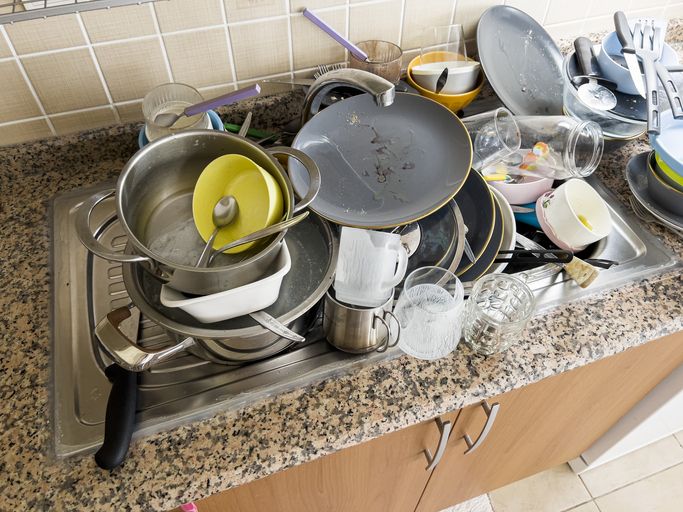
[Financial News] There is a warning that leaving dirty dishes soaking in water after a meal, instead of washing them right away, can lead to a rapid increase in dangerous bacteria that cause food poisoning.
According to the Daily Mail on the 30th, the habit of postponing dishwashing and leaving dishes soaking in water can increase the risk of infectious diseases.
Microbiologist Jason Tetro told the media, "The kitchen sink is a paradise for microorganisms and bacteria such as E. coli, foodborne pathogens, and skin bacteria." He explained, "Especially when dishes are left soaking in warm water, it creates a hot and humid environment ideal for harmful microorganisms to thrive, increasing the risk of infection."
In fact, a research team from Cardiff Metropolitan University found that the highest concentration of bacteria was detected in kitchen sinks after surveying 46 households across the UK.
The researchers analyzed, "Many people wash raw chicken before cooking, which leads to more bacteria in the sink." Such actions are known to spread bacteria throughout the kitchen.
The survey found that the most common bacteria detected were E. coli, Enterobacter cloacae, and Klebsiella pneumoniae. These bacteria can be extremely harmful to health, causing symptoms such as fever, vomiting, and diarrhea.
Even stacking dirty dishes increases the risk of bacterial infection
Brian Labus, a public health expert at the University of Nevada, pointed out that simply stacking dirty dishes next to the sink is also unsafe.
He stated, "Bacteria grow well in warm and humid environments, which is exactly what a sink full of dirty dishes provides. If food scraps are left at room temperature, insects may be attracted and eventually spread bacteria throughout the kitchen."
He added, "While bacteria may not grow in dry environments, they can survive and multiply later."
To reduce the risk of food poisoning or other harmful bacterial infections, it is best to wash used dishes as soon as possible, preferably on the same day.
Additionally, sponges or scrubbers used for dishwashing should be properly dried and replaced regularly. Since they are repeatedly exposed to water and food residues, even small amounts of bacteria can multiply quickly. It is recommended to replace sponges every one to two weeks and, before replacing, to disinfect them with bleach.
Be cautious about washing raw chicken before cooking
There are also warnings that washing raw chicken can spread bacteria throughout the kitchen. The surface of raw chicken can harbor various bacteria, such as Salmonella, which cause food poisoning.
When raw chicken is washed with water, foodborne bacteria like Campylobacter and Salmonella can be carried by water droplets, spreading up to one meter onto sinks, cutting boards, and vegetables. When washing raw chicken, take care to minimize splashing and clean the surrounding area with kitchen detergent. Scalding the chicken with boiling water before washing is also recommended.
The Ministry of Food and Drug Safety cautioned, "Water splashed during the washing of raw chicken can contaminate vegetables, utensils, and other items, so extra care is needed." They also advised, "After handling raw chicken, always wash your hands, and when cooking, ensure the meat is thoroughly cooked to an internal temperature of 75°C."
moon@fnnews.com Moon Young-jin Reporter