Editorial: Lee Hye-hoon's 'Gray Rhino' Remark—No Partisan Lines in Reform
- Input
- 2025-12-29 18:43:58
- Updated
- 2025-12-29 18:43:58
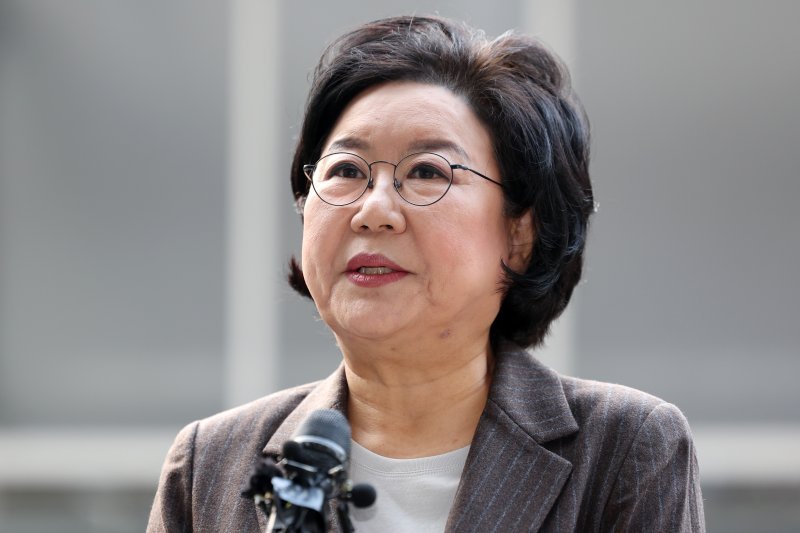
Lee Hye-hoon previously served as a research fellow at the Korea Development Institute (KDI) and was recruited into the Grand National Party (GNP) by then-presidential candidate Lee Hoi-chang ahead of the 2002 election. She was elected three times in Seocho District Gap, Seoul, a conservative stronghold, and participated in Kim Moon-soo’s presidential campaign. She also served as the People Power Party’s district chair for Jung–Seongdong B (Seoul). In 2021, she criticized then-Gyeonggi Governor Lee Jae Myung’s advocacy for basic income, and last year, she called the Democratic Party of Korea (DPK)’s proposal to distribute 250,000 won to all citizens a prime example of populism.
After Lee accepted the ministerial nomination, the People Power Party condemned the move as the 'worst act of betrayal' and decided to expel her in an emergency Supreme Council meeting. Conservatives accused her of betrayal and defection, while some in the ruling bloc questioned the appropriateness of appointing a politician who once supported martial law. Sharp reactions have emerged, reflecting calculations of political gain and loss.
However, it is not desirable to approach the control tower of the national budget from an ideological perspective. The budget is not the property of any political camp, but a public tool for designing the nation’s sustainability. This appointment could serve as a test of pragmatism and unity amid an extremely polarized political landscape. Criticism for its own sake benefits neither side.
On the 29th, Lee Hye-hoon described the Korean economy as facing a 'Gray Rhino' scenario—a risk long warned about but left unaddressed, now on the verge of crisis. She pointed to five structural crises: demographic decline, climate crisis, severe polarization, dramatic industrial and technological upheaval, and the disappearance of local communities. None of these can be resolved with short-term fixes.
At this point, the role of the budget authority becomes even more critical. The national budget is not just about allocating annual project funds. It is the most powerful tool for clarifying policy priorities and driving mid- to long-term structural reform. Lee’s references to the 'Gray Rhino' and 'structural crisis' highlight the essential function of the budget.
The real issue is fiscal capacity. Although Lee avoided giving a direct answer regarding the current administration’s expansionary fiscal stance, the nation’s fiscal situation is far from easy. Next year’s budget will increase by a record 54.6 trillion won (8.1%), pushing national debt above 1,400 trillion won and, for the first time, the debt-to-GDP ratio will exceed 50%. Warning lights are already flashing for national finances.
While expansionary fiscal policy can stimulate the economy and boost consumption, its limits are clear—it ultimately burdens future generations. Unlike her previous political statements, as the head of the budget authority, Lee must weigh both fiscal sustainability and policy effectiveness. Above all, reviewing populist spending and eliminating inefficiencies in expenditure reform can no longer be delayed. We expect responsible decisions that do not ignore the 'Gray Rhino' threatening the nation’s finances.