[Editorial] Four Major Business Leaders Deliver New Year’s Messages, Emphasizing a Leading Role in Times of Transformation
- Input
- 2025-12-29 18:43:56
- Updated
- 2025-12-29 18:43:56
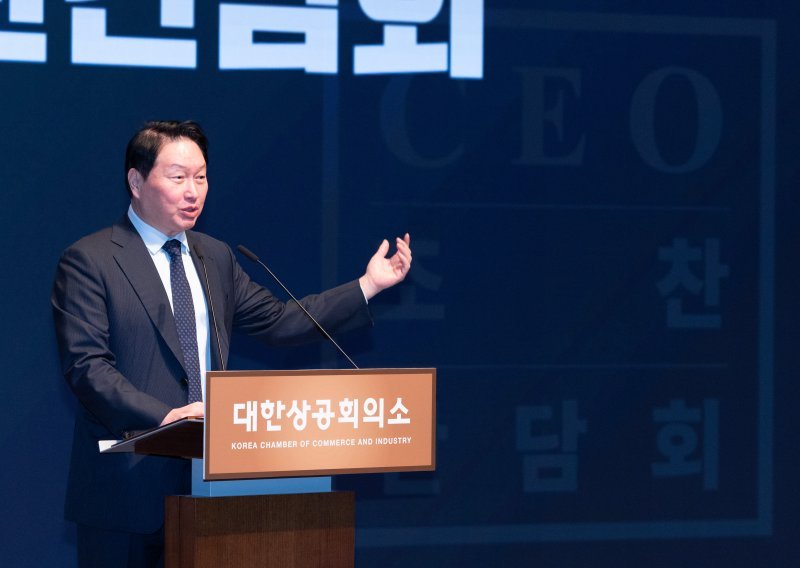
Chairman Chey stated, "Korea’s current industrial competitiveness is the result of bold challenges that have paved new paths by taking risks. I hope that, with continued policy support from the government and broad social consensus, these efforts will once again drive growth."
Sohn Kyung Shik, Chairman of the Korea Enterprises Federation (KEF), remarked, "To survive in the global competition, it is essential to foster a dynamic business environment that encourages innovation and a spirit of challenge among companies." He urged the government to address rigid labor market regulations and to push forward with bold deregulation, including reforms to corporate and inheritance taxes, to invigorate advanced sectors.
Ryu Jin, Chairman of The Federation of Korean Industries (FKI), noted, "Korea is now moving from being a follower to a nation that sets the rules." He added, "At this turning point in technological civilization, it is time to usher in the era of the New K-Industry." Jin-Shik Yun, Chairman of the Korea International Trade Association (KITA), emphasized, "By focusing on new trade, new industries, and new markets as core keywords, we will provide more multidimensional and systematic support for Korean companies expanding overseas."
The key words in the New Year’s messages from these leaders were transformation, transition, deregulation, and entrepreneurship. While these changes have already begun, the advent of the new year is expected to accelerate new paradigms—such as Artificial Intelligence (AI)—that will not only reshape the economy but also transform the nation, society, and even the world at large.
History has shown that failing to respond appropriately during such watershed moments can result in falling behind in global competition. The New Year’s messages convey an urgent call for all economic actors—government, businesses, and households—to remain vigilant and not merely follow global trends, but to lead them.
This year, the Korean economy achieved a significant milestone by reaching $700 billion in exports, ranking sixth in the world. Only five countries—the United States of America (USA), Germany, China, Japan, and the Netherlands—achieved this feat before Korea. This accomplishment is even more valuable given the challenging circumstances.
However, there is little time for celebration, as next year is expected to be equally challenging. There is no choice but to tighten belts once again in pursuit of a better future.
These business leaders are not merely spokespersons for the business community. They have expressed their sense of heavy responsibility as representatives of the Korean economy in their New Year’s addresses. Rather than dismissing their words as mere rhetoric, government officials and businesspeople alike should reflect on their significance. The main point is that, at the peak of change in the coming Year of the Blue Horse, Korea must take a more proactive approach to elevate its economy to the next level.