Unification Church Engulfs Political Sphere... Dispute Over Special Prosecutor Nomination Rights
- Input
- 2025-12-24 15:40:51
- Updated
- 2025-12-24 15:40:51
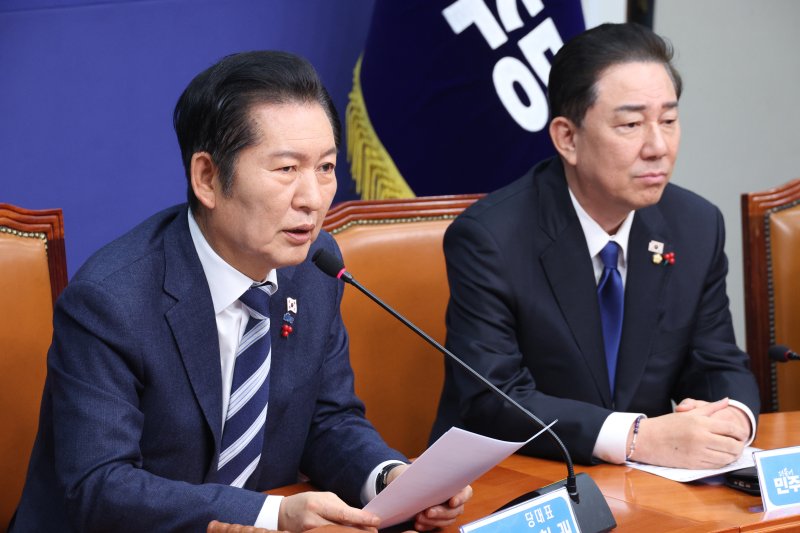
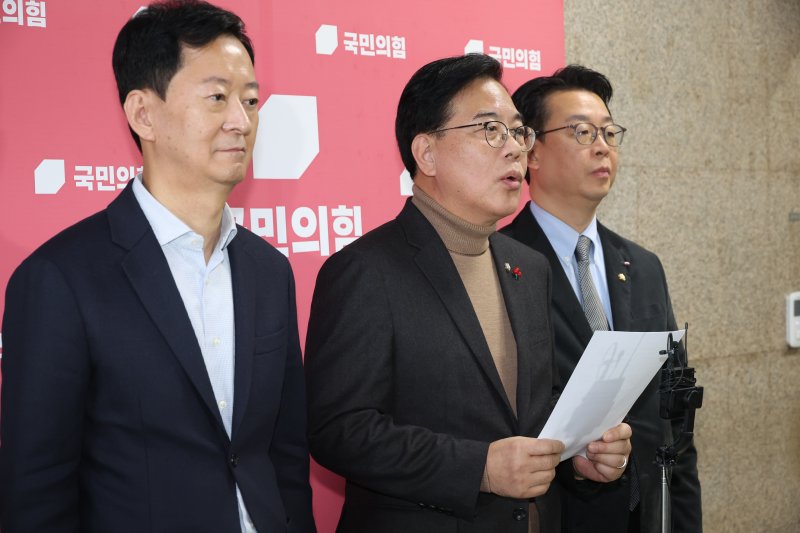
[Financial News] As the ruling and opposition parties continue their standoff over the Unification Church special prosecutor, it appears unlikely that the bill will be passed within this year. The People Power Party and Reform Party (RP), who have already submitted the special prosecutor bill, have proposed granting the nomination rights to the National Court Administration, excluding both parties under investigation. However, the Democratic Party of Korea (DPK) maintains that the judiciary should not be entrusted with nominating the special prosecutor. As a result, both sides have been criticized for employing 'stalling tactics.'
According to political sources on the 24th, while both parties agree on the need for a special prosecutor to investigate the so-called 'Unification Church Gate' allegations, they remain divided over who should have the nomination rights. The People Power Party and RP submitted their special prosecutor bill on the 23rd, and the DPK is expected to submit its own bill as early as next week.
The DPK is leveraging allegations related to the Unification Church as a means to pressure the opposition. Jung Chung-rae, DPK leader, stated at the Supreme Council meeting, "If collusion between the People Power Party and the Unification Church is confirmed as a crime, the People Power Party should be dissolved as an unconstitutional party," adding, "The DPK will immediately push for a special prosecutor on the Unification Church." He also emphasized that Na Kyung-won, a People Power Party lawmaker, should be included as a target of the investigation. He argued, "Whether or not she visited Cheon Jeong Gung should also be subject to the special prosecutor's investigation," and insisted that allegations of preferential treatment regarding Cheon Jeong Gung permits in Gapyeong County should also be investigated.
Currently, the DPK’s legal committee is reportedly drafting the special prosecutor bill. The party is considering a system where each party nominates one candidate and the President of South Korea appoints one of them, but other options are also under review. A member of the party’s floor leadership explained, "Who will be granted the nomination rights is still under discussion," adding, "The final decision will be made by the legal committee."
In contrast, the People Power Party, RP, and Rebuilding Korea Party argue that neither the DPK nor the People Power Party, both under investigation, should have the right to nominate the special prosecutor. The bill jointly submitted by the People Power Party and RP stipulates that the Chief of the National Court Administration will have the authority to recommend two special prosecutors. Lee Jun-seok, leader of the RP, noted, "The permanent special prosecutor rules unilaterally revised by the DPK in November 2024 state that 'parties under investigation are excluded from nomination rights.' Kim Yong-min also said, 'Excluding parties under investigation ensures greater fairness and neutrality.' By that logic, the DPK should forgo its nomination rights in the Unification Church special prosecutor case." The Rebuilding Korea Party insists that parties not under investigation, such as itself, should recommend candidates for special prosecutor.
However, the DPK strongly opposes granting nomination rights to the judiciary. Kim Byung-kee, floor leader, criticized, "Why should we have a special prosecutor where the judiciary monopolizes the nomination rights?" and argued, "This directly contradicts the purpose of the special prosecutor system."
With both parties unable to narrow their differences over nomination rights, it now seems impossible for the special prosecutor bill to be passed within the year. The DPK has even hinted at a second comprehensive special prosecutor bill, and with the filibuster and ongoing extreme confrontation between the parties, conflicts over the Unification Church and a second special prosecutor are expected to continue in the National Assembly of the Republic of Korea through the end of the year.
[email protected] Lee Hae-ram, Kim Hyung-gu Reporter