[Editorial] Presidential Directives Require Verification Before Execution, Even After Ministry Briefings Conclude
- Input
- 2025-12-23 18:33:19
- Updated
- 2025-12-23 18:33:19
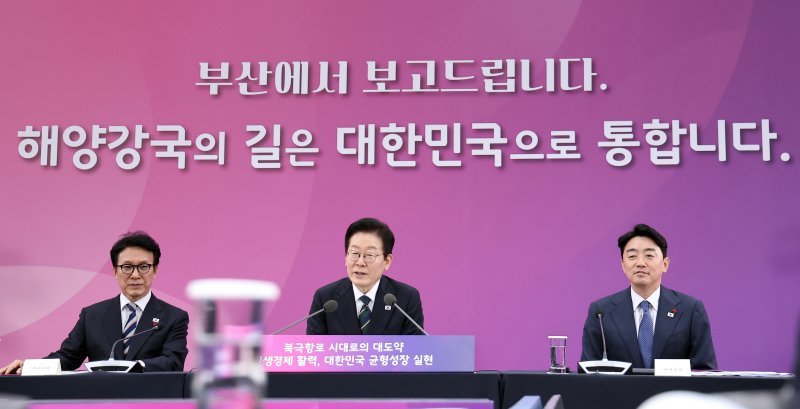
The most notable feature of this round of briefings was that the entire process was broadcast live. In the name of increasing transparency in state affairs, not only opening remarks but also discussions were aired in real time, creating a palpable sense of tension throughout the public sector. In the past, after ministry briefings, the president would typically provide broad policy direction, and relevant ministries would then coordinate details and elaborate on policies. However, this time, the president repeatedly issued public directives on specific policy details immediately following the briefings, increasing the burden on both ministries and the Office of the President of South Korea.
Nevertheless, the positive effects of live briefings are clear. For policies that have long been stalled due to political controversy or regional opposition, direct and concrete instructions from the president can help break the deadlock. In fact, President Lee Jae-myung addressed the slow progress of the Saemangeum Development Project, stating, "It is not right to continue pursuing the project based on unrealistic expectations of private investment. We must not give false hope to local residents." When the president personally manages such details, public officials may be prompted to break away from passive attitudes and demonstrate greater initiative.
However, concerns remain. If the president’s public directives are implemented without sufficient review, unforeseen side effects may arise. During the NHIS briefing, President Lee Jae-myung instructed the designation of Special Judicial Police Authority to respond to the illegal operation of medical institutions. Even though Jeong Eun-kyeong, Minister of Health and Welfare, mentioned the possibility of controversy, the public nature of the directive makes it likely to be carried out as stated. In addition, the president ordered reviews of incentives for discontinuing life-sustaining treatment and the inclusion of hair loss medication under health insurance coverage. While these are major issues that could directly affect people’s lives, they have not yet undergone feasibility studies or achieved social consensus.
Once the president’s words are made public, they become key standards for state administration. Official remarks are compiled as directives and relayed to relevant ministries, followed by checks on their implementation. In particular, statements made during the year-end briefings for all ministries carry even greater symbolic weight and significance.
Kang Hoon-sik, Chief of Staff to the President, highlighted the significance of the briefings at the Senior Party-Government Council on the 21st, stating, "Now, what matters is execution." If a livelihood bill has been thoroughly vetted, swift implementation is desirable. However, it is not feasible to push through every presidential directive without exception.
The Office of the President of South Korea must faithfully fulfill its role as a coordinator, reviewing legal validity, fiscal capacity, and social impact. Government ministries, too, should not accept presidential instructions uncritically, but instead report candidly on feasibility and potential side effects. Reckless policy implementation will only undermine trust in state governance.