Both Ruling Party and Judiciary Push Ahead with Separate Bills and Procedures for Special Panel for Insurrection Cases
- Input
- 2025-12-22 16:02:28
- Updated
- 2025-12-22 16:02:28
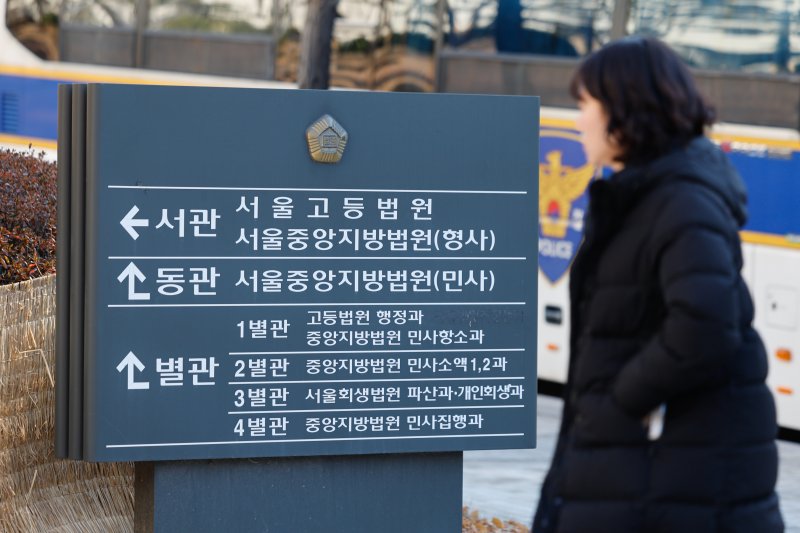
[Financial News] On the 22nd, the Democratic Party of Korea (DPK) pushed ahead with submitting a revised bill to establish a Special Panel for Insurrection Cases to the plenary session of the National Assembly of the Republic of Korea. Meanwhile, the judiciary also proceeded with follow-up procedures for its own regulation to establish a 'special panel for nationally significant cases.' The DPK and the judiciary now find themselves in direct confrontation over the Special Panel for Insurrection Cases.
According to the legal community, the Seoul High Court held a closed full judges' meeting at the Seoul Court Complex today to discuss follow-up measures based on the Supreme Court of Korea's regulation.
At this meeting, it was reported that a proposal was made to increase the number of criminal divisions by at least two in next year's regular judicial personnel appointments.
If the proposal is adopted, the Seoul High Court will organize a total of 16 criminal trial divisions in next year's personnel allocation, and 2 to 3 of these criminal appellate divisions will be randomly assigned as Special Panels for Insurrection Cases.
On the same day, when asked by reporters about his position on the plan to submit the Special Panel for Insurrection Cases bill to the plenary session, Supreme Court of Korea Chief Justice Cho Hee-dae said, "I will review it together and provide a statement."
He did not answer a question about whether the Supreme Court of Korea would revise its regulation on the establishment of special panels for insurrection and treason cases if the DPK's bill passes the National Assembly of the Republic of Korea.
On the 18th, the Supreme Court of Korea, citing concerns over the unconstitutionality of the DPK's bill, announced its own regulation to establish special panels for insurrection and treason cases, with the principle of random assignment of judges. However, the DPK is pressing ahead with the bill.
However, the revised bill submitted to the plenary session reportedly includes a plan to form the special panel judges through a statutory body within the Supreme Court of Korea, instead of a judge recommendation committee.
If the bill is passed at the plenary session as the DPK has announced, the law will take precedence, making it difficult to implement the Supreme Court of Korea's regulation as previously disclosed. There is also a possibility that follow-up procedures will be required, such as amending the regulation to align with the intent of the enacted law.
Nevertheless, the legal community believes that no matter how the process unfolds, there will be aftereffects such as trial delays and ongoing debates over constitutionality.
Cha Jin-a, a professor at Korea University Law School, stated, "After the bill passes, the courts may file a competence dispute, or the relevant panel may request a constitutional review from the Constitutional Court of Korea. Although the DPK claims to have eliminated unconstitutionality, issues remain regarding Article 101(1) of the Constitution (judicial independence), Article 27(1) (right to a fair trial), and Article 11(1) (equality before the law)." She pointed out that if the bill establishing the Special Panel for Insurrection Cases is referred to the Constitutional Court of Korea, trial delays will be inevitable.
Another legal expert remarked, "Even the revised bill is likely to divide opinions on constitutionality at the Constitutional Court of Korea," adding, "It is highly probable that the 'principle of unified jurisdiction' and the 'principle of judicial independence' enshrined in the Constitution will be infringed."
On the other hand, some criticize that distrust in the judiciary during insurrection trials has led the National Assembly of the Republic of Korea to pursue the establishment of a Special Panel for Insurrection Cases. Han Sang-hee, an emeritus professor at Konkuk University Law School, argued, "It stems from public distrust toward panels like the one presided over by Ji Gui-yeon, which released former President Yoon Suk Yeol and mishandled insurrection trials, as well as the judiciary's questionable dismissal of arrest warrants for insurrectionists."
Kim Dae-geun, a research fellow at the Korean Institute of Criminology and Justice (KICJ), also noted, "Judicial neutrality is important, but the current judiciary has already lost neutrality and public trust. Instead of hiding behind the pretext of 'independence,' it should cooperate with the National Assembly of the Republic of Korea."
[email protected] Lee Hwan-joo Reporter