U.S. 'Market Structure Bill' Delayed Until Next Year... Crypto Faces a Real Showdown [Crypto Briefing]
- Input
- 2025-12-22 13:23:42
- Updated
- 2025-12-22 13:23:42
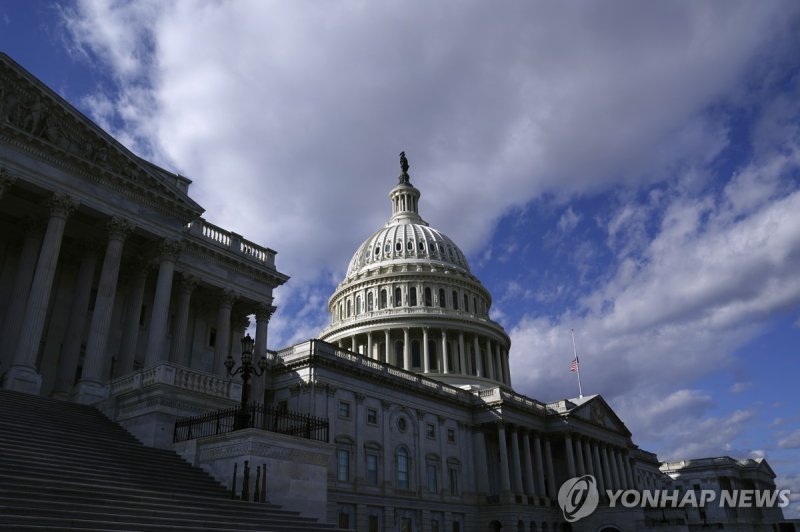
[Financial News] The United States Senate has postponed its review of the Market Structure Bill (Digital Asset Market Clarity Act of 2025, CLARITY Act of 2025), which defines the legal status of virtual assets, until early next year. Although the bill passed the House of Representatives in July, its review by the United States Senate Committee on Banking, Housing, and Urban Affairs has been delayed. However, as the criteria for classifying virtual assets as either 'commodities' or 'securities' based on decentralization requirements become clearer, the market is expected to see a more distinct separation of winners and losers. As a result, Stablecoins and Real-World Asset (RWA) tokenization, which have come under regulatory scrutiny, are expected to benefit, while centralized Altcoins may face the risk of being pushed out of the market.
According to foreign media and the virtual asset industry on the 22nd, the market initially anticipated the CLARITY Act of 2025 would pass the Senate within this year, but jurisdictional disputes between agencies have stalled progress. The United States Senate Committee on Banking, Housing, and Urban Affairs, which oversees the U.S. Securities and Exchange Commission (SEC), and the United States Senate Committee on Agriculture, Nutrition, and Forestry, which supervises the Commodity Futures Trading Commission (CFTC), have been in direct conflict over which body should regulate virtual assets.
Democratic members of the Banking Committee, in particular, have reportedly maintained a cautious stance, expressing concerns that reducing the SEC's authority could weaken investor protections. Nevertheless, with the Republican Party eager to push the bill ahead of next November’s midterm elections, many expect the CLARITY Act of 2025 to pass early next year.
Hyeon Kyeong Yang, a researcher at iM Securities, explained, "Among the three major virtual asset bills in the U.S. Congress, the Stablecoin bill (Guiding and Establishing National Innovation for U.S. Stablecoins Act, GENIUS Act) has already been enacted after passing the Senate and receiving the President’s signature. However, the remaining bills—the CLARITY Act of 2025 and the bill prohibiting the issuance of Central Bank Digital Currency (CBDC)—are still pending Senate review." Yang added, "If the CLARITY Act of 2025 is actively discussed and passed early next year, it is more likely to result in selective restructuring of the market rather than benefiting the entire sector."
The core of the CLARITY Act of 2025 is to clearly distinguish between 'security tokens' and 'digital commodities.' Assets with strong control by a foundation or specific issuer will be classified as securities and subject to the SEC’s strict disclosure and registration requirements. This will likely pose significant challenges for early-stage projects or centralized Altcoins, effectively forcing them out of the U.S. market if they cannot meet the regulatory standards.
An industry insider commented, "Early-stage projects that cannot bear high compliance costs or Altcoins still embroiled in securities debates will be hit hardest by the new regulations."
On the other hand, assets meeting the criteria for a 'mature blockchain system' will be classified as commodities and regulated more leniently by the CFTC. The main requirements include decentralization without control by a single entity, distributed governance, the impossibility of arbitrary transaction restrictions, and technical certification.
The sectors expected to benefit most are issuers of dollar-based Stablecoins and Real-World Asset (RWA) tokenization platforms. With the GENIUS Act already enacted and the CLARITY Act of 2025 in the pipeline, the legal status of Stablecoins will become clearer, accelerating the adoption of blockchain-based payment and financial infrastructure. Bitcoin (BTC) and Ethereum, due to their high level of decentralization, are likely to be classified as non-security digital commodities.
Accordingly, next year is expected to mark a turning point where crypto regulation becomes not just a restriction but an institutional gateway connecting virtual assets with traditional finance.
Hong Jin-hyun, a researcher at Samsung Securities, noted, "As regulatory integration strengthens, the price volatility of major assets such as BTC is expected to decrease, while their correlation with macroeconomic conditions will increase. Investors should focus less on short-term price gains and more on each project's regulatory compliance and fundamental revenue structure."
elikim@fnnews.com Kim Mi-hee Reporter