Standing at a Paris Intersection... Where Does 'Class 1 Carcinogen' Spike?
- Input
- 2025-12-22 08:57:15
- Updated
- 2025-12-22 08:57:15
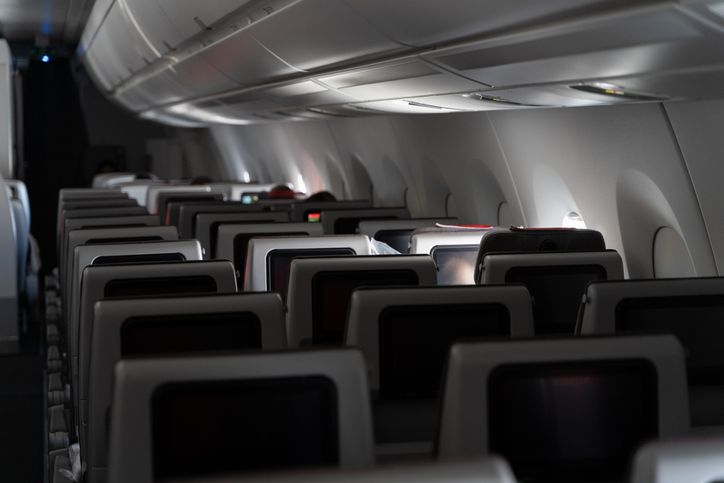
[Financial News] A new study has found that the concentration of ultrafine dust inside airplanes surges while the aircraft is on the ground.
A research team from Université Paris Cité measured cabin air quality on 16 flights of three aircraft types—Airbus A220, Airbus A319, and Airbus A321—departing from Charles de Gaulle Airport (CDG) in Paris to various destinations across Europe. To conduct the study, air quality monitoring equipment was installed on the flights to analyze ultrafine particles and Black carbon (soot generated by incomplete combustion of fossil fuels) from boarding until deplaning.
The results showed that cabin air was relatively clean once the aircraft reached cruising altitude. In contrast, when passengers were boarding at the gate, ultrafine particle concentrations soared to 22,000 particles/cm3, and during taxiing before takeoff, levels reached about 21,000 particles/cm3. This is more than twice the average standard set by the World Health Organization (WHO). The WHO also classifies particulate matter, including ultrafine dust, as a Group 1 carcinogen.
The concentration of 'black soot'—Black carbon produced by incomplete fuel combustion—was also highest when the aircraft remained in the airport’s ground zone. This polluted air gradually dissipated from the cabin after takeoff.
The research team concluded that cabin pollution is mainly due to external sources around the airport. The airport area is highly polluted not only because of aircraft engines but also due to emissions from ground support vehicles such as diesel buses, baggage carts, and refueling trucks.
In the case of ultrafine dust, pollution levels at a point 1 km from Charles de Gaulle Airport were similar to those experienced while standing in the middle of an intersection in downtown Paris.
The researchers explained, “Once the ventilation system is activated after takeoff, pollutants are gradually expelled, but concentrations rise again when the aircraft descends for landing or when the airport is downwind.”
These findings were published in the December issue of the International Journal of Environmental Science and Technology.
[email protected] Seo Yoon-kyung Reporter