Will Next February’s Regular Court Personnel Changes Become a Key Variable in Three Special Prosecutor Verdicts, Including Insurrection Cases?
- Input
- 2025-12-21 15:50:47
- Updated
- 2025-12-21 15:50:47
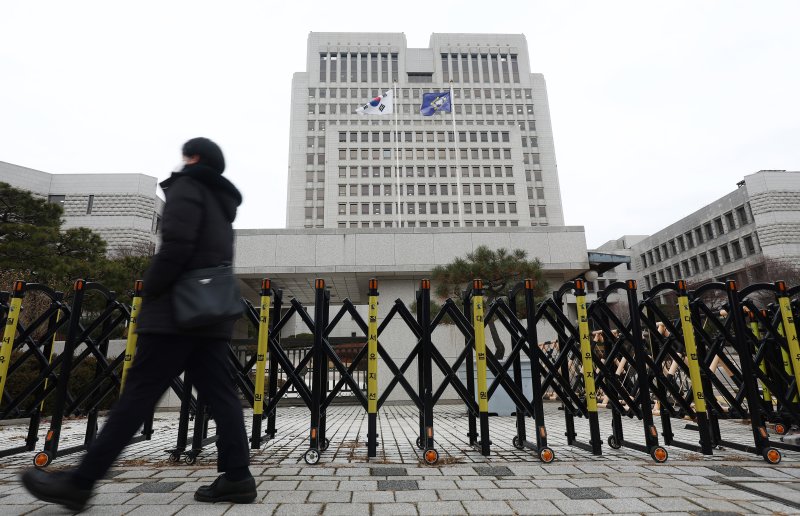
[Financial News] With nationwide judicial appointments scheduled for early next year, attention is focused on whether the three Special Prosecutor cases—including those involving insurrection and treason—will be affected. In criminal cases, if the presiding judge is changed due to personnel moves, the new judge (or panel) must renew the trial proceedings, which inevitably delays the trial. However, given the importance of these cases, there remains a possibility that, as in the precedent set by the Park Geun-hye influence-peddling scandal, the bench will remain unchanged.
According to the legal community on the 21st, nationwide judicial appointments have typically taken place in February each year. Last year, appointments for court presidents, chief judges, and high court judges were effective as of February 10, while those for district court chief judges and lower judges took effect on February 24.
This year, it is reported that some benches presiding over cases prosecuted by the three Special Prosecutors—including the insurrection and treason cases, the Kim Keon Hee case, and the Corporal Chae Incident—will also see personnel changes.
Earlier this month, the Central District Military Court, which is currently trying military generals involved in the emergency martial law case, announced that all three judges, including the presiding judge, will be replaced in early January next year.
When the composition of the bench changes in a criminal trial, the newly assigned judge must conduct a 'trial renewal procedure,' which involves reviewing and proceeding with the case from the beginning.
The same applies to the benches handling the three Special Prosecutor cases. A legal source explained, "In general, if there are no objections to previous testimonies or evidence, the trial renewal procedure is a simple confirmation. However, in insurrection trials, there is a high likelihood of objections after a bench change, so the process of reviewing evidence and questioning witnesses alone can significantly delay the proceedings."
The Criminal Agreement Division 35 of the Seoul Central District Court, presided over by Baek Dae-hyun, which is handling the case against former President Yoon Suk Yeol on charges including obstruction of special official duties, has announced that it will hold the final hearing on the 26th and deliver its verdict on the 16th of next month. This is seen as a move to account for potential personnel changes.
Former President Yoon argued that the verdict on his obstruction of arrest warrant execution case should only be delivered after the outcome of his insurrection leadership case is confirmed. However, the court rejected this, stating that the case must be concluded within six months by law and that the legality of martial law is not at issue in this case.
On the other hand, considering the importance of these cases, public interest, distrust in the judiciary, and the ruling party’s push for judicial reform, some predict that the bench for major trials such as the insurrection case will remain unchanged.
This is supported by the fact that, during the regular court personnel changes in 2018, the Criminal Agreement Division 22 of the Seoul Central District Court, which was about to rule on the Park Geun-hye influence-peddling scandal, was not replaced.
Currently, the main benches handling insurrection-related cases are Criminal Agreement Division 25 (presided over by Jee Kui-yeon), Criminal Agreement Division 33 (presided over by Lee Jin-kwan), and Criminal Agreement Division 35 (presided over by Baek Dae-hyun) of the Seoul Central District Court.
Taeho Jeong, a professor at Kyung Hee University Law School, pointed out, "Since the special panel for insurrection cases has promised a swift verdict, any personnel changes could be interpreted as having 'other motives.'"
Meanwhile, on the 19th, the Supreme Court of Korea enacted regulations on the establishment and procedures for special panels to handle nationally significant cases at the Supreme Court Administrative Meeting. 'Nationally significant cases' refer to those involving insurrection or treason under the Criminal Act, rebellion under the Military Criminal Act, or cases with major political, economic, or social impact that attract public attention and require expedited proceedings.
Currently, the insurrection and treason cases prosecuted by the Special Prosecutor are at the first trial stage. Once the appeal reaches the Seoul High Court, a special panel will be assigned. After the regular personnel changes early next year, the Seoul High Court will operate 16 criminal divisions. The court plans to randomly assign cases to these divisions and designate the assigned division as the special panel.
[email protected] Lee Hwan-joo Reporter