Seoul High Court Plans to Designate 2–3 Insurrection-Dedicated Courts Next Year... Judicial Duty Allocation to Be Discussed at Full Judges’ Meeting on the 22nd
- Input
- 2025-12-19 11:39:50
- Updated
- 2025-12-19 11:39:50
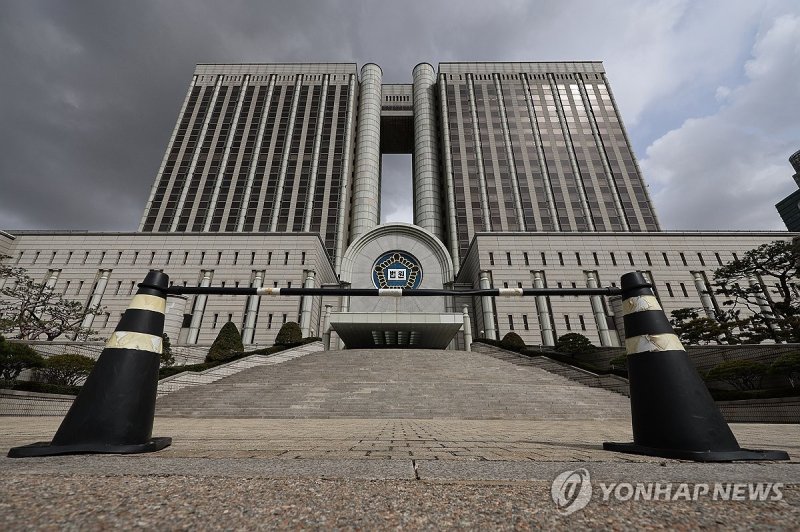
[Financial News] As a follow-up to the Supreme Court of Korea’s enactment of regulations for Insurrection-Dedicated Courts, the Seoul High Court plans to establish two to three panels dedicated to handling cases involving insurrection and related charges. The court will convene a full judges’ meeting on the 22nd to determine the principles for allocating judicial duties.
On the 19th, the Seoul High Court announced via press release that the upcoming full judges’ meeting on the 22nd will discuss a plan to expand the number of criminal panels by at least two in next year’s regular judicial appointments and to allocate duties accordingly. This is a follow-up measure to the Supreme Court of Korea’s recent enactment of regulations to establish dedicated panels for nationally significant cases.
If the proposal is accepted at the meeting, the Seoul High Court will organize a total of 16 criminal panels in next year’s allocation, designating two to three of these as Insurrection-Dedicated Courts to focus on cases involving insurrection and related charges.
The specific scale, composition process, and timing of the expansion will be finalized by the Committee for Allocation of Judicial Duties. The Seoul High Court will determine the number of dedicated panels in January next year, taking into account the volume of relevant cases, and will decide on the panel structure (such as the number of equal-status panels) after the regular judicial appointments at the end of January. The final assignment of judges to the criminal panels is expected to be completed by mid-February.
To ensure fairness in the composition and designation of dedicated panels, the Seoul High Court will, prior to case assignment, check for any grounds for disqualification or recusal among judges assigned to criminal panels and reflect this in the allocation plan. Random assignment will then be conducted among the remaining panels, excluding those not eligible, to designate the Insurrection-Dedicated Courts.
In addition to the targeted cases, those with identical issues or overlapping facts will be classified as 'related cases' and, after consultation among the relevant panels, will be assigned to the dedicated courts to ensure prompt proceedings.
Furthermore, in line with the 'Intensive Trial Panel Operation Plan' announced last September, the Seoul High Court requested an increase in the number of panels and corresponding staff, which the National Court Administration has fully approved.
Effective January 1, 2026, the National Court Administration will assign four additional panel advisors and three administrative officers to the Seoul High Court, with plans to supplement the remaining personnel before the dedicated courts are established. Next year’s regular judicial appointments are expected to include six additional judges needed for the two new panels. Each dedicated panel will be supported by at least three judicial researchers, and additional criminal courtrooms are under construction to accommodate daily hearings.
Previously, the Supreme Court of Korea defined crimes such as insurrection and treason under the Criminal Act and military rebellion under the Military Criminal Act as 'nationally significant cases' if they have major political, economic, or social impact and attract significant public attention. To ensure swift trials, the court enacted regulations mandating the establishment of dedicated panels. This was a proactive measure in response to the ongoing insurrection-related cases concerning the December 3 Martial Law Incident being handled by the National Assembly of the Republic of Korea.
The new regulations require the establishment of Insurrection-Dedicated Courts for intensive trials of such cases and mandate the use of a random assignment system to ensure fairness. Panels assigned these cases will be designated as dedicated courts and, in principle, will handle only those cases, with all previously assigned cases to be reassigned.
[email protected] Choi Eun-sol Reporter