Despite Supreme Court’s Proactive Administrative Rule... Limits of 'Self-Reform', Uncertainty Over DPK Bill Withdrawal [Comprehensive]
- Input
- 2025-12-18 15:28:26
- Updated
- 2025-12-18 15:28:26
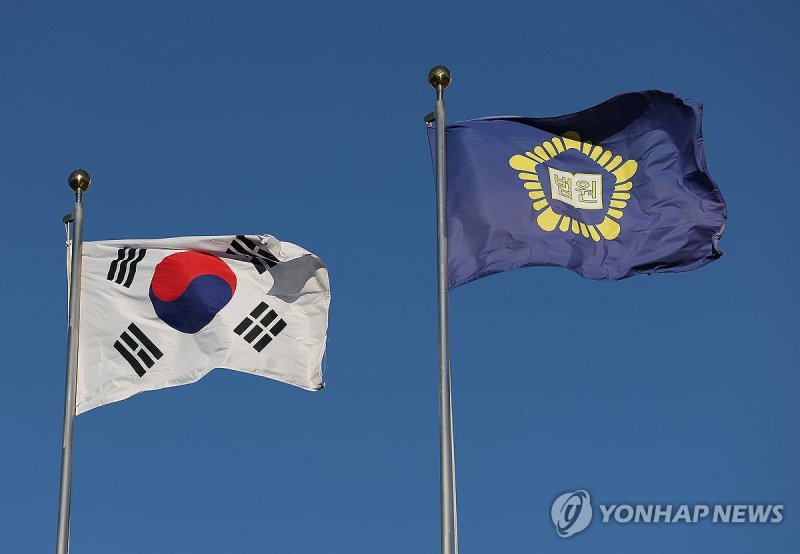
[Financial News] The Supreme Court of Korea has decided to establish a Special Panel for Insurrection Cases to handle criminal cases of insurrection and treason under the Criminal Act, as well as rebellion under the Military Criminal Act. This move appears to demonstrate the judiciary’s ability to process insurrection cases swiftly and fairly, while avoiding the constitutional controversy surrounding the Special Panel for Insurrection Cases bill promoted by the Democratic Party of Korea (DPK).
As a result, the legislative justification for establishing a Special Panel for Insurrection Cases has somewhat diminished. However, since the Supreme Court of Korea’s plan is limited to an Administrative Rule that can be changed at any time and lacks binding force, it is considered insufficient to completely counter the DPK’s arguments.
The National Court Administration under the Supreme Court of Korea announced on the 18th that, at the Supreme Court Justices’ administrative meeting, it decided to enact an 'Administrative Rule on the Establishment of Special Panels and Procedures for Nationally Significant Cases.' The rule will be implemented after an administrative notice period of at least 10 days.
'Nationally Significant Cases' refer to cases of insurrection, treason, and rebellion under the Military Criminal Act that have major political, economic, or social ramifications, attract significant public attention, and require expedited trial procedures.
According to the supplementary provisions, the rule applies to cases indicted after its implementation. For appeals, it includes cases where an appeal has been filed. Therefore, ongoing insurrection or treason cases will be subject to the rule starting from the appellate proceedings at the Seoul High Court.
Chief judges of each court may establish a Special Panel for Insurrection Cases to focus on these cases, and such cases must be handled promptly, taking precedence over other trials.
To ensure fairness in case assignment—a key aspect—the rule mandates random allocation of cases, with the assigned panel designated as the Special Panel for Insurrection Cases. This rule takes precedence over existing administrative rules on judicial assignments and case distribution.
As a principle, all cases handled by the Special Panel for Insurrection Cases will be reassigned. However, exceptions may be made considering the urgency and workload of ongoing cases.
Additionally, related cases are to be assigned after consultation among relevant panels, and, except for special circumstances, no new cases unrelated to the subject matter should be assigned to the Special Panel for Insurrection Cases. The chief judge must provide personnel and material support to ensure the panel can conduct trials swiftly and thoroughly.
For insurrection appeals scheduled for the first half of next year, the Seoul High Court will determine the number of Special Panels for Insurrection Cases through a general judges’ meeting and an assignment committee. All panels will receive random assignments, and those assigned will serve as the Special Panel for Insurrection Cases. Existing cases handled by these panels will be reassigned, and new assignments will be suspended.
This action by the National Court Administration is seen as a preemptive measure to address the loopholes in the DPK’s revised bill to establish a Special Panel for Insurrection Cases, aiming to prevent the legislative branch from taking the initiative.
According to legal experts, if the DPK’s revised bill is enacted, dozens of defendants in insurrection trials could request the court to refer the bill to the Constitutional Court of Korea for a constitutional review. If the court accepts and refers the case, trials would be suspended until the Constitutional Court of Korea issues a decision. Even if the request is denied, a constitutional complaint could still be filed with the Constitutional Court of Korea. Thus, a bill intended to expedite trials could ironically become a tool for delaying them.
A National Court Administration official explained, "If there is any potential for the bill to be challenged as unconstitutional, defendants could file procedural motions such as constitutional review requests or recusals, inevitably delaying the trial," adding, "This measure is intended to preemptively eliminate such possibilities."
Furthermore, the National Court Administration recognizes that the DPK’s revised bill, which targets specific individuals or cases (such as the insurrection case involving former President Yoon Suk Yeol), has the characteristics of a 'dispositional law.' Even if enacted, it is highly likely to spark constitutional and legal controversies.
However, even with the National Court Administration’s decision to enact an Administrative Rule, it remains unclear whether the DPK will withdraw its plan to submit the revised bill on the establishment of the Special Panel for Insurrection Cases to the National Assembly of the Republic of Korea’s plenary session scheduled for the 23rd.
Potential issues include: △ Administrative Rules are not laws but administrative regulations, so the judiciary can change or abolish them at any time △ They are criticized for lacking parliamentary oversight or democratic legitimacy △ The judiciary’s move is seen as a defensive 'self-reform' that may foster distrust △ Key decisions, such as the number of panels or the scope of case reassignment, are left to the discretion of chief judges △ Administrative Rules lack binding force. These points may be raised as grounds for criticism.
[email protected] Lee Hwan-joo Reporter