"Outdated Regulations on Pay TV Must Be Eased... Tax Incentives and Policy Financing Needed"
- Input
- 2025-12-18 17:09:27
- Updated
- 2025-12-18 17:09:27
[Financial News] "Given that legacy media operators in Korea account for a significant portion of the content production infrastructure, which is the core competitive edge of the domestic media industry, it is time to pursue forward-looking regulatory relaxation for these legacy players."
At a policy seminar held on the 18th at the Korea Press Center in Jung-gu, Seoul, under the theme 'Proposals for Innovative Policy Tasks Following the Launch of the Korea Media and Communications Commission (KMCC),' Chang-Hee No, head of the Digital Industry Policy Institute, stated, "It would be desirable to ease regulations on legacy media operators to a level comparable to internet-based businesses, except for a few specific cases."
No explained, "Domestic legacy media operators are still subject to various regulations. Broadcast content providers face strict rules regarding advertising and review processes, while domestic pay TV operators are subject to programming and pricing regulations, among others."
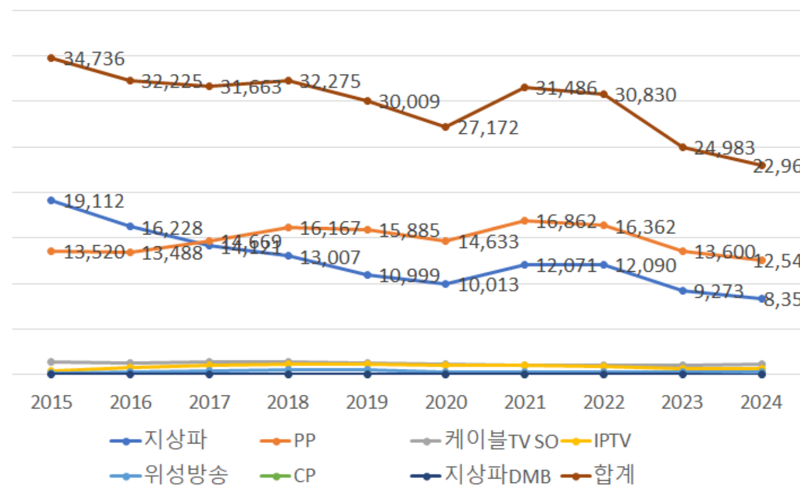
He pointed out, "Although the need to improve outdated regulations on broadcast content providers and pay TV operators has been raised through various government plans for several years, only limited progress has been made so far."
No emphasized that outdated regulations on broadcast advertising and content reviews should be relaxed to create a policy environment where content providers can compete with internet-based businesses.
He added, "To reduce the burden on pay TV operators, behavioral regulations such as pricing and programming controls should be made more flexible." He also mentioned, "It is necessary to introduce permanent tax credits for video content production costs, expand tax deductions, and improve tax refund systems, thereby providing greater tax and policy financing support for content creators."
No further suggested, "The paradigm of media industry policy, which has focused on public interest and regulation, should shift toward fostering industry growth. This would lay the foundation for the advancement of the entire media sector, including the pay TV ecosystem." He continued, "Since comprehensive media system reforms, such as the introduction of integrated media legislation, will take considerable time, it is important to promptly secure autonomy for the pay TV ecosystem by easing outdated regulations."
Hong Jongyun, a professor at Seoul National University (SNU), argued that regulations on physical platforms should be applied separately, while content areas should be classified simply and in line with global standards as real-time TV broadcasting services (TV), Video on Demand (VOD), Video Sharing Platform (VSP), and commercial advertising, with consistent regulations applied to each service category.
Professor Hong stated, "Within a horizontal regulatory framework, terrestrial broadcasting, cable television, Satellite, Internet Protocol Television (IPTV), and Over-the-top (OTT) are all just audiovisual media service providers in the private sector." He added, "If a regulation cannot be applied to global OTT providers, it should also be relaxed for domestic terrestrial, cable, Satellite, and IPTV operators." According to Professor Hong, when applying regulations, criteria such as revenue or subscriber numbers should be established from an influence perspective, and regulations should be applied consistently.
[email protected] Jang Min-kwon Reporter