"A 2 Billion Won Apartment in Songpa Surges in Months..." Trauma from the Overheated Market during the Moon Administration Resurfaces
- Input
- 2025-12-18 14:49:42
- Updated
- 2025-12-18 14:49:42
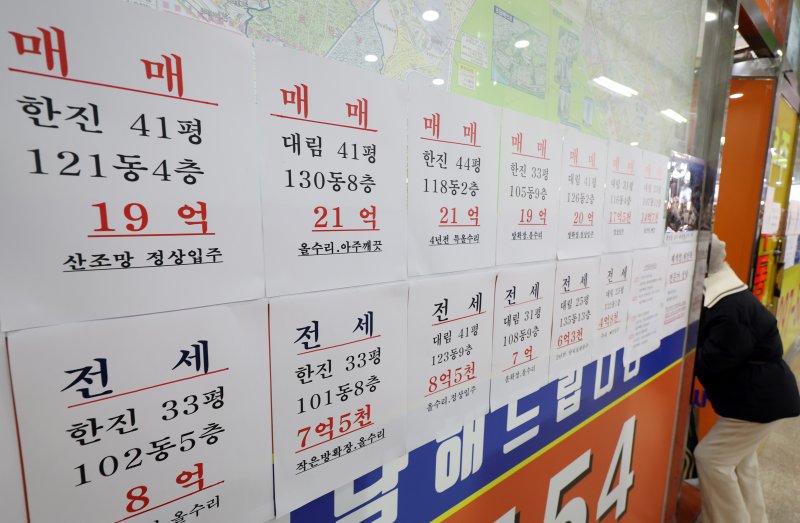
[Financial News] The rate of increase in Seoul apartment sales prices this year is expected to reach its highest level in 19 years since 2006. Although the buying frenzy that erupted before and after the announcement of the October 15 Real Estate Measures has somewhat subsided, the price gap between Gangnam and non-Gangnam areas has widened more than ever, intensifying the polarization.
According to statistics from the Korea Real Estate Board (KREB) on the 16th, the cumulative increase in Seoul apartment sales prices from January to November this year was 8.04%. While the December rate has yet to be reflected, it is unlikely to turn negative, so the annual increase is expected to be the highest since 2006 (23.46%) in 19 years.
President Lee also says, "No solution for Seoul housing prices"... Prices have risen even more than during the overheated market under the Moon administration
This figure surpasses the annual increases recorded during the Moon Jae-in administration, when real estate prices soared. It already exceeds the sharp rises seen in 2018 (8.03%) and 2021 (8.02%) under the Moon administration, and is more than seven times higher than the relatively stable 2019 (1.11%).
Seoul apartment prices have rallied for 44 consecutive weeks since turning upward in the first week of February. In particular, around the time of the government's October 15 Real Estate Measures, which designated all of Seoul as an Area Subject to Adjustment, Speculative Overheating District, and Land Transaction Permit Zone, the weekly increase soared to 0.50%, showing signs of overheating.
Amid these soaring prices, President Lee Jae-myung also expressed his difficulties. At a town hall meeting held on the 5th at Korea University of Technology and Education (KOREATECH) in Cheonan, he remarked, "I have been criticized a lot lately because of housing prices in Seoul and the metropolitan area, but honestly, there is no solution," adding, "Even if we exhaust all available wisdom and policy resources, it is not easily resolved due to structural factors," highlighting the challenges in addressing housing prices.
"Only certain areas are rising"... Songpa up 20% while Dobong rises just 0.7%
The most notable feature of this upward trend is the extreme polarization by region. The overall average for Seoul was driven up by so-called prime areas, including the three Gangnam Districts and the Mayongseong area (Mapo, Yongsan, Seongdong).
Looking at the increase by district, Songpa District recorded the highest rise at 19.78%, followed by Seongdong (17.94%), Mapo (13.50%), Seocho (13.20%), and Gangnam District (12.90%). In contrast, the outer areas of Seoul, such as Nodogang (a portmanteau of Nowon-gu, Dobong-gu, and Gangbuk-gu in Seoul) and Geumgwan-gu (Geumcheon, Gwanak, Guro), showed a different trend. Nowon (1.76%), Geumcheon (1.15%), Gangbuk (0.93%), and Dobong (0.79%) all saw annual increases hovering around 1%, effectively remaining flat.
No signs of decline... The concentration on a single high-value property is likely to continue
After the October 15 Real Estate Measures, the rate of increase slowed for four consecutive weeks, but has recently fluctuated slightly. However, anxiety over supply shortages persists, and rising jeonse (long-term lease) prices continue to support sales prices, making a significant downturn unlikely.
In particular, regional polarization is expected to remain a key market theme next year. Experts predict that as regulations tighten, the preference for concentrating on a single high-value property in prime areas will intensify, and the gap between Gangnam and non-Gangnam areas will persist for the foreseeable future.
[email protected] Kim Hee-sun Reporter