[Editorial] The Crisis of Germany’s Automotive Industry Is Not a Distant Fire
- Input
- 2025-12-17 18:31:44
- Updated
- 2025-12-17 18:31:44
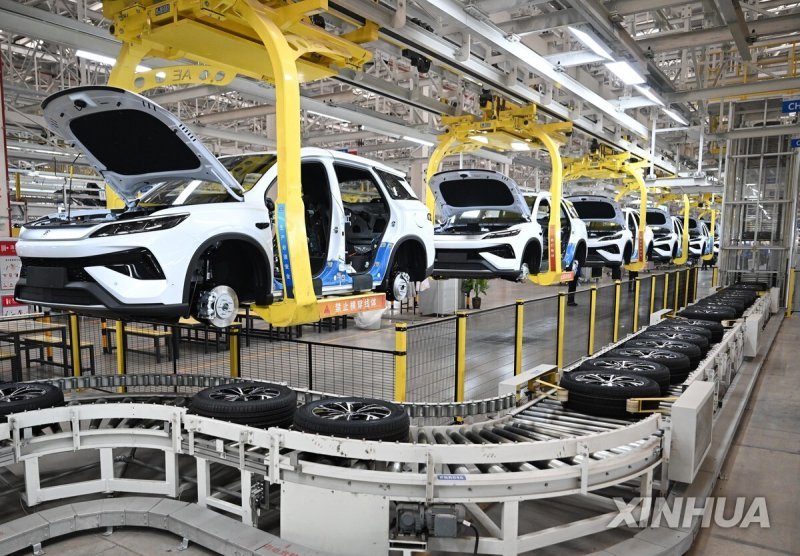
The global automobile market is currently undergoing a major transformation. As the industry shifts from internal combustion engine vehicles to electric vehicles, it is experiencing a temporary chasm marked by stagnant demand. Whenever technological revolutions occur, the positions of market leaders inevitably change. The disappearance of Nokia Corporation and Motorola, Inc. during the transition from mobile phones to smartphones is a prime example.
The same applies to the automotive market. The transition from traditional internal combustion engine vehicles to electric vehicles is causing significant changes in the industry. Companies that fail to lead technological innovation and fall behind may be eliminated in an instant. There are no eternal champions. Even European automakers, the birthplace and inventors of the automobile, now face concerns about their survival. On the 16th, Volkswagen was forced to close a factory in Germany for the first time in its 88-year history.
In the electric vehicle sector, China, a powerhouse in batteries (secondary cells), is driving major changes in the market. German automakers, which once dominated the Chinese market, have fallen into management crises as China has developed its own capabilities, leading to sluggish sales. Much of this can be attributed to their overreliance on the Chinese market and failure to respond to the shift toward electric vehicles. Meanwhile, in the United States of America (USA), Tesla, Inc. has emerged as a dominant force in the electric vehicle market.
The EU’s shift in automotive policy is a response to the growing dominance of Chinese and American electric vehicles. There is a sense of crisis that the European automotive industry could collapse if the market is completely reorganized around electric vehicles. Chinese electric vehicles are rapidly increasing their market share by offering prices that are only half those of their European counterparts. The abrupt abolition of the $7,500 per vehicle electric vehicle subsidy last October was also driven by this concern.
This decision by the EU also signals a retreat from its carbon neutrality policy. Halting the production of internal combustion engine vehicles powered by gasoline was part of its environmental policy, but the EU, once a leader in carbon reduction, now appears to be changing direction.
Although automotive companies in the Republic of Korea (ROK) have withstood US tariffs, they must take the developments in the automotive industries of Germany and the EU as a lesson. China, which is already threatening ROK in major industries, could easily surpass ROK in the automotive sector if the market rapidly shifts toward electric vehicles.
Korean companies must continue to focus on developing and innovating electric vehicles while also managing the internal combustion engine vehicle market. Above all, technological innovation is crucial. Technology is not limited to batteries or engines; driving performance, design, and safety are also key aspects. Only by maintaining innovations that competitors like China cannot easily replicate can ROK sustain its position as a leading automotive nation.
There are also considerations regarding carbon neutrality policies. ROK’s carbon reduction policies are progressing too rapidly. The USA and China, the world’s largest carbon emitters, are taking a more passive approach, so there is no reason for ROK to move ahead alone. Even the EU may secretly regret having led the push for carbon neutrality. It is possible that they now regret having championed environmentalism at the expense of their own industries. If ROK responds too slowly to the rapidly changing global environment, it could find itself in the same predicament as Germany.