"Something Was Wrong"... Chef Saves Life of 10-Year Regular After Not Seeing Him, Visits His Home [Health Talk]
- Input
- 2025-12-18 04:30:00
- Updated
- 2025-12-18 04:30:00
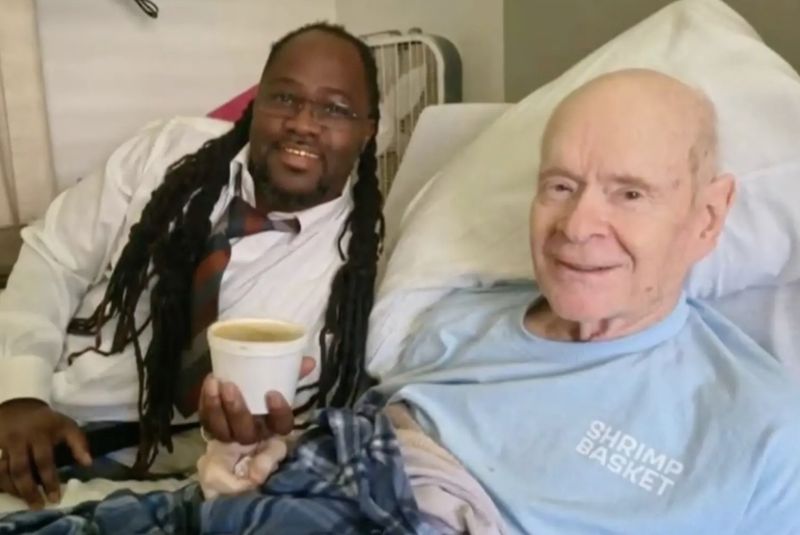
According to The Financial News, a chef personally visited the home of a regular customer who had not shown up for several days after visiting daily for over ten years, ultimately saving his life.
On the 17th, the New York Post reported that Donell Stallworth, 45, a chef at the Shrimp Basket in Pensacola, Florida, tried to contact Charlie Hicks, 78, after he suddenly stopped coming to the restaurant.
For the past ten years, Hicks had visited the restaurant every day to enjoy 'Gumbo' for both lunch and dinner.
Stallworth said, "Hicks never missed a day at the restaurant, so when he didn't show up for several days in September, I felt something was wrong." He added, "I immediately called Hicks to check on him, and after learning he was unwell, I delivered food to his doorstep."
However, a few days later, Hicks stopped answering his phone altogether. Fearing the worst, Stallworth rushed to Hicks's house while still on duty.
"When I arrived at Hicks's house, I knocked on the door several times, but there was no response," Stallworth recalled. "Just as I was about to leave, I heard a voice from inside the house calling for help."
Stallworth said, "When I opened the door, I found Hicks collapsed on the floor. I was terrified because I couldn't tell what condition he was in."
Hicks had fallen at home, breaking two ribs and suffering from severe dehydration. Emergency responders arrived and immediately transported him to the hospital.
Even after the incident, restaurant staff continued to bring Hicks his usual meals at the hospital every day, and after his discharge, they helped him move into a new apartment right next to the restaurant.
Now recovered, Hicks has returned to regularly visiting the Shrimp Basket.
The Risks of Geriatric Fractures
Elderly individuals are more prone to fractures because their bones are weakened by osteoporosis, and their reduced muscle strength and slower nervous system make it harder to maintain balance in sudden situations.
Fractures of the wrist, hip, spine, and ribs are the most common among seniors. These geriatric fractures can occur even from minor trauma or simple falls, but they are often mistaken for simple bruises by the patient or those around them, which can delay accurate diagnosis and treatment in the early stages.Rib FracturesAmong all bones in the body, rib fractures heal the fastest, typically within four weeks for seniors. Although the pain can be severe and daily life uncomfortable, painkillers are usually sufficient, and surgery or special interventions are rarely needed. In the absence of complications such as pneumothorax (air trapped in the pleural cavity due to a punctured lung) or hemothorax (blood accumulating in the pleural cavity, increasing pressure and collapsing the lung), the pain usually subsides within a few days with pain medication and disappears after about three weeks.Wrist FracturesThese are especially common in women over 60. If an elderly person slips on an icy road in winter, falls, and experiences pain, swelling, or bruising in the wrist area, a fracture should be suspected and a specialist should be consulted to confirm the diagnosis.
Treatment may involve immobilizing the wrist with a cast or splint for 6 to 8 weeks followed by joint exercises, or surgical methods such as pin fixation after realigning the fractured bone.Hip FracturesHip fractures are serious osteoporotic injuries that can shorten life expectancy. Patients often become almost completely immobile due to pain and movement restrictions, making it difficult to perform daily activities even at home. Without proper treatment, prolonged bed rest can rapidly deteriorate heart and lung function, and complications such as pressure sores or pneumonia may develop, potentially leading to death.
If there is pain in the hip area and difficulty sitting or standing after a fall or injury, an X-ray should be taken to check for fractures. Most of these accidents happen from simple falls at home or on the street. Therefore, prevention is the best way to reduce fractures. Maintaining good nutrition and regular exercise helps prevent osteoporosis and maintain muscle strength.
[email protected] Moon Young-jin Reporter