"Dot-com Bubble Déjà Vu" vs. "A Process to Determine the Winners"... Stock Markets Roiled by the AI Bubble Debate [Weekend Digging]
- Input
- 2025-12-20 06:00:00
- Updated
- 2025-12-20 06:00:00
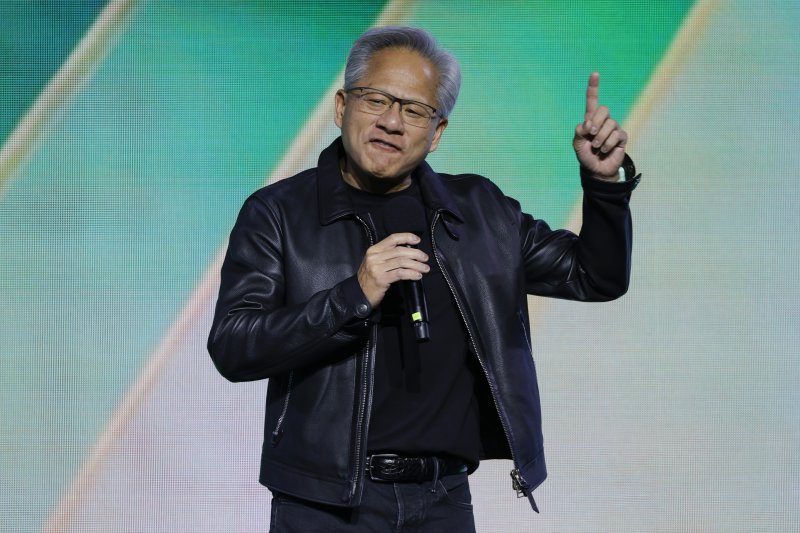
[The Financial News] Recently, the global financial market has been abuzz with Artificial Intelligence (AI). As AI-related stocks led by Nvidia surge, some in the market are voicing concerns, recalling the nightmare of the early 2000s dot-com bubble.Is the AI boom a genuine revolution, or is it a massive bubble on the verge of collapse?
Stock Markets Swayed by Recurring 'AI Bubble' Debate

Earlier last monthMichael Burry, known as the real-life figure behind 'The Big Short,' reignited the AI bubble debate.Burry, who accurately predicted the 2008 subprime mortgage collapse, made headlines when Scion Asset Management, which he manages, disclosed on the 3rd (local time) that it held put options betting on a decline in Nvidia and Palantir Technologies. Following this, AI-related stocks plummeted. Palantir Technologies dropped as much as 16% during trading, Nvidia fell nearly 4%, while the NASDAQ Composite Index declined by 2.04% and the S&P 500 Index fell by 1.17%.
On the 17th, news that Oracle Corporation's data center investment faced setbacks rattled the markets. The Financial Times (FT) reported that Blue Owl Capital, a key investment partner of Oracle, withdrew from a $10 billion AI data center project in the State of Michigan. As the AI bubble debate resurfaced among investors, Oracle dropped over 5%, Nvidia fell 3.81%, Broadcom Inc. declined 4%, and the Philadelphia Semiconductor Index (SOX) lost 3.78%.
With growing doubts about the sustainability of AI infrastructure investments, the NASDAQ fell 1.81% and the S&P 500 Index dropped 1.16%. Each time the AI bubble debate flares up, the market experiences extreme volatility, amplifying investor anxiety.
What if it ends up like fiber optic cables... A 'dot-com bubble' déjà vu
Proponents of the AI bubble theory warn that the current overheating of AI stocks is reminiscent of the dot-com bubble 30 years ago.The transaction structure between Nvidia and OpenAI is a prime example. In September, Nvidia agreed to invest up to $100 billion in OpenAI to support the construction of a 10GW AI data center. The issue is that a significant portion of this investment is used to purchase Nvidia's own AI chips.This situation has been compared to the 'Vendor Financing' practices of the dot-com bubble era. Vendor Financing refers to a supplier lending money to a customer, who then uses those funds to buy the supplier's products. During the dot-com bubble, telecom equipment companies lent billions of dollars to telecom operators, who used the money to buy the suppliers' equipment, artificially inflating sales figures.
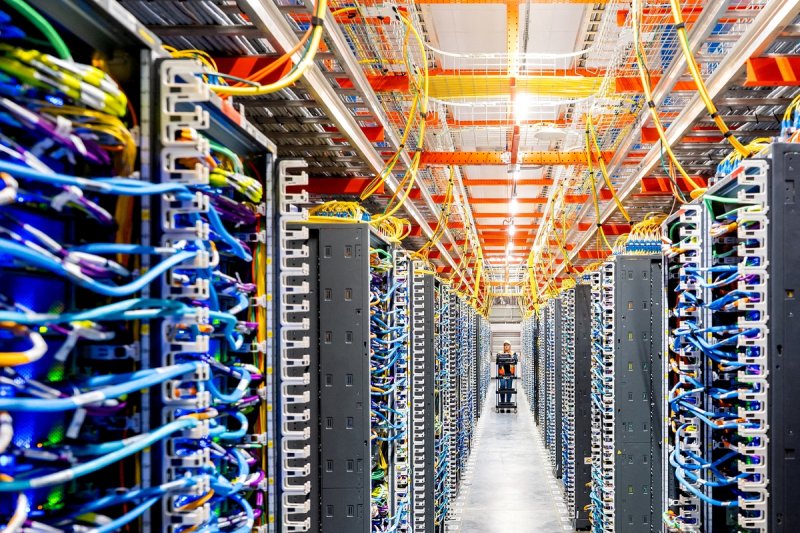
Currently, big tech companies are fiercely competing to build massive data centers on a gigawatt scale. Meta Platforms Inc.'s 'Hyperion Data Center' and the 'Stargate Project' by OpenAI and Microsoft are notable examples. While these strategies aim to secure future demand, some argue that this mirrors the fiber optic cable installation race during the dot-com era.
Back then, anticipating an explosion in internet traffic, vast amounts of fiber optic cables were laid. However, advances in data compression technology dramatically increased the efficiency of existing cables, leaving 95% of the installed cables as unused 'dark fiber.'Similarly, if AI models become lighter or more efficient algorithms emerge, the astronomically expensive data centers being built now could become 'white elephants'—costly but useless assets.
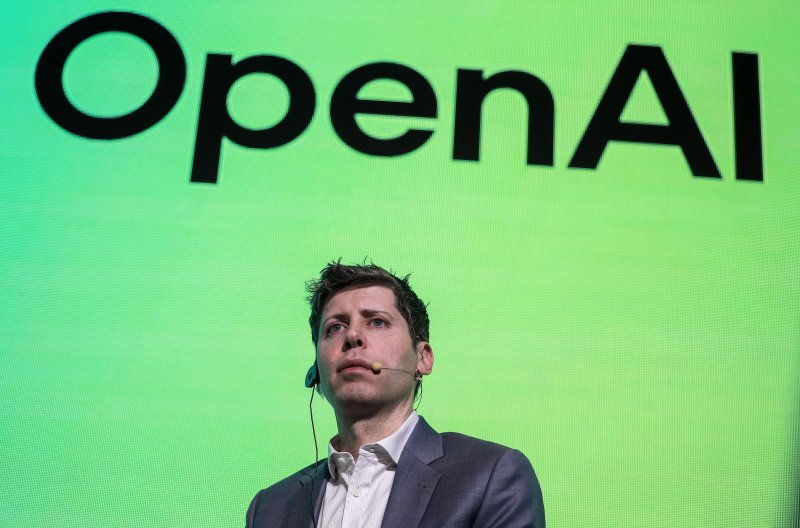
Doubts have also been raised about OpenAI's financial capacity, which is central to the circular transactions among AI companies. On the 18th, Bloomberg, citing The Information, reported that OpenAI is in talks with investors to raise tens of billions of dollars at a valuation of $750 billion. OpenAI's revenue this year is expected to be around $15 billion, but the company continues to post massive losses. As a result, many question whether it can afford the $500 billion-plus infrastructure costs for the 10GW project mentioned by CEO Jensen Huang.
The issue is not limited to OpenAI. Many major AI companies, including Nvidia and Microsoft, are intricately linked through cross-shareholdings and service purchases.Although the AI industry appears to be growing rapidly, it is heavily reliant on circular funding among companies rather than genuine demand, raising the risk of a bubble burst.
"An AI Bubble Will Never Happen"—Industry Remains Optimistic
While investors and observers remain uneasy about the AI stock market,the industry itself is filled with optimism.On the 15th, Bae Kyung-hoon, Deputy Prime Minister and Minister of Science and ICT (MSIT), dismissed concerns about an overheated AI investment phase, stating, "An AI bubble will never occur."Fund managers are also more optimistic about the stock market than ever.According to a monthly global fund manager survey released by Bank of America on the 16th (local time), the cash allocation in their portfolios fell from 3.7% last month to 3.3% this month, marking a record low.
If the Bubble Bursts, the Winners Will Emerge
The Wall Street Journal (WSJ) reported on the 14th that if investors grow weary of uncertain profit prospects, the AI ecosystem could hit a wall and face an outcome similar to the dot-com bubble era. However, if the rapid infrastructure buildout for this innovative technology generates massive cash flow, the current cross-investment could become a win-win strategy for all companies involved.
Jeff Bezos, founder of Amazon.com, Inc., commented in October, "When people get as excited about artificial intelligence as they are today, every experiment gets funded. Investors, amid this excitement, have difficulty distinguishing good ideas from bad ones." He added that since the future is unpredictable, it is inevitable that more than optimal costs will be invested to prepare for various possibilities.
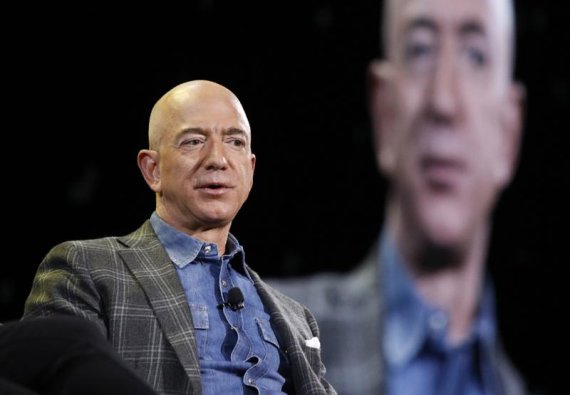
The belief in 2000 that the internet would change the world ultimately proved correct. However, many weak companies disappeared along the way. Just as Amazon.com, Inc. and Microsoft survived the dot-com bubble, robust companies will endure the AI frenzy.
Even if the current AI investment boom contains a bubble, it is hard to deny that AI is a technology capable of revolutionizing human productivity. In the end,the AI bubble debate will continue until it bursts.Whether to bet on AI despite the risks or shift to safer assets requires a cool-headed judgment.
[email protected] Reporter Sung Min-seo Reporter