[Editorial] Generous Incentives Needed to Attract Companies to Regional Areas
- Input
- 2025-12-16 18:22:38
- Updated
- 2025-12-16 18:22:38
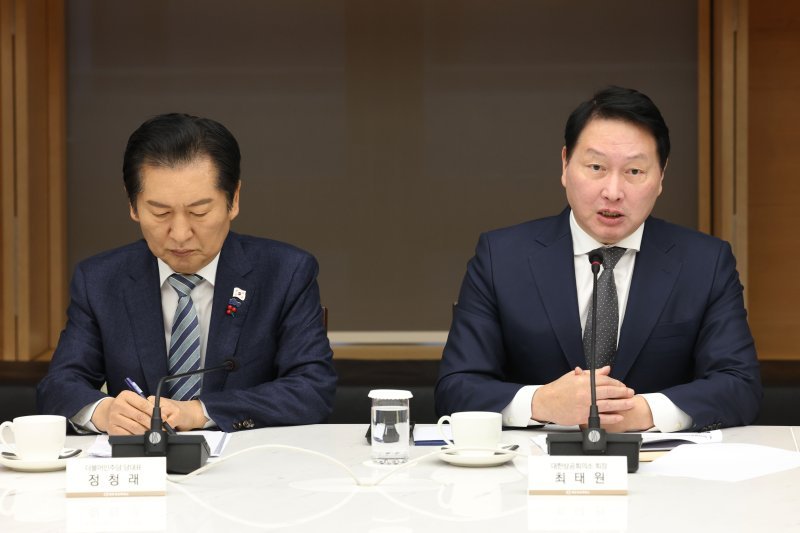
Revitalizing local areas begins with successfully attracting businesses. Companies that relocate in anticipation of government policies and institutional support should receive corresponding incentives. Such a virtuous cycle is essential for regional regeneration. This is why meetings between the business sector and political leaders must not become mere formalities. Follow-up actions are needed to ensure the business community’s proposals are broadly accepted.
Balanced national development has seen little progress despite a slew of government initiatives. Chey Tae-won, Chairman of KCCI, rightly pointed out, "The fundamental issues of government policy remain unresolved and seem to repeat endlessly." The concentration in the Greater Seoul area and the hollowing out of other regions are worsening. According to KCCI, the Gross Regional Domestic Product (GRDP) of the Greater Seoul area grew by 39% from 2013 to 2023, while non-metropolitan areas saw only a 20% increase.
As a result, the share of the Greater Seoul area and non-metropolitan areas in the nation’s total Gross Domestic Product (GDP) has reversed. A decade ago, the Greater Seoul area accounted for less than 50% of total GDP. By 2023, its share had risen to 52.3%, while non-metropolitan areas dropped to 47.7%. It is only natural that people flock to the Greater Seoul area where companies and jobs are concentrated. The key to regional development lies in building robust industrial infrastructure in local areas.
The business community has reportedly requested the introduction of a differential electricity rate system by region to address power supply issues for local companies. Although such a system has been discussed as part of regional balanced development policies, it has been repeatedly postponed. The core idea is to reduce electricity rates in regions with a high concentration of power plants. With the enactment of the Distributed Energy Activation Special Act in June last year, the legal basis is now in place. Implementation would not be difficult if the government and ruling party are willing.
There is also a need to devise ways to enhance the efficiency of RE100 Industrial Complexes that use 100% renewable energy. The government regards RE100 Industrial Complexes as a key pillar of future growth. Areas such as the Southwestern Region, which have abundant renewable energy facilities, are among the candidates.
Although these policies aim for both energy transition and balanced regional development, companies cannot be expected to take risks and pay high electricity bills simply to align with government plans. For RE100 Industrial Complexes to succeed, bold electricity rate discounts and various tax benefits must be considered.
The All-in-One Innovation Platform, a mega-scale regulatory sandbox, should also be considered for certain regions. Dramatically easing regulations on new industries and providing comprehensive infrastructure support could lead to regional revitalization. Chung Cheong-rae, leader of the DPK, stated, "The government and businesses are a community of shared destiny for national development." What matters most is action. Effective policies must be put in place to support these goals.