Special Panel for Insurrection Cases Faces Controversy Over Arbitrary Interpretation of 'Target Cases'... Concerns Over YouTuber Broadcasts
- Input
- 2025-12-16 14:50:00
- Updated
- 2025-12-16 14:50:00
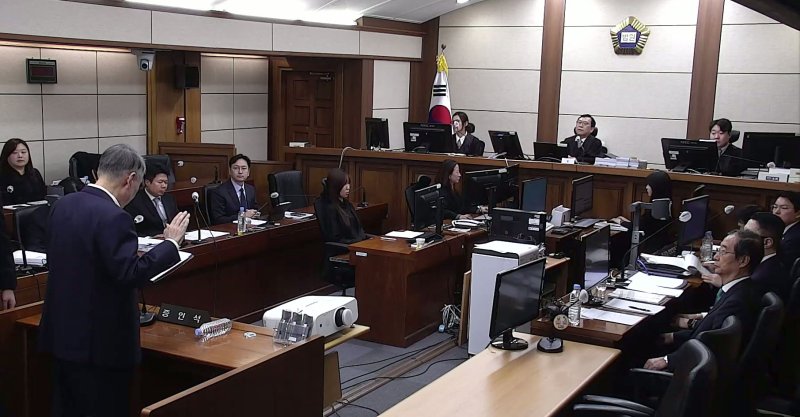
[Financial News] As the ruling bloc pushes for the establishment of the Special Panel for Insurrection Cases, controversy over its constitutionality continues. Critics argue that the scope of target cases is excessively broad and the provisions regarding trial broadcasting lack clarity on who is authorized to broadcast.
In particular, the provision assigning the Special Panel for Insurrection Cases to handle 'related cases' before and after the December 3 Martial Law makes it difficult to clearly define the scope of cases, potentially violating the constitutional principle of clarity. The obligation to broadcast trials also raises concerns, as the law does not specify who may conduct the broadcast, which could result in audience members or YouTubers being permitted to stream proceedings.
According to legal sources on the 16th, the 'Special Act on the Establishment of the Special Panel for the December 3 Martial Law and Protection of Whistleblowers (Alternative Bill),' which passed the Legislation and Judiciary Committee of the National Assembly under the initiative of the Democratic Party of Korea (DPK), is currently being promoted. The bill defines the panel's target cases to include not only insurrection and treason under the Criminal Act and rebellion under the Military Criminal Act related to the December 3 Martial Law, but also 'related cases occurring before and after the December 3 Martial Law.'
The main issue is that this definition of target cases can be interpreted too broadly. Jang Young-soo, an emeritus professor at Korea University School of Law, noted, "Although the law establishing the special panel is procedural and may not require strict interpretation, the principle of clarity—which requires that restrictions on basic rights be clearly defined—still applies. While crimes of insurrection, treason, and rebellion are relatively clear, 'related cases before and after the incident' are too vague and indeterminate in scope."
A particular concern is the ambiguity in distinguishing between the basic planning stage ('conspiracy') and the concrete preparation stage ('preparation') of crimes committed before martial law. Actions taken after martial law are also contentious. Professor Jang explained, "Under the Criminal Act, those subject to punishment for insurrection include ringleaders, key participants, and accomplices. However, the political sphere continues to discuss the concept of 'sympathizers with insurrection,' which is not defined by law, as punishable, raising significant controversy."
Jo Ki-hyun, an attorney specializing in constitutional litigation, also pointed out, "There are various charges such as ringleader and aiding insurrection, but it is unclear how these will be included as target cases for the special panel. The scope of 'related cases' is even less clear, violating the constitutional principle of clarity and potentially increasing the likelihood of procedural objections from defendants in the future."
Another contentious point is the bill's 'trial broadcast obligation' clause. Article 14 (Broadcasting, Recording, and Filming of Trials) stipulates that the special panel must permit audio or video recording and filming of all or part of the trial proceedings for the purpose of documenting the trial. Except for certain cases involving national security, this effectively mandates trial broadcasts. However, while the clause grants the panel authority to restrict broadcasting, it does not specify who is permitted to broadcast.
Legal experts warn that, without clear legal grounds, court observers or YouTubers could broadcast from the gallery, potentially turning the law into a 'YouTuber Broadcast Promotion Act.' Jo Ki-hyun commented, "The provision could be interpreted as allowing YouTubers or ordinary audience members to broadcast, record, or film the proceedings, which poses a significant risk of turning trials into trials by public opinion."
The lack of safeguards during the broadcasting process is also a concern. In the case of insurrection special prosecutor indictments currently being broadcast at the first trial, a revision to the Special Prosecutor Act last September included an immunity clause exempting individuals from civil or criminal liability if personal information, privacy, or state secrets are disclosed during the broadcast. In contrast, the broadcast clause in the special panel bill lacks such immunity provisions, meaning judges or court staff could be held legally responsible for disclosures during broadcasts. Professor Jang stated, "It is unreasonable to hold individuals legally liable for mandatory broadcasts under the law," adding, "The National Assembly of the Republic of Korea must take responsibility for this aspect during legislation."
[email protected] Choi Eun-sol Reporter