Special Prosecutor for Insurrection and Treason Remains 'Incomplete'... Will It Ignite a Second Comprehensive Investigation?
- Input
- 2025-12-15 16:20:49
- Updated
- 2025-12-15 16:20:49
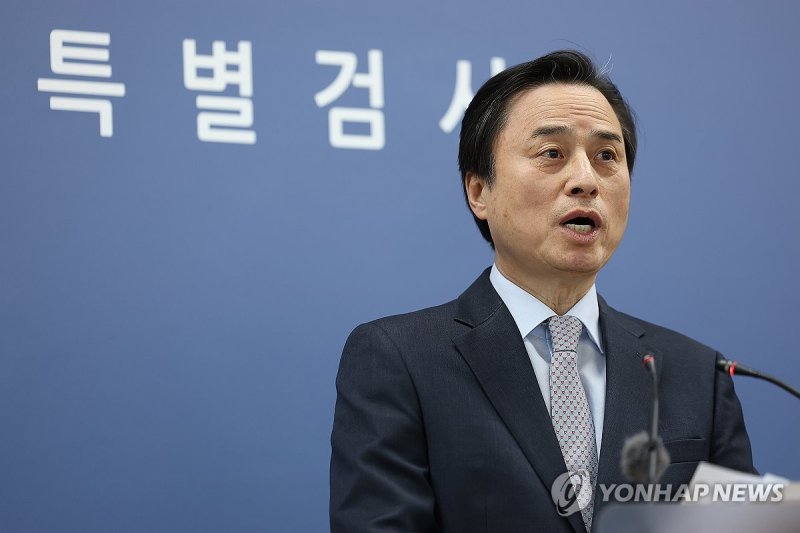
[Financial News] The Special Prosecutor Team for Insurrection and Treason, led by Cho Eun-seok, managed to clarify the timing and purpose of the emergency martial law preparations during its 180-day investigation. However, it failed to detain key figures or substantiate core charges such as treason, and could not determine the reasons for the Supreme Prosecutors' Office of the Republic of Korea's decision to forgo an immediate appeal.
Although the special prosecutor team plans to transfer the case to the police, the investigation is effectively ending without a full resolution. This outcome is seen as providing political justification for pursuing a second comprehensive special investigation.
According to the results announced by the special prosecutor team on the 15th, seven individuals have been detained so far: former President Yoon Suk Yeol, former Minister of National Defense Kim Yong-hyun, former Director of the National Intelligence Service Cho Tae-yong, former Minister of the Interior and Safety Lee Sang-min, Counterintelligence Commander Yeo In-hyung, former Director of Military Intelligence Sang-ho Moon, and former Director of Military Intelligence Sangwon Noh.
Other figures—including former Prime Minister Han Duck-soo, Deputy Prime Minister and Minister of Economy and Finance Choi Sang-mok, former Minister of Justice Park Sung-jae, former Deputy Chief of Presidential Security Kim Sung-hoon, and former floor leader of the People Power Party Choo Kyung-ho, as well as three military prosecutors—were either not subject to arrest warrants or had their warrants denied, and have been referred to trial without detention.
Initially, the team sought to prosecute former President Yoon Suk Yeol for the most serious charge of high treason, but due to insufficient evidence, he was only indicted for the lesser charge of ordinary treason.
The suspicion that the Supreme Prosecutors' Office of the Republic of Korea deliberately abandoned an immediate appeal against Yoon's release remains unresolved and has been left for the police to investigate. The special prosecutor team questioned those involved in the decision at the time, but since many of them later joined the special prosecutor team, concerns about impartiality led to the case being handed over to the police.
Allegations such as the involvement of prosecutors and the National Intelligence Service (NIS) in the dispatch of forensic personnel to the National Election Commission, suspicions of a secret meeting at the presidential safe house after the declaration of martial law, and claims of shamanistic intervention were either found to be unsubstantiated or could not be pursued further due to the refusal of key individuals to testify. Although 34 cases were referred, only about 10 are believed to remain after excluding complaints such as those against former Prosecutor General Sim Woo-jung.
Another unresolved issue is the special prosecutor team's explanation regarding suspicions of Kim Keon Hee's involvement in the emergency martial law plan. Rather than stating it was 'false,' the team said it was 'unconfirmed.'
A member of the special prosecutor team stated, "We found no evidence that Mrs. Kim attended the meeting or was involved in the declaration of martial law," adding, "However, it appears that concerns about Mrs. Kim's legal risks were a background factor in former President Yoon's decision to declare martial law." On the day martial law was declared, Mrs. Kim reportedly visited a plastic surgery clinic.
The decision not to indict members of the Judiciary for alleged complicity in the martial law declaration remains controversial. The special prosecutor team concluded that there was no evidence that Supreme Court Chief Justice Cho Hee-dae and Court Administration Director Cheon Dae-yeob held executive meetings to prepare or discuss measures related to martial law. Chief Justice Cho arrived at the Supreme Court of Korea at 12:40 a.m., and Director Cheon at 12:50 a.m., four days after the martial law declaration. At 1:01 a.m., the National Assembly of the Republic of Korea voted to lift martial law, indicating that they were not aware of the declaration in advance. The special prosecutor team also reported that Supreme Court staff refused requests from the Martial Law Headquarters. In the case of Judge Jee Kui-yeon, no connection to the Supreme Court of Korea was found, resulting in a decision not to indict.
Chung Cheong-rae, leader of the Democratic Party of Korea (DPK), announced at the party's Supreme Council meeting in the National Assembly of the Republic of Korea that, "We will push for a second comprehensive special investigation to uncover the truth behind the insurrection allegations," adding, "The party and government will unite as one team to thoroughly address the remaining suspicions."
[email protected] Jung Kyung-soo, Lee Hwan-joo Reporter