Prototype Superconductor to Be Developed Within 5 Years... Lee Administration Launches '15 Ultra-Innovative Projects'
- Input
- 2025-12-16 08:30:00
- Updated
- 2025-12-16 08:30:00
[Financial News] Over the past four months, the government has finalized a roadmap for 15 ultra-innovative economic projects, including superconductors, power semiconductors, and Small Modular Reactors (SMR). These ambitious projects are part of the new administration’s drive to boost economic growth. Starting next year, which marks the beginning of expansionary fiscal policy, the government plans to focus its budget on these 15 projects.
On the 16th, the Ministry of Economy and Finance held a meeting on strengthening industrial competitiveness and a growth strategy task force, announcing the fourth implementation plan for the 15 ultra-innovative economic projects. As a result, the government has finalized 20 tasks under the 15 leading ultra-innovative economic projects.
The final set of tasks announced this time includes four projects: accelerating the commercialization of national strategic advanced materials and components such as superconductors, and expanding the global market presence of K-Bio, K-Digital Healthcare, and K-content.
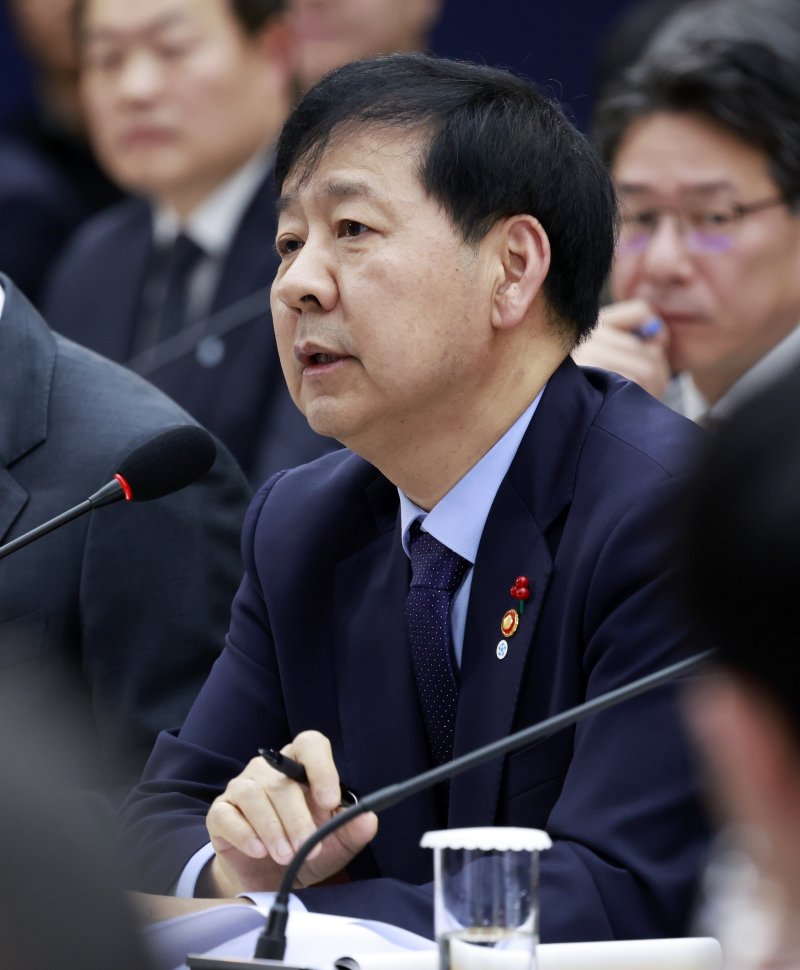
Koo Yun-cheol, Deputy Prime Minister and Minister of Economy and Finance, stated, 'The next five years are the golden time for our economy.' He emphasized, 'We will mobilize comprehensive support packages—including fiscal, tax, financial, workforce, and regulatory measures—so that the outcomes of these ultra-innovative projects become visible.'
The government has set a goal to develop application-specific superconductor prototypes within five years. To achieve this, it will advance core technologies for high-temperature superconducting magnets and focus on practical technologies in applications such as medical (cancer treatment accelerators), energy (nuclear fusion), and transportation (aircraft). Next year, approximately 30 billion KRW will be invested, including 8 billion KRW for the development of practical high-temperature superconducting magnet technology.
A superconductor is a material that loses all electrical resistance when cooled below a certain temperature. Because it eliminates energy loss and heat generation, it can dramatically reduce electricity costs and is attracting attention as a revolutionary technology for industries such as power, semiconductors, medicine, and energy.
The K-Bio industry is also accelerating its entry into the global market. The core strategy is to shift from a technology transfer-focused structure to a direct global sales model. To this end, the government will select promising late-stage clinical pipeline projects with high potential for global commercialization and provide targeted support, including a 60 billion KRW fund dedicated to phase 3 clinical trials. Including the K-Global Vaccine Fund (20 billion KRW), a total of 92 billion KRW will be allocated to the K-Bio industry next year.
K-Digital Healthcare will focus on developing new export models and expanding strategic bases. The government will support the use of overseas hospitals acquired by domestic companies as testbeds for medical devices, digital health solutions, and small and venture enterprises.
For the K-content industry, the government will expand direct and indirect support to boost growth. It will invest 430 billion KRW in the K-Content Fund to secure major IP and strengthen support for AI-based content production. New income and corporate tax credits will also be introduced for webtoon content production.
In the economic growth strategy announced last August, the government outlined the overall framework for the 15 leading ultra-innovative economic projects. Over the past four months, 20 joint public-private task forces have gathered on-site feedback and refined the tasks. With the completion of the fourth phase, all 15 projects and 20 tasks have now been finalized.
The first phase in September included support measures for next-generation power semiconductors, LNG cargo tanks, Graphene, special carbon steel, and K-Food. The second phase in October covered Smart Farming, Smart Fisheries Industry, Very High Resolution Satellite, AI Bio Open Ecosystem, and K-beauty. Last month’s third phase featured Next-Generation Solar Power and electrical grid, offshore wind power, High Voltage Direct Current (HVDC), Green Hydrogen, and Small Modular Reactor (SMR).
[email protected] Jung Sang-geun Reporter