State-Owned Property, Once Sold Off Hastily and Cheaply, Can No Longer Be Sold Without National Assembly Approval
- Input
- 2025-12-15 11:03:35
- Updated
- 2025-12-15 11:03:35
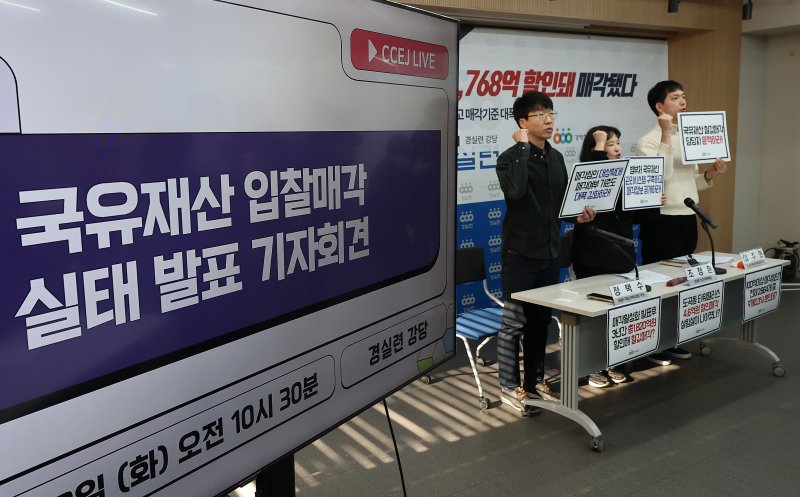
[Financial News] The system for selling state-owned property, which has repeatedly faced criticism for undervalued sales and procedural loopholes, will become more transparent and stringent. Going forward, any sale of assets valued at over 30 billion KRW must be reported to the National Assembly of the Republic of Korea in advance, and, in principle, assets cannot be sold below their appraised value. The sale of shares in public institutions will also require prior approval from the National Assembly.
On the 15th, the Ministry of Economy and Finance announced these reforms to prevent indiscriminate privatization of government assets and to address issues of undervalued sales and lack of transparency. This action comes about 40 days after President Lee Jae-myung issued an emergency order to halt all government asset sales on March 3. Following the president’s directive, the ministry conducted a comprehensive review of all state-owned property sales exceeding 100 million KRW across all government departments.
Kang Young-gyu, Director of Fiscal Management at the Ministry of Economy and Finance, stated, “Government assets are not merely a source of fiscal revenue, but serve as public goods that maximize the interests of the nation, local communities, and future generations.” He added, “We will overhaul the entire process of government asset sales to ensure transparency and fairness.” The ministry plans to swiftly amend relevant laws, including the State-Owned Property Act and the Act on the Management of Public Institutions, by the first half of next year.
The core of these reforms is to effectively prevent the sale of state-owned property above a certain scale without special scrutiny. To this end, the government will strengthen pre-sale reviews by both the administration and the National Assembly, implement stricter sales procedures, and legally require parliamentary review for the privatization of public institution shares.
Specifically, any sale exceeding 30 billion KRW must be reported in advance to the relevant standing committee of the National Assembly after passing through the Cabinet. Approximately 40% of planned government asset sales each year, or an average of 15 cases, exceed this threshold. Sales over 5 billion KRW must be reviewed and approved by specialized committees such as the State Property Policy Deliberation Committee. These committees, composed mainly of external experts, will be established within each ministry and agency.
For example, in February last year, KEPCO Knowledge, Data & Network (KEPCO KDN) and the Korea Racing Authority (KRA) sold a 30.95% stake in YTN to Eugene Group for 319.9 billion KRW. Under the new system, such a transaction would require prior reporting to the National Assembly and approval by the Cabinet.
In particular, the privatization of public institutions will now require prior consent from the relevant standing committee of the National Assembly. Previously, shares could be sold at the discretion of the institution’s head without any special preliminary procedures, but going forward, thorough and in-depth parliamentary review will be mandatory.
However, to minimize administrative waste and public inconvenience, certain market-responsive asset sales, such as the management of surplus funds by the Korea Investment Corporation (KIC), and routine sales for core institutional functions, such as public housing construction, will be exempt from these reporting requirements. Mandatory sales for loss compensation as required by law will be permitted to report after the fact.
Sales at prices below the appraised value will, in principle, be prohibited. If a discounted sale is unavoidable, it must first be approved by the State Property Policy Deliberation Committee through strict procedures. To enhance the reliability of appraisals for government assets, any appraisal exceeding 1 billion KRW must be accompanied by a review certificate from the Korea Association of Property Appraisers.
According to the Citizens' Coalition for Economic Justice (CCEJ), the total amount of state-owned property auctioned off between 2023 and August 2025 under the Yoon Suk Yeol administration was 667.5 billion KRW. This figure is 182 billion KRW less than the appraised value of 849.5 billion KRW, fueling controversy over sales at below-market prices.
The same standards will apply to the sale of unlisted NXC shares, which were provided by the Nexon founder’s family in lieu of inheritance tax. Kang Yoon-jin, Director of the Treasury Bureau at the Ministry of Economy and Finance, explained, “When proceeding with the sale of NXC shares next year, if the sale price is lower than the payment-in-kind value, the process must be approved by the State Property Policy Deliberation Committee.”
Disclosure of information related to asset sales will also be greatly expanded. Once a government asset sale is decided, bidding information will be immediately posted on the government’s OnBid website. The same standards will apply to asset sales by public institutions. After the sale, details such as the asset’s location, price, and reason for sale will be transparently disclosed to guarantee the public’s right to know and to strengthen post-sale external oversight.
Additionally, before selling government assets to the private sector, the government must thoroughly consider whether local governments or public institutions could use the assets for administrative purposes.
[email protected] Jung Sang-kyun, Kim Chan-mi Reporter