[Editorial] No Country Has Achieved Advanced Status Without a Strong Middle Class
- Input
- 2025-12-10 18:20:10
- Updated
- 2025-12-10 18:20:10
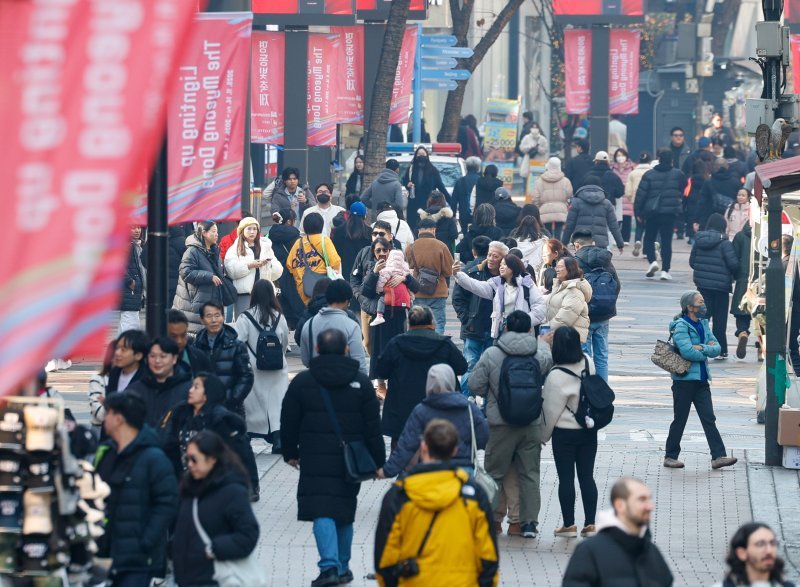
The middle class forms the economic backbone of society. When this group is healthy, the entire society can stand strong and stable. Historically, societies with a weak middle class have been unable to escape severe social unrest and economic hardship. For economic growth, the role of the middle class—society’s core—is especially crucial. The middle class not only supports current social health but also underpins future development potential. The fact that income growth for Korea’s middle class has barely increased is a troubling sign.
While it is important for the middle class to see increased income and purchasing power, active social mobility is equally vital. However, opportunities for mobility are also diminishing. According to statistics released in October this year, income mobility stood at 34.1%, declining for three consecutive years. In particular, the escape rate from the lowest income quintile dropped to 29.9%, falling below 30% for the first time since records began. Meanwhile, 85.9% of those in the top 20% remained in their group, and 70.1% of the bottom 20% stayed in the lowest tier. The ladder of social mobility is becoming steeper and narrower.
Public sentiment is also pessimistic. According to a survey by the Center for Social Value Enhancement Studies (CSES), only 39.5% of respondents identified themselves as middle class. This is far below the actual middle class ratio of 59.3% calculated by Statistics Korea. This means that one in five people who are statistically middle class do not perceive themselves as such. Rising anxiety appears to stem from a lack of stable income opportunities and increasing prices.
The government should actively consider policies to strengthen and expand the middle class. Until now, policy efforts have mainly focused on addressing polarization, emphasizing support for the low-income group and taxation of the high-income group. While such approaches are necessary, they are not sufficient. Without policies to robustly grow and sustain the middle class, social sustainability cannot be ensured. A strong middle class revitalizes consumption, boosts domestic demand, and energizes the entire economy. When the middle class is solid, the ladder for the low-income group to climb up becomes sturdier.
To reinforce the middle class, multifaceted efforts are needed, including the creation of quality jobs, substantial support for the self-employed and small and medium-sized enterprises (SMEs), easing the burdens of education and housing, and expanding the social safety net. If the middle class collapses, the whole society will be shaken. The government should make rebuilding the middle class a key national agenda and devise effective measures to achieve this goal.