[Editorial] The Semiconductor Special Act Delayed Again Despite Urgency
- Input
- 2025-12-09 18:25:10
- Updated
- 2025-12-09 18:25:10
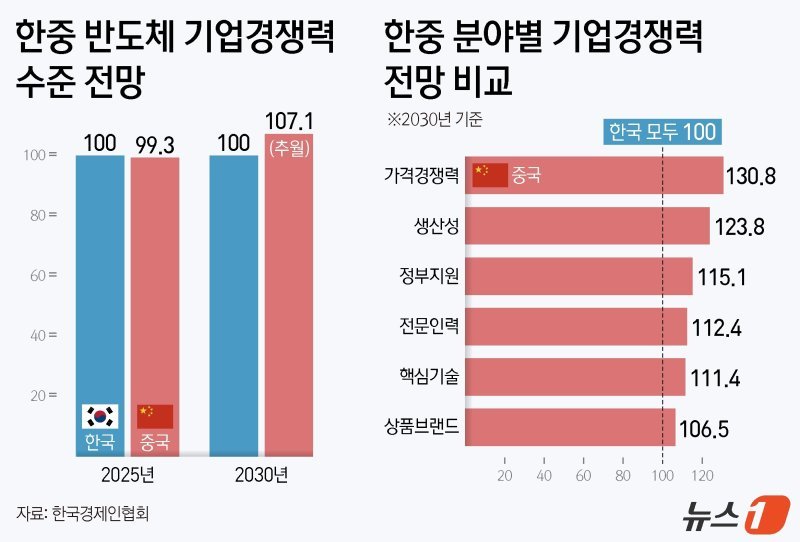
Even if the Semiconductor Special Act is enacted soon, it remains inadequate as it excludes the '52-hour maximum workweek regulation exception' clause. Nevertheless, regardless of further discussions on this exception, passing the bill within this year must be the top priority. The National Assembly of the Republic of Korea has already wasted considerable time and should reflect deeply on this. While major countries such as the United States of America (U.S.A.) and China are pouring astronomical sums into subsidies and accelerating supply chain restructuring, the competitiveness of our companies has likely fallen behind.
Speed is everything in the semiconductor industry. A technological gap of even six months can deal a fatal blow to competitiveness. Despite this, the National Assembly of the Republic of Korea has failed to promptly pass a single law to support the semiconductor sector, instead hampering businesses. How can we expect to win in global competition under these circumstances? The legislature cannot avoid responsibility for failing to resolve this issue by the end of the regular session.
Even if the bill passes, it is regrettable that the '52-hour maximum workweek regulation exception'—a provision the semiconductor industry has desperately called for—has been omitted. Endless deadlock between the parties over this clause has repeatedly delayed the bill’s passage. Politics should not harm the economy or businesses, even if it cannot always benefit them.
Given the continuous cycle of experiments and analysis in semiconductor research and development, flexible working arrangements are essential. Semiconductor firms in China and Taiwan are pushing technological advancement with around-the-clock operations. Only our country remains bound by rigid work hour regulations. The resulting decline in competitiveness is all but inevitable. While massive investment is important for strengthening the semiconductor industry, research and development capabilities are decisive. Even if top talent is assigned to R&D, without greater flexibility in working hours, meaningful results cannot be achieved.
Even now, China is mobilizing large numbers of science and engineering talents to drive its semiconductor ambitions. The U.S.A. has already adopted a negative regulation system, enabling rapid acceptance of new industries and further consolidating its market leadership. It is concerning that only our country seems trapped by outdated frameworks.
As Kwon Oh-hyun, former chairman of Samsung Electronics who helped build the K-semiconductor legend, pointed out, we must reflect on how our success as a 'fast follower' has led us to postpone the innovations we truly need. He sharply noted, 'If you look at semiconductors, mobile phones, shipbuilding, and steel, all of them copied what advanced countries did,' adding, 'We are so intoxicated by past successes that we have changed nothing.'
The political sphere must come to its senses first. Lawmakers should spare no effort in supporting legislation that allows companies to become first movers. The National Assembly of the Republic of Korea has a mountain of work to do for industry and business beyond the Semiconductor Special Act. Other legislative measures to enhance competitiveness must also be discussed without delay. In the long term, the adoption of a negative regulation system should be seriously considered. Ultimately, creativity and innovation among talented individuals will determine the outcome of the semiconductor race. It is no exaggeration to say that the future of our economy hinges on the semiconductor industry.