GIST Becomes First in the World to Identify Deuterium Sensitivity, a Key to Artificial Sun Research
- Input
- 2025-12-09 14:09:22
- Updated
- 2025-12-09 14:09:22
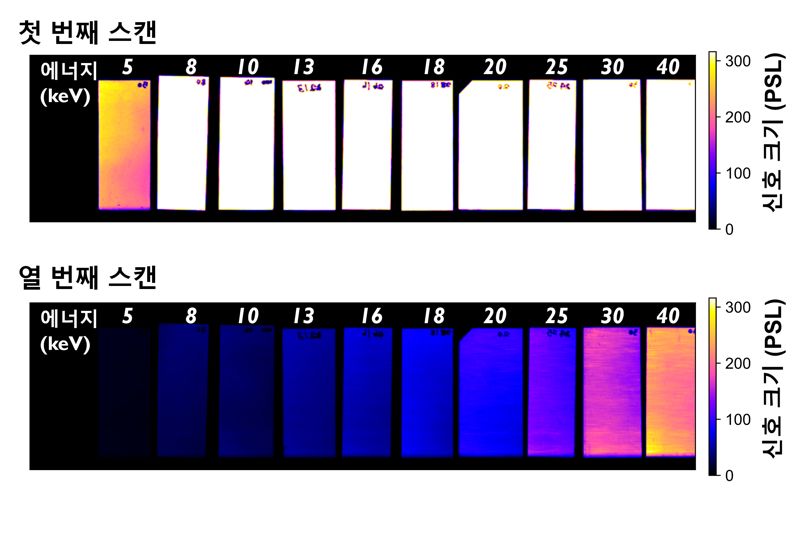
[Financial News] The Gwangju Institute of Science and Technology (GIST) announced on the 9th that Professor Wooseok Bang and his research team from the Department of Physics and Photon Science have overcome the limitations of conventional particle detection equipment. They succeeded in measuring, for the first time in the world, the 'absolute sensitivity' of deuterium ions—the core fuel for nuclear fusion, which is attracting attention as a future clean energy source—within the actual energy range (5–200 kiloelectronvolts (keV)) where nuclear fusion reactions occur.
'Absolute sensitivity' refers to the actual signal strength left by a single particle in a detector. Knowing this allows for reliable measurement of the number of incident particles and radiation dose even in high-intensity radiation environments where many particles arrive simultaneously.
This achievement is directly related to the artificial sun (nuclear fusion) research facility, for which Naju, Jeollanam-do was recently selected as the preferred negotiation site. Reliable absolute sensitivity data is essential for accurately measuring high-energy deuterium and tritium particles generated inside fusion devices.
Deuterium ions are extremely important in nuclear fusion, plasma, and accelerator research. However, in the main energy range essential for fusion (several keV to several hundred keV), it was previously impossible to obtain absolute sensitivity data due to detector saturation.
This result marks the first time that this crucial data, previously unavailable worldwide, has been measured. It is expected to lay the foundation for accurate particle measurement in various fields, including nuclear fusion, accelerator, and radiation measurement.
Professor Wooseok Bang stated, "This technology presents a new diagnostic method capable of accurately reading signals even in extreme experimental environments where a large number of particles are incident at once." He added, "The absolute sensitivity data obtained from this research can be immediately utilized in international nuclear fusion and accelerator experiments and will broadly contribute to various particle experiment studies."
This research, supervised by Professor Wooseok Bang of the Department of Physics and Photon Science at GIST and with Hyungil Kim, an integrated master's and doctoral program student, as the first author, was supported by the National Research Foundation of Korea (NRF) through its Mid-career Researcher Support Program. The results were published online on November 24, 2025, in 'Radiation Physics and Chemistry,' an international journal ranked in the top 6.1% in the field of nuclear science according to Journal Citation Reports (JCR).
jiany@fnnews.com Yeon Ji-an Reporter