"What Are Your Thoughts on Judicial Reform?" Listening to Citizens... Two-Hour Debate with Kim Sun-soo, Moon Hyung-bae, and Others
- Input
- 2025-12-09 08:03:04
- Updated
- 2025-12-09 08:03:04
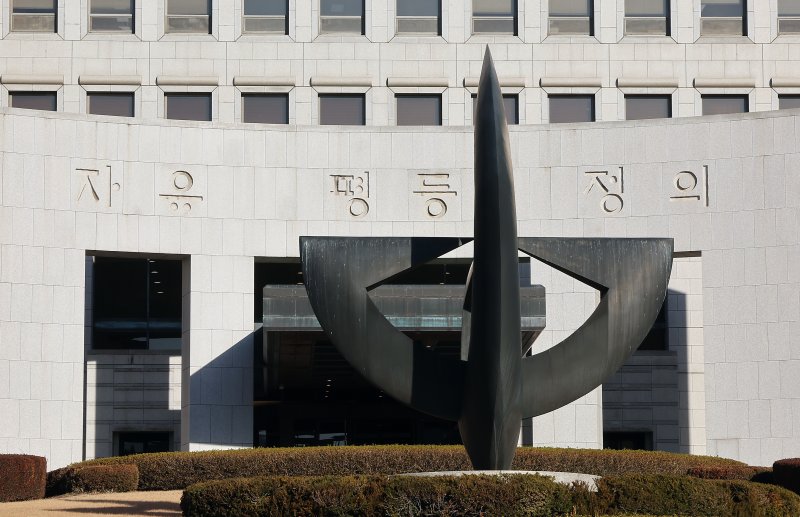
[Financial News] The Supreme Court of Korea has decided to hold a public hearing on judicial system reform, inviting a wide range of opinions from various sectors on the topic of judicial reform. What began as a judicial reform initiative from the ruling party is now expanding beyond opposition within the judiciary to broader public debate.
The National Court Administration, an administrative body under the Supreme Court of Korea, will co-host a public hearing titled "Judicial System Reform for the People: Directions and Tasks" with The Law Times from December 9 for three days at Cheongsim Hall in the Seoul Court Complex in Seocho-dong. The hearing will be broadcast live on the Supreme Court of Korea's official YouTube channel.
The hearing will feature not only members of the judiciary but also participants from various external sectors. A diverse group of speakers and panelists, representing both conservative and progressive viewpoints, will take part.
The first session on the opening day, "The Current State and Issues of Our Trials," will address the current status and problems of trials that affect people's everyday lives. After gathering a range of opinions on areas in need of improvement from the public's perspective, the session will set the direction for judicial system reform.
Ki Woo-jong, a High Court Judge at the Seoul High Court and a member of the 26th class of the Judicial Research and Training Institute, will present his views on key issues in judicial system reform. The panel discussion will include Gong Duhyeon, a professor at Seoul National University (SNU) Law School and a member of the 40th class of the Judicial Research and Training Institute, among others.
The second session will focus on strengthening the fairness and transparency of the judiciary, while the third session will discuss expanding public participation in the judicial process, with participants from various walks of life.
Presentations in the second session, which will address evidence collection procedures, disclosure of judgments, and live broadcasting of trials, will be delivered by Joon Buhm Lee, a professor at Inha University Law School, and You Aram, a presiding judge at Incheon District Court and a member of the 33rd class of the Judicial Research and Training Institute.
The third session, which will cover topics such as the establishment of labor courts and the expansion of citizen participation trials, will feature presentations by Lee Jonggil, a presiding judge at Daegu District Court and a member of the 32nd class of the Judicial Research and Training Institute, and Oh-sung Kwon, a professor at Yonsei University Law School.
On the second day, December 10, the program will focus on "Protecting Citizens’ Rights and Reforming the Appellate System." The fourth session will discuss improvements to the criminal justice system to better protect citizens’ rights, the fifth session will address reforms to the appellate system, and the sixth session will consider proposals to increase the number of Supreme Court justices.
The fourth session, which will discuss issues such as search and seizure, detention, and the system for requesting a review of non-prosecution decisions, will feature presentations by Eun-kyung Cho, a presiding judge at Gimcheon Branch of Daegu District Court and a member of the 36th class of the Judicial Research and Training Institute, and Yun Dong-ho, a professor at Kookmin University Law School. The fifth session will be led by Yong Kyu Oh, an attorney at Dongin Law Group and a former professor and presiding judge at the Judicial Research and Training Institute, who recently published a study on the appellate system.
On the final day, December 11, a two-hour comprehensive debate will be held under the theme "The Future Path of the Judiciary in Korea." Kim Sun-soo, former Supreme Court Justice and former President of Lawyers for a Democratic Society (Minbyun), currently Distinguished Professor at the Judicial Research and Training Institute (17th class), will serve as moderator.
Panelists will include Moon Hyung-bae, former Constitutional Court Justice (18th class); Pak Un-jong, Professor Emeritus at Ewha Womans University Law School and former Chairperson of the Anti-Corruption and Civil Rights Commission (ACRC); Shim Seoktae, professor at Semyung University Graduate School of Journalism and former legal journalist; Jaeyeon Cho, former Supreme Court Justice and Distinguished Professor at Sungkyunkwan University (SKKU) Law School (12th class); and Cha Byung-jik, attorney at Klass Hangyeol, who has expressed a wide range of views on judicial reform. Experts from various fields, including both conservative and progressive circles, academia, and the legal profession, are expected to engage in lively debate.
An official from the Supreme Court of Korea explained, "This is not a forum for unilaterally presenting the judiciary's position, but a platform for gathering and reflecting a wide range of opinions from all sectors of society to seek desirable directions for judicial system reform that benefit the people."
[email protected] Lee Hwan-joo Reporter