"Can You Tell Diabetes by the Shape of Your Buttocks?"... Flat in Men, Protruding in Women Signals Risk [Health Issue]
- Input
- 2025-12-06 08:00:00
- Updated
- 2025-12-06 08:00:00
[Financial News] An intriguing study has found that simply observing the shape of one’s buttocks can help detect the risk of diabetes. The analysis revealed that men with flatter buttocks and women with more protruding, fat-rich buttocks are at a higher risk for Type 2 diabetes (T2D).
On the 5th (local time), several international media outlets, including Newsweek and the Daily Mail, reported that a research team from the University of Westminster presented these findings at the recent annual meeting of the Radiological Society of North America (RSNA) in Chicago.
The researchers analyzed over 61,300 Magnetic Resonance Imaging (MRI) scans registered in the UK Biobank. They found that the shape of the gluteus maximus is more closely linked to diabetes than its size, and that muscle morphology varies significantly depending on gender and disease status.
According to the research team, patients with diabetes showed distinct differences in buttock shape by gender. Male patients with diabetes had smaller, flatter gluteus maximus muscles compared to healthy men, which was attributed to muscle atrophy.
In contrast, female diabetes patients exhibited larger and more protruding buttocks due to fat infiltration and accumulation within the muscle, compared to healthy women.
The study also analyzed body measurements, medical history, lifestyle factors, and disease-related test results. It found that better physical fitness was associated with healthier gluteus maximus morphology, while aging and prolonged sedentary behavior contributed to muscle thinning.
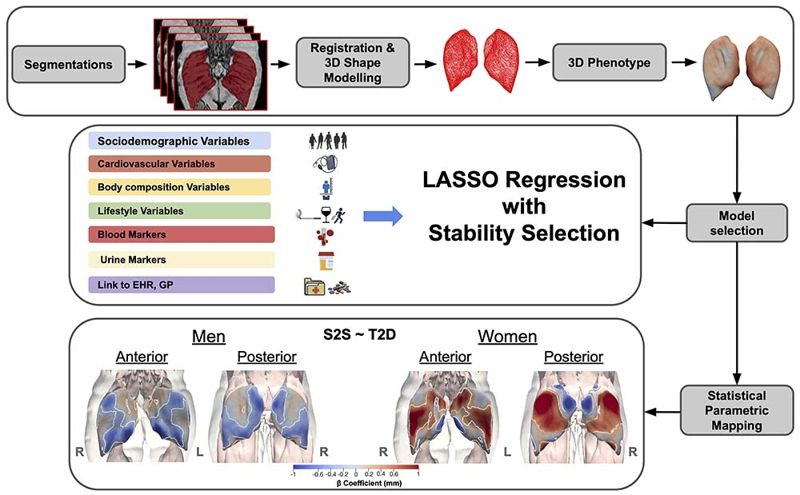
This research is significant in that it warns of the dangers of 'hidden fat,' which cannot be detected by weight or Body Mass Index (BMI) alone. The researchers explained, "Changes in gluteus maximus morphology may serve as an early warning sign of Type 2 diabetes (T2D), and even those with a normal outward body shape may be at high metabolic risk."
[email protected] Kim Hee-sun Reporter