If You Want to Eliminate Oxygen Residue in Your Body... Take Off Your Shoes and Step on the Ground [Park Dong-chang’s Barefoot Walking Science]
- Input
- 2025-12-05 04:00:00
- Updated
- 2025-12-05 04:00:00
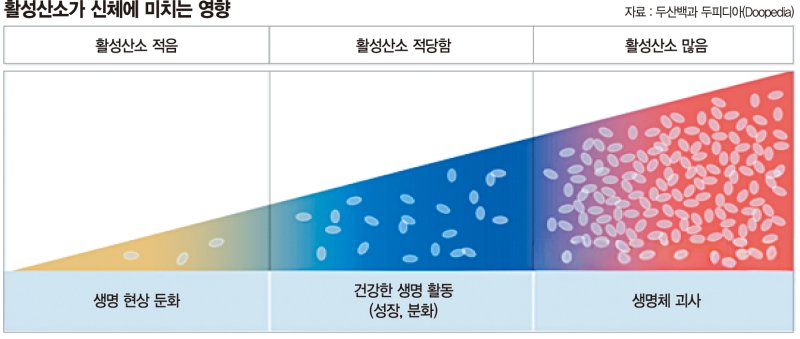
Despite the fact that we cannot survive even a moment without oxygen in the air, we tend to overlook its vital importance. Furthermore, we are often unaware of the harm caused by reactive oxygen species (ROS), the waste produced after we inhale oxygen. Here lies the irony of life: two opposing factors that determine our health coexist within us.
The oxygen we inhale through breathing is transported throughout our bodies to generate energy. The mitochondrion, the cellular organelle responsible for energy production, uses oxygen and glucose to create energy, and in this process, it also generates ROS as a byproduct.
Simply put, just as a car emits exhaust gas as a byproduct when burning fuel, ROS are unavoidable waste products generated by our daily lives.
If these ROS are not promptly eliminated, our bodies become filled with harmful exhaust, leading to discomfort and complaints from within. As a result, various inflammations, skin diseases, boils, and hair loss may occur. If these issues are not resolved, ROS can cause cellular mutations that develop into cancerous tumors and become the root cause of cardiovascular diseases.
Additionally, ROS are biochemically unstable substances. They oxidize fats in cells and blood, resulting in lipid peroxidation, which accumulates in blood vessels and leads to hypertension and hyperlipidemia, as well as being a major cause of aging. The rancid smell of old oil is also due to the oxidation of fats by oxygen.

However, neither the Doosan Encyclopedia nor any other source provides a clear answer on how to remove ROS. They simply recommend consuming foods or drugs containing antioxidants that can eliminate ROS. For example, they suggest Vitamin C, Vitamin E, or fruits and vegetables containing these vitamins. Yet, a fundamental method for removing ROS remains unknown.
Nevertheless, we have discovered that our Creator designed all life on Earth—including humans—to live healthily by running barefoot on the ground. In doing so, the positively charged ROS in our bodies meet the negatively charged free electrons in the earth, leading to immediate neutralization and elimination.
Dr. Carol M. Davis, Professor Emeritus at the University of Miami Miller School of Medicine, stated, 'For ROS generated in the body to remain stable, they must find electrons to connect with. While such electrons exist in certain foods and vitamins, countless free electrons are also present in the ground beneath our feet. If grounding is blocked and we cannot obtain these free electrons, ROS will attack healthy cells and steal electrons from them, resulting in infections and inflammation.'
Yet, in the 19th century, modern humans invented rubber and began wearing shoes with insulating soles. Roads were paved with asphalt, cement, and urethane, cutting off our connection to the earth 24 hours a day, 365 days a year. This blocked the pathway for free electrons to enter our bodies and neutralize ROS. As a result, we now live in a state of chronic ROS overload, suffering from constant inflammation and disease.
What we must remember is that eliminating ROS—the root of all diseases—is the key to a healthy society free from the pain of illness and aging. This can be achieved by recharging with the earth’s life-giving free electrons through barefoot walking and grounding.
The existence of these free electrons has been repeatedly confirmed in previous grounding experiments with onions, milk, goldfish, and rubber trees. Naturally, in humans as well, we can infer the difference in the supply of life-giving free electrons between barefoot walking and walking with shoes.
Ultimately, it is up to each reader to decide: Will you walk barefoot, absorbing free electrons from the earth and maintaining a healthy, vibrant life with neutralized ROS? Or will you continue to live a weary life, cut off from the ground, burdened by excess ROS, aging, and illness?