[Editorial] Concerns Over Budget Proposal Delay for Fifth Consecutive Year—Compromise Needed for the Sake of Livelihoods
- Input
- 2025-12-01 18:17:00
- Updated
- 2025-12-01 18:17:00
Article 85 of the National Assembly Act stipulates that if the budget review is not completed by November 30 each year, the government’s original proposal must be submitted to the plenary session on December 1. However, even after the processing deadline of the 2nd, if the parties reach an agreement, a revised budget proposal can be resubmitted to the plenary session. In reality, negotiations may continue until the end of the Regular Session of the National Assembly on the 9th. Nevertheless, concerns are growing that the vicious cycle of delayed budget processing will continue for a fifth consecutive year since 2021.
The parties are currently locked in fierce disputes over dozens of contentious issues. The People Power Party has labeled government fiscal projects such as the Local Love Gift Certificate as 'cash handouts,' designating them as top priorities for cuts. The party also opposes the special activity funds of the Office of the President of South Korea and government contingency funds, calling the budget proposal a case of 'double standards.' On corporate tax, the government and the ruling party intend to raise all tax brackets by 1 percentage point to restore them to 2022 levels. However, the People Power Party insists that increasing the tax burden on companies already facing greater investment pressure in the U.S. is unacceptable and is demanding a withdrawal.
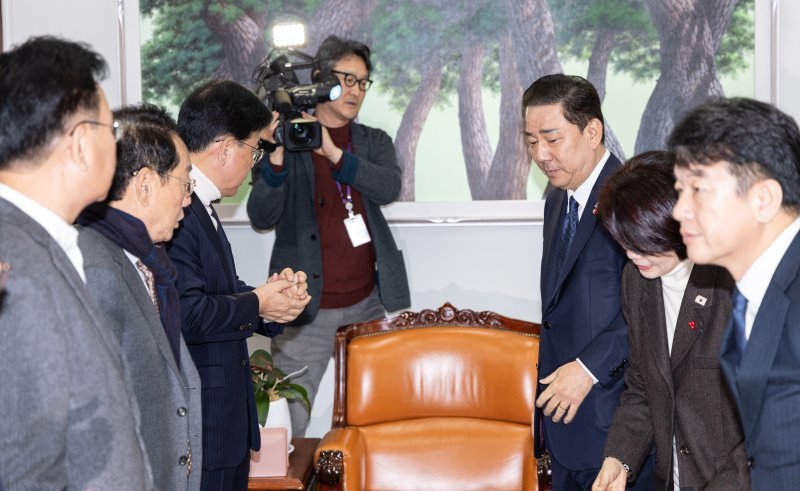
While some issues require consensus through debate and persuasion, many are mired in political wrangling without substantive logic. As both parties spend time on political disputes without distinguishing between these cases, the discussions have reached an impasse. In fact, even a '4+4' meeting involving the floor leaders and deputy floor leaders of both parties failed to make progress. Han Byeongdo, chair of the Special Committee on Budget and Accounts and a member of the Democratic Party of Korea (DPK), criticized, 'The People Power Party is engaging in time-wasting tactics without presenting alternatives, like playing 'bed soccer.'' Kim Do-eup, policy committee chair of the People Power Party, countered, 'With companies already suffocating, raising the corporate tax is nothing short of extortion.'
Currently, the public is struggling through the waves of recession. Although third-quarter sales for small business owners increased, rising costs have led to lower profits compared to the previous quarter. The youth employment rate has been declining for 18 consecutive months, and the number of people in their 30s classified as 'not working' has reached a record high. While both parties emphasize livelihoods and the economy, it is questionable how acutely they feel the urgency of the situation.
Next year’s budget proposal is a crucial tool to support livelihoods and revive economic vitality amid ongoing economic slowdown, high inflation, and a strong dollar. If the national budget is not finalized on time, policy implementation will be delayed, and public anxiety will inevitably increase.
The parties must look beyond political interests and face economic realities. Narrowing their differences and reaching a compromise on the budget proposal is the minimum responsibility that politics owes to the people.