Seoul Subway Begins Work-to-Rule Protest... Anxious Citizens Worry About Delays
- Input
- 2025-12-01 16:00:25
- Updated
- 2025-12-01 16:00:25
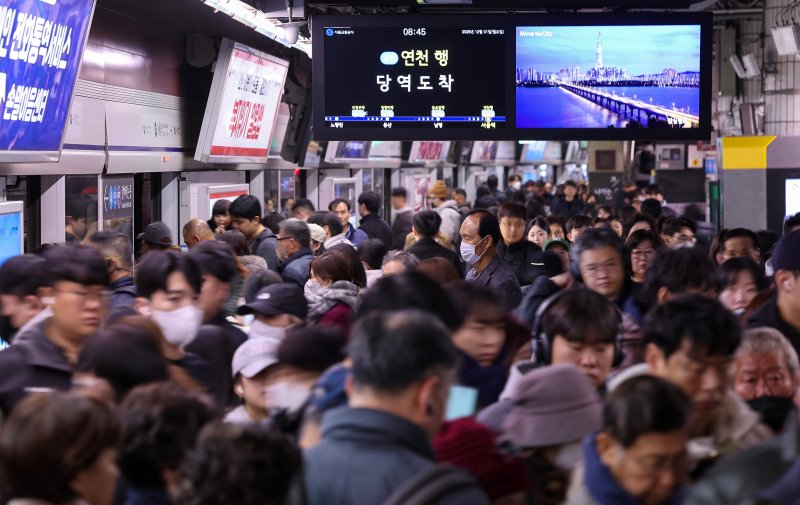
With the Seoul Metro Labor Union launching a work-to-rule protest on the 1st, inconvenience for citizens began as well. So far, only minor train delays have occurred, but if the labor-management conflict drags on, major disruptions are inevitable. Both labor and management are urged to come together quickly to resolve the situation.
On this morning, the 1st and 2nd unions of Seoul Metro began work-to-rule from the first train after wage and collective agreement negotiations with management broke down. Work-to-rule is a form of industrial action less severe than a strike, where workers strictly adhere to regulations—such as ensuring a full 30 seconds for passenger boarding and alighting for safety, or refusing tasks not specified in their job descriptions.
Although it was not a full strike and congestion levels were similar to usual, the situation changed rapidly, causing anxiety among commuters. Around 8 a.m., the platform at Yongsan Station was relatively calm, but by 8:20 a.m., as rush hour approached, crowds gathered and trains were delayed by 2 to 3 minutes. Mr. Lee (31), who commutes from Seodaemun-gu to Yongsan-gu, said, 'The number of passengers kept increasing, making it harder to breathe than usual. When getting off, I had to brace myself to avoid falling as everyone exited at once.'
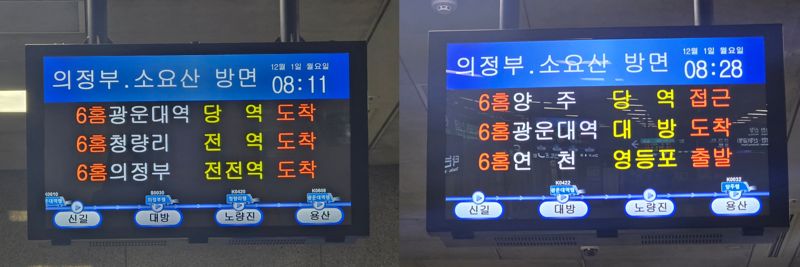
Commuters at Seoul Station on Line 1 were equally anxious. Announcements repeatedly informed passengers that train operations might be delayed due to the work-to-rule protest. Many checked navigation apps and listened closely to the announcements. Ms. Park (36), an office worker, said, 'I have to transfer at Jongno 3-ga Station. Even a two-minute delay can make me much later when I have to transfer several times, so it’s very inconvenient.'
Many citizens were also concerned about a possible general strike. Labor and management at Seoul Metro remain divided over wage increases, restructuring, and new hiring. The 1st and 3rd unions have announced a general strike for the 12th, while the 2nd union is considering a strike in mid-December. Ms. Lee (28), who commutes to City Hall Station, said, 'I left about 20 minutes early because I was worried about being late. If there’s a full strike, I hope they announce it in advance.' Mr. Choi (43), who runs a restaurant at Jonggak Station, said, 'If there’s a general strike, I’ll probably have to use the bus or a taxi since I can’t predict train operations.'
Experts advise that the labor-management conflict should be resolved as soon as possible. Kang Kyung-woo, an emeritus professor of transportation and logistics engineering at Hanyang University, noted, 'Work-to-rule protests have been repeated every busy year-end. Accidents are caused not only by staff shortages but also by complex factors such as adherence to systems and manuals.'
[email protected] Seo Ji-yoon, Park Sung-hyun Reporter