[Editorial] Success of Nuri (KSLV-II) Launch Marks Opportunity to Lead the 2,700 Trillion Won Space Industry
- Input
- 2025-11-27 18:41:27
- Updated
- 2025-11-27 18:41:27
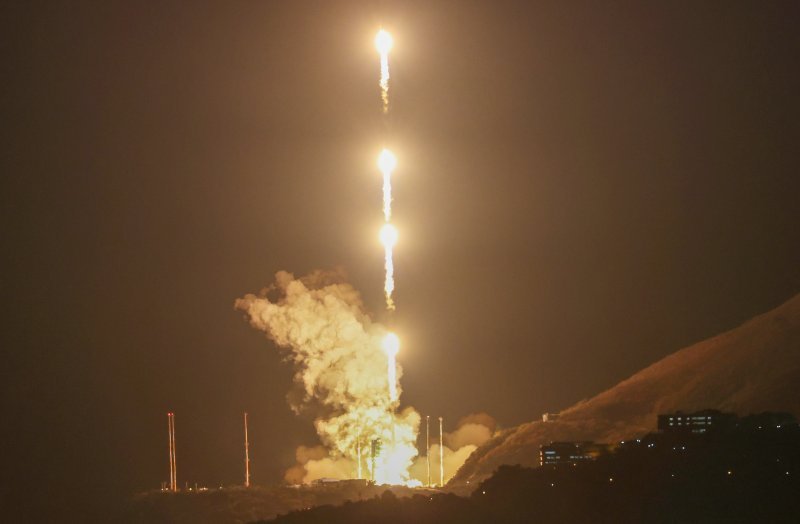
Following the predetermined flight sequence, all phases of Nuri (KSLV-II)’s flight proceeded as planned. After liftoff, the first stage separated and the second stage ignited at an altitude of about 65.7 km. The fairing separated at approximately 211.1 km, and the second stage separated and the third stage ignited at around 263 km. The vehicle then reached an altitude of 600.5 km, with the entire process unfolding smoothly. The fact that the launch proceeded within the expected parameters demonstrates a significant advancement in Korea’s space science and technology.
This launch is particularly meaningful as it was the first to be carried out by a unified public-private team. Hanwha Aerospace, a private company, not only oversaw the production and assembly of the launch vehicle but also participated in the launch process led by the Korea Aerospace Research Institute (KARI). This marks a turning point as the ecosystem of the space industry shifts from being government-centered to private sector-led.
The market encompassed by the space industry is as vast as space itself. Global consulting firm McKinsey & Company projects that the space market will grow to $1.8 trillion (about 2,700 trillion won) by 2035. The industry is expected to expand beyond launch vehicles to high-value-added sectors such as Global Navigation Satellite System (GNSS) and communications equipment.
Hanwha Group is expected to enhance its competitiveness in the space industry by leading businesses that will expand into space transportation services and satellite services. After acquiring Nuri (KSLV-II) development technology from KARI last July, Hanwha Aerospace has also secured a license to directly manufacture and launch Nuri (KSLV-II) by 2032. Through future fifth and sixth launches of Nuri (KSLV-II), the company plans to broaden its scope to include predicting natural disasters such as wildfires and floods and monitoring port logistics. While current mobile communication systems require roaming services when traveling abroad, the full-scale implementation of satellite-based communication networks could connect the world under a single communication zone. Vague expectations for space are now starting to yield tangible results.
As the space industry shifts toward private sector leadership, the government must establish institutional foundations and a sustainable investment environment. A long-term roadmap and a stable budget support system should be put in place so that companies can minimize risks and participate in technology development. In addition, an ecosystem should be fostered to promote cooperation between companies and research institutes in areas such as launch vehicles, satellites, and data utilization. Accelerating commercialization will require nurturing space technology talent and regulatory innovation. Korea must also lay the groundwork to usher in a true era as a space powerhouse by expanding collaboration with global companies and increasing participation in international space standards.