'Song Young-moo, Former Defense Minister, Acquitted Again on Appeal for Alleged Coercion of False Signatures on Martial Law Document'
- Input
- 2025-11-27 11:07:21
- Updated
- 2025-11-27 11:07:21
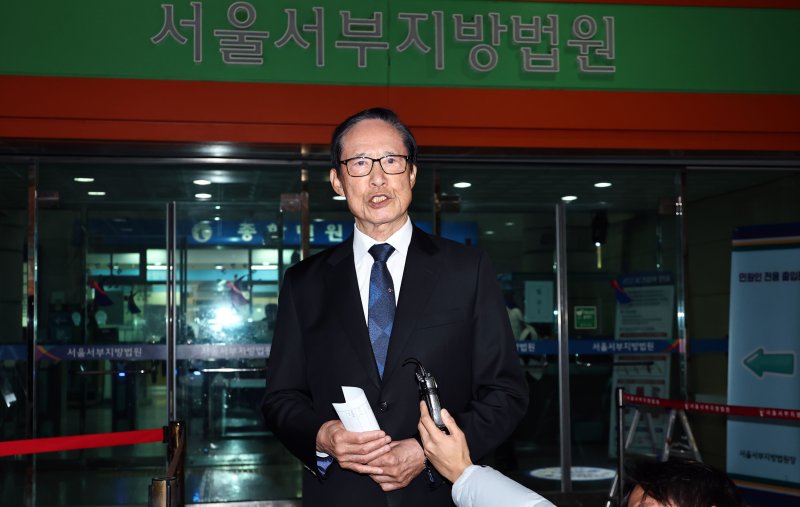
[Financial News] Song Young-moo, former Minister of National Defense, who was indicted for allegedly coercing senior officials to sign false statements regarding the Defense Security Command (DSC)'s martial law review document during the Park Geun-hye administration, was acquitted again on appeal.
On the 27th, the Seoul Western District Court's Criminal Appeals Division 2-3 (Presiding Judge Im Gi-hwan) dismissed all appeals by the Prosecution Service in the trial of former Minister Song, former military aide Jeong Haeil, and former spokesperson Hyun-soo Choi, upholding the not-guilty verdict from the first trial.
The court determined that it was difficult to conclude that former Minister Song had instructed former aide Jeong and former spokesperson Choi to draft the fact statements.
The court explained, "In 2018, the Ministry of National Defense (MND) was vigorously pursuing reforms of the DSC, so it is hard to see Song Young-moo as lacking awareness of the issues with the martial law document or being passive about reforms." The court added, "It appears that his subordinates were also aware of his stance."
Considering the circumstances, such as the review within the MND of whether to request a correction after reports about Song's remarks, the court found it plausible that subordinates, believing the reports to be inaccurate, attempted to draft fact statements as part of preparing a request for correction.
The court stated, "It is not unusual for aides to prepare fact statements as part of gathering materials in advance of filing with the Press Arbitration Committee." The court further pointed out, "If it had been at Song's instruction, there would be no reason for the vice minister or deputy chief of staff, who attended the same meeting, to be excluded from signing, yet they were in fact excluded." This, the court noted, supports the view that the subordinates acted on their own judgment.
The court emphasized, "It is also difficult to see the independent drafting of fact statements by Jeong Haeil and Hyun-soo Choi as an unlawful abuse of authority," and concluded, "The acquittal in the first trial is justified."
Previously, the Prosecution Service argued that Song Young-moo had coerced the signing of the fact statements and that a conspiracy was established through circumstantial evidence, seeking a two-year prison sentence in the appeal. However, the court did not accept this. Song's defense, as in the first trial, denied any illegal orders or conspiracy and requested the appeal be dismissed.
After the verdict, Song Young-moo stated, "I am grateful to the court for confirming my acquittal on appeal, allowing the truth to come to light," and added, "I only considered what was necessary for the nation and the people, and never acted illegally." He continued, "I hope the Defense Counterintelligence Command (DCC) will become an organization that serves the people without political intervention or civilian surveillance in the future."
This case originated in 2018 after reports alleged that Song Young-moo made remarks defending the martial law document at a meeting, leading to suspicions that he demanded attendees sign a fact statement denying the reports. The Corruption Investigation Office for High-ranking Officials (CIO) requested the Prosecution Service to indict him for abuse of authority, and the Prosecution Service brought the case to trial last year. The first trial found that, while remarks were made, coercion or conspiracy could not be established, resulting in an acquittal, which was upheld on appeal.
[email protected] Kim Ye-ji Reporter